Europe’s startup ecosystem got a shot in the arm this week. The European Parliament voted for a harmonised ’28th regime’ on Tuesday, and Commission President Ursula von der Leyen unveiled ‘EU- Inc.‘ at Davos — a unified corporate structure to help companies scale across borders, reviving an initiative that has repeatedly stalled.
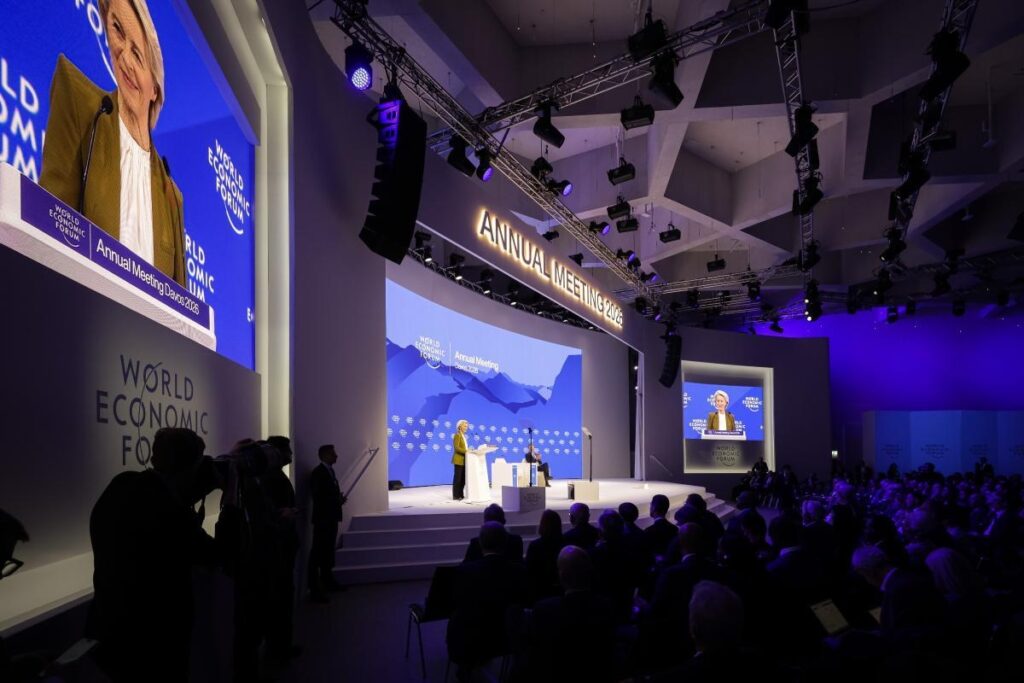
“We will soon put forward our 28th regime. The ultimate aim is to create a new, truly European company structure. We call it EU-Inc.” Speaking in Davos on Tuesday, Ms von der Leyen made an announcement long awaited by Europe’s startup scene. EU–Inc., a pan-European policy movement has been in the works since 2024. It has won the backing of over 22,000 signatories made up not only of the startup community but also the bloc’s leading investors.
48 hours, fully online
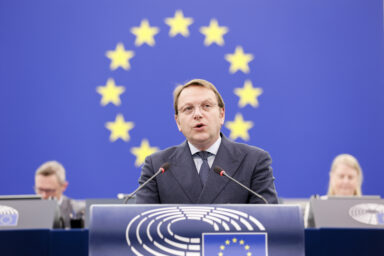
They are not the only ones with strong opinions on how harmonisation could benefit European business. Earlier in the day, parliamentarians called for the so-called 28th regime in a report backed by a big majority of MEPs, endorsing a series of recommendations that will feed into the Commission proposal for a new legal framework supporting companies in the EU that will be unveiled in the coming months.
After the vote, René Repasi (S&D/DEU), the Parliament’s rapporteur on the 28th regime said, “Today’s vote shows that Europe can and must fix what has long held innovators back against global competitors. Our vision of the S.EU [the European Parliament’s official name for EU Inc.] would allow companies to set up within 48 hours, fully digitally and across borders. At the same time, the European Parliament wants to see robust social standards as part of this new regime.”
Ms Von der Leyen presented the same line at Davos. “(It is) a single and simple set of rules that will apply seamlessly all over our Union. So that business can operate across member states much more easily.” She continued, “Our entrepreneurs, the innovative companies, will be able to register a company in any member state within 48 hours, fully online. They will enjoy the same capital regime all across the EU.”
Closing the innovation gap with US and China
At the heart of the EU’s headway on EU Inc. is its desire to catch up to Chinese and American markets. “Ultimately, we need a system where companies can do business and raise financing seamlessly across Europe—just as easily as in uniform markets like the US or China,” Von der Leyen said at Davos.
Europe is not just hoping to attract any business, but the economic driver it has been missing: tech. Valdis Dombrovskis, European Commissioner for Economy and Productivity, at Davos on Wednesday, said, “In terms of productivity, the EU is lagging behind other major economies already for a few decades. So, there is some catching up to do.” His answer to why Europe is lagging on productivity growth: “the tech sector”.
Europe’s technology deficit is stark. Venture capital investment represents just 0.03 per cent of EU GDP compared to 0.19% in the United States, while EU venture capital funds raise only five per cent of global venture capital compared to 52% in the US and 40% in China.
The regulation-directive question
European startups face a stark capital disadvantage, attracting approximately three times less venture funding than their American counterparts. But the challenge intensifies at growth. When European companies are ready to scale beyond their national borders, they confront a fragmented regulatory landscape across member states. This regulatory fragmentation, combined with the scarcity of late-stage European capital, drives a phenomenon known as the ‘Delaware flip’, where European companies register a second enterprise in the state of Delaware to access US late-stage investors.
We will soon put forward our 28th regime. The ultimate aim is to create a new, truly European company structure. We call it EU-Inc. — Ursula von der Leyen, European Commission President
EU-Inc. is intended to be the solution to that problem, but there is a split on how it should take place. While there is overwhelming support in the Parliament, 144 MEPs voted against, and 28 abstained. EU-Inc., which represents 22,000 signatories, explicitly demands the 28th regime be implemented as a regulation. A coalition of 27 European startup associations—including France Digitale (which represents over 2,000 startups and investors and helped draft EU-Inc.’s policy blueprint)—sent an urgent letter to von der Leyen expressing alarm that leaked Commission documents suggest a directive approach instead.
Regulation or a directive? That is the core question. Regulation would be following what the US and China have: one uniform law instantly applicable across all regions. A directive would be a framework each country implements in its own way. According to leaked drafts of the Commission’s 2026 work programme reported by Euractiv and EU Perspectives, the EU is leaning towards proposing a directive that would not guarantee regulatory harmonisation.
Poor past record
The EU has tried similar initiatives twice before — both failed. The European Private Company (SPE) proposal collapsed in 2014 after years of negotiation when member states couldn’t agree on worker participation rules. An earlier attempt at a European Company Statute for small and medium enterprises also stalled in the 1990s. Meanwhile, the existing Societas Europaea (SE) structure took 30 years to create but is rarely used because it’s so complex and still requires navigating 27 different national implementations. The final proposal arrives in Q1 2026, and this technical choice will determine whether EU-Inc. becomes a game-changer or another stalled Brussels initiative.