As global leaders increasingly frame food systems as a pillar of national and economic security, a parallel concern is gaining prominence: who will farm the land in the decades ahead? At the World Economic Forum discussion in Davos this week, policymakers, investors and producers warned that technological progress alone will not secure food systems unless agriculture becomes a viable and attractive livelihood for younger generations.
The warning came amid a broader reassessment of food security as a strategic risk, shaped by climate volatility, rising input costs and increasingly fragile global trade.
Ana Carolina Zimmermann, a farmer in Brazil, argued that while innovation, automation and data-driven farming will be essential, they cannot compensate for a dwindling and disengaged farming workforce.
The backdrop is a period of unprecedented instability in global food systems. Extreme weather events are becoming more frequent, disrupting production across regions, while geopolitical tensions and supply-chain bottlenecks are amplifying price volatility. Recent surges in cocoa and coffee prices were cited by Sam Kaas, the chairperson as early indicators of pressures that are likely to intensify rather than recede. Longer-term modelling discussed by Kaas during the session suggested that yields of key staples such as rice could fall sharply by mid-century, with potentially destabilising consequences for countries heavily dependent on imports.
The human constraint on high-tech farming
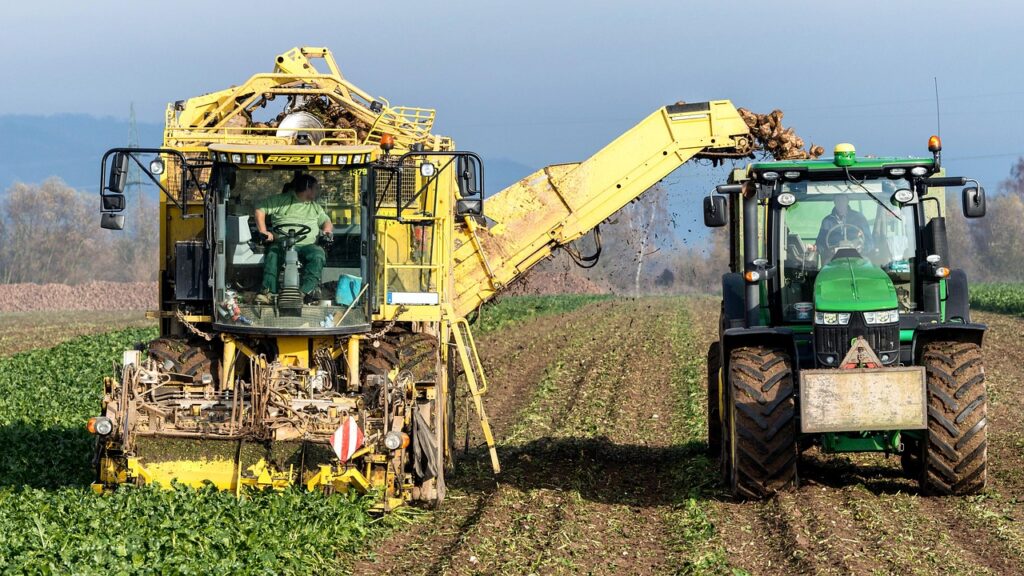
Against this strategic backdrop, the discussion returned repeatedly to a more practical constraint: people. While advances in precision agriculture, artificial intelligence and automation promise efficiency gains, capital is often quicker to flow towards machines than towards farmers themselves. That imbalance risks accelerating a trend in which agriculture becomes more productive, but less populated.
Ana Carolina Zimmermann highlighted the reality behind the demographic challenge. Agriculture remains a high-risk occupation, exposed to climate shocks, volatile input costs and fluctuating market prices, while offering limited control over income. In many regions, weak rural infrastructure — from connectivity to healthcare and education — further undermines its appeal to younger workers. Technology, she argued, can reduce physical burdens and improve decision-making, but it cannot substitute for stable livelihoods.
The concern is particularly acute In advanced economies, where ageing farmer populations and land consolidation are already reshaping rural landscapes. But speakers also warned that the issue is global. In regions with rapid population growth, notably parts of Africa, agriculture is seen as a potential source of employment and stability for millions of young people entering the labour market each year. A shift towards capital-intensive, labour-light farming models could undermine that role.
A strategic choice
The Davos debate showed that more and more people agree that the future of food security depends on both human capital and productivity growth. Many people thought that technology was necessary, but only if it helps farmers instead of getting in their way. If we don’t look at the demographic and social roots of farming, food systems could be more efficient on paper but more vulnerable in real life.
For policymakers, the implication is that securing food supply in an era of climate stress is not simply a question of innovation or yields. It is a question of whether farming can once again be made a credible, dignified and profitable profession for the next generation. Without that shift, the ambition to treat food as strategic infrastructure may prove difficult to sustain.