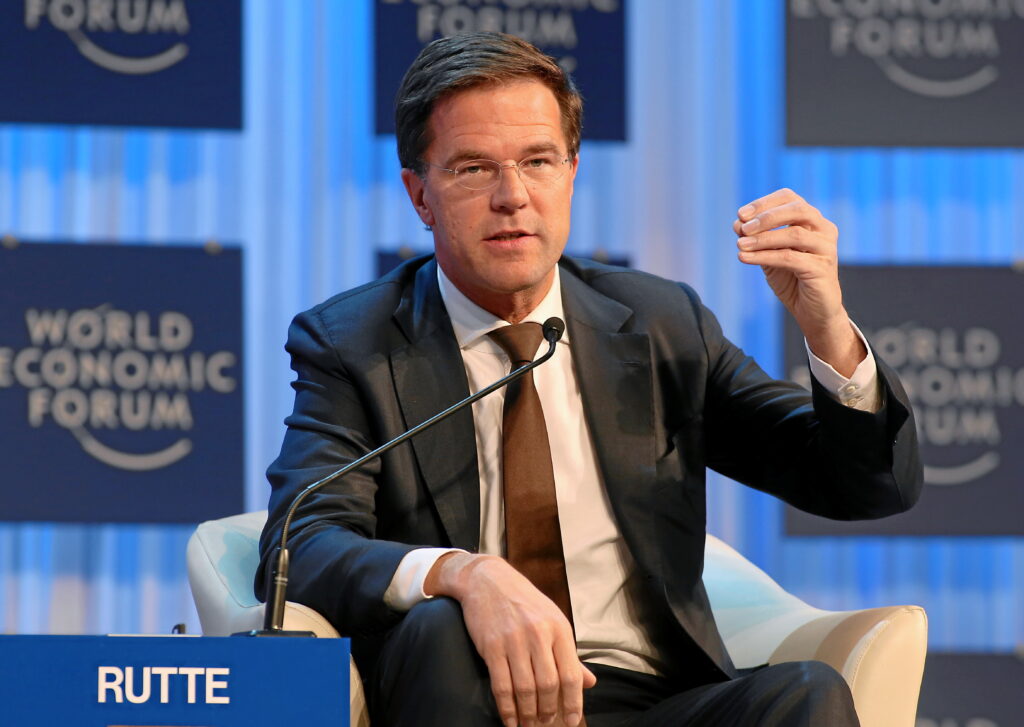
After talks with NATO Secretary General Mark Rutte in Davos, US President Donald Trump announced that he was cancelling plans to impose additional 10% trade tariffs on selected European countries planned to kick-off on 1 February. According to Mr Rutte, the preliminary agreement with President Trump on Greenland does not include the issue of Danish sovereignty over the Arctic island.
Denmark, Finland, France, Germany, the Netherlands, Norway, Sweden, and the United KIngdom. This is the list of countries that the US president had threatened last weekend with additional trade tariffs as a punishment for siding with Copenhagen in the ongoing dispute over Greenland (Greenland is an autonomous territory under the administration of the Kingdom of Denmark).
The additional 10 percent tariffs were supposed to come into effect as early as on 1 February. The levy on these countries would rise to 25 per cent from 1 June, Mr Trump said.
“Deal for Arctic Region formed”
A few days later things are upside down. In his combative speech at the World Economic Forum in Davos, Switzerland, Trump reiterated that the United States “simply needs” Greenland, but at the same time he ruled out the use of force. Even greater relief for Europe came overnight when Trump announced on his social network Truth Social that, following “very productive talks with NATO Secretary General Rutte,” he would not impose additional tariffs on eight European countries.
“We have formed the framework of a future deal with respect to Greenland and, in fact, the entire Arctic Region. This solution, if consummated, will be a great one for the United States of America, and all NATO Nations. Further information will be made available as discussions progress,” President Trump wrote.
That say, the threat of additional tariffs now seems to have been averted—but given President Trump’s unpredictability, the question is for how long.
Mark Rutte, the dealmaker
Details of the deal are so far scarce, but according to various US media outlets there was no agreement for American control or ownership of Greenland. NATO Secretary General Rutte himself gave some guidance during an interview with the American television channel Fox News.
President Trump is very much focused on what we need to do to make sure that that huge Arctic region, where the Chinese and Russians are more and more active, how we can protect that. – Mark Rutte, NATO Secretary General
“That issue (of Danish sovereignity over Greenland) did not come up anymore in my conversations with Mr President. He is very much focused on what we need to do to make sure that that huge Arctic region, where change is taking place at the moment, where the Chinese and Russians are more and more active, how we can protect that,” Mark Rutte said.
Mark Rutte (*1967), a former long-time prime minister of the Netherlands (2010–2024), has served as the 14th NATO Secretary General since October 2024. He is known as a skilled negotiator and “man of compromise”. Mr Rutte belongs among the few top European politicians who have a good and mutually respectful relationship with Donald Trump.
Part of Rutte’s tactics toward Trump is his ability to flatter the US President at the right moment, as has happened several times in the past—for example, after the American strikes on Iran in June 2025. Rutte also acts as a kind of ’liaison’ between Mr Trump and Ukrainian President Zelensky, whose mutual relations are unstable.
Council to discuss the matter later today
The European Union has not yet issued an official statement on the latest developments on Greenland. An informal Council meeting is scheduled for Thursday evening. Its official agenda says that “EU leaders will discuss recent developments in transatlantic relations and their implications for the EU and coordinate on the way forward”. However, the negotiations will likely be affected by the shift in the US position.
We can not negotiate on our sovereignty. – Mette Frederiksen, Danish Prime Minister
What is available is the statement of Danish Prime Minister Mette Frederiksen which reads: “We can negotiate on everything political—security, investments, economy. But we can not negotiate on our sovereignty.”