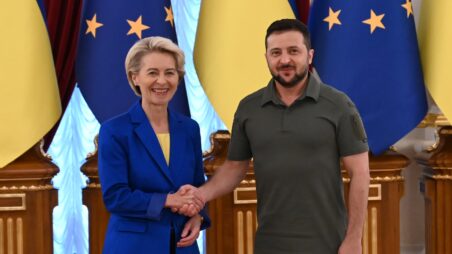
European Commission President Ursula von der Leyen survived a motion of censure in the European Parliament on Thursday 22 January. The motion, brought by the far‑right Patriots for Europe (PfE) and partly motivated by criticism of the EU–Mercosur trade agreement, was decisively rejected, with 390 MEPs voting against, 165 in favour, and 10 abstaining.
This was the fourth no-confidence motion against the Commission in this legislative cycle. While more than the minimum number of signatures required to table the motion were collected, the vote fell well short of the two‑thirds majority needed. Centrist groups including the European People’s Party (EPP), the Socialists & Democrats (S&D), and Renew Europe opposed the motion, citing the importance of institutional stability.
Opposition to Mercosur
The motion was largely tied to concerns over the EU–Mercosur free trade deal, which some MEPs and European farmers argue could impact domestic agriculture. It was supported by far-right politicians, notably France’s Jordan Bardella, a leading figure in the PfE and a likely candidate in the next French presidential elections, who used the vote to draw attention to opposition to the trade agreement.
Some analysts have noted that the repeated censure motions risk diluting their impact, and there have been calls to consider raising the procedural threshold needed to bring them forward.
Watered down
Ms Von der Leyen did not attend the preceding parliamentary debate in person, leaving the defence of the Commission’s record on Mercosur and other issues to Trade Commissioner Maroš Šefčovič—a move interpreted by commentators as a signal that the motion had little chance of succeeding and was not being taken all that seriously by centrist groups. The Commission president brushed off the threat this time with relative ease.