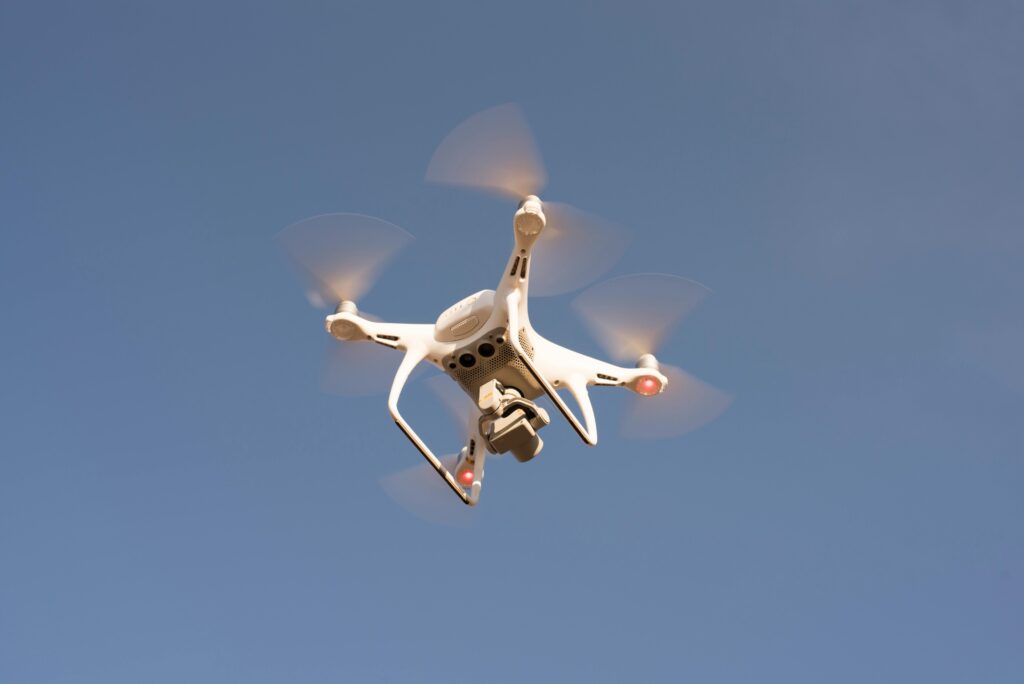
The European Parliament gave unmanned warfare a firm legislative nudge on January 22nd, voting 483-68 (with 76 abstentions) to adopt its first drone-specific resolution. The text asks Brussels to hurry up with common standards, shared stockpiles and stricter trade rules.
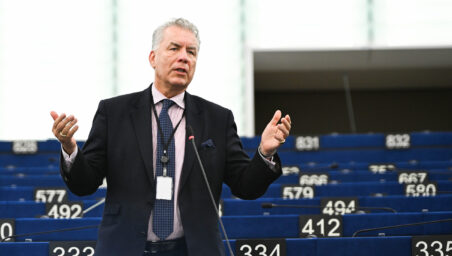
Rapporteur MEP Reinis Pozņaks (ECR/LAT) steered the file—2025/2088(INI)—through the Security and Defence Committee last month. Own-initiative reports do not bind the Commission, yet the margin of support at Strasbourg makes any potential inaction on the side of the Union‘s executive arm politically risky.
Ukrainian battlefields, Mr Pozņaks argued, have shown that “cheap loitering munitions, autonomous quadcopters and AI-enabled targeting” decide skirmishes. The hemicycle largely agreed. Only the Greens, The Left and a clutch of market-liberal MEPs mounted full opposition, citing civil-liberties or free-trade qualms.
Sharper teeth, shorter supply lines
Their misgivings did little to slow a vote that aligned Christian Democrats, Socialists and many Eurosceptics. With war on Europe’s eastern flank, deputies preferred kit to caution.
The resolution backs an EU-wide ‘drone readiness plan’. National forces should share certification data, pool orders and replenish war stocks in months rather than years. Members also call on the Commission to ring-fence a quarter of the €1.5bn European Defence Industry Programme, agreed last October, for unmanned systems and jamming payloads. That spending, they say, must slot into an “air-space surveillance drone shield” stretching from Finland to Portugal—necessary, Brussels insists, after recent incursions over Baltic energy assets.
Strategic autonomy sits at the heart of the text. By 2030 at least half of EU military procurement should flow from European firms. A ‘Buy European first’ rule would limit imports of off-the-shelf drones unless no local substitute exists. The clause delights Airbus Defence and its Franco-German peers; Nordic and Dutch liberals call it thin-veiled protectionism that could irk the US and Israel, the bloc’s current suppliers of armed models.
Clouds above the drone shield
The rapporteur won cross-party support for a Ukrainian twist. Kyiv’s factories would gain access to the bloc’s defence contracts, while EU money could bankroll joint repair hubs in Poland and Slovakia. Parliament hopes that gesture locks Ukraine more tightly into its industrial orbit and speeds battlefield maintenance.
Most dissent on the day centred on the price tag. Southern left-wingers dismissed EDIP as “corporate welfare for the arms lobby” that siphons cash from social programmes. Greens demanded an outright ban on fully autonomous lethal systems and tougher export controls, warning that European drones might be “used for extrajudicial strikes outside declared war zones”. Baltic hawks endorsed the package yet warned against duplicating NATO’s Integrated Air and Missile Defence command.
Start-ups voiced their own fears. Semiconductor and thermal-camera makers worry that an EU-only supply chain could freeze out global parts, slowing an innovation cycle that moves far faster than Brussels’s rule-making.
Council roadblock ahead?
By custom the Commission must respond with concrete proposals to an own-initiative text within twelve months. Officials already say the ideas will inform the European Defence Transformation Roadmap due this summer and a draft Unmanned Systems Regulation pencilled in for 2027. The tough items—import restrictions and autonomy curbs—face Council scepticism, particularly from free-trading Nordics and pro-American Poles.
Still, the message from Strasbourg is clear. After decades of relying on American and Israeli drones, the Union wants to build its own. The vote gives Brussels both a mandate and a deadline. Whether Europe’s tangle of budget rules, ethics lobbies and industrial rivalries allows it to meet that deadline is a battle yet to be fought.