Europe’s armoury once looked like a flea-market. Each capital bought what it fancied, mostly from America, and worried little about how the parts might fit together. On January 27th the European Parliament’s Committee on Security and Defence (SEDE) tried to impose order.
By 30 votes to three, with four abstentions, it adopted a report that names four flagship projects—the European Drone Defence Initiative, Eastern Flank Watch, an Air Defence Shield and a Defence Space Shield—as common undertakings of continental interest. “These flagship projects are presented as key tools to close capability gaps, strengthen the EDTIB, align national efforts with EU and NATO priorities, and advance towards a genuine European Defence Union,“ SEDE press release read.
The guidance urges tighter timetables, firmer budgets and clear governance. If member states and the Commission heed it, Europe’s forces could share sensors, ammunition and data rather than scramble alone when trouble hits.
A toolkit for modern war
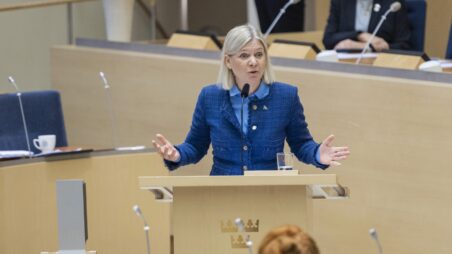
The stakes have risen. Russia’s war on Ukraine shows that drones cripple armour, missiles exhaust stockpiles and satellites guide almost every shot. Yet Europe still lacks pooled air defences and common drone counters. “New technologies have dramatically changed warfare,” said MEP Lucia Annunziata (S&D/ITA), the report’s author, as she presented the text. Her words summed up a growing fear in Brussels: that lavish spending means little if Europe continues to buy piecemeal.
The report does not bind governments, but Parliament’s seal matters. It signals that any future EU defence cash—whether under the European Defence Fund or new instruments—will flow first to collaborative projects. It also presses capitals to curb reliance on non-EU suppliers when local alternatives exist or can sprout. The goal is a managed shift towards strategic autonomy rather than an overnight divorce from American kit.
The drone initiative offers the clearest illustration. Europe’s skies have already seen rogue quadcopters buzzing airports and stadiums. A joint programme would bundle orders for jammers, acoustic sensors and directed-energy weapons that fry drone electronics. Shared procurement would cut prices and ensure that border guards in Finland use the same software as police in Spain. Industry stands to gain scale; soldiers gain the comfort that batteries, codes and spare parts match across units.
Eastern Flank Watch tackles an older worry with new means: Russian mischief along NATO’s frontier. The scheme would link radar and camera feeds from the Baltic to the Black Sea, letting Polish, Romanian and Lithuanian officers pull up the same real-time picture of troop movements. In practice that could involve optical satellites passing data to ground stations in Estonia, fused with drone patrols over the Suwalki Gap. Such stitching is already possible but remains ad-hoc. The flagship aims to make it routine.
From words to factories
An Air Defence Shield sounds grandiose but rests on a simple truth. No single European country can afford the full ladder of interceptors, from guns that swat drones at 1km to missiles that smash ballistic rockets at 100km. The project would marry German Iris-T batteries, French radar and Italian command software into one mesh. That would stop the waste of each state buying a little of everything. Shared stores of Patriot missiles—or their eventual European successor—would fill gaps exposed when Ukraine’s defenders plead for every spare round.
New strategies are shifting progressively towards unmanned tech power systems, such drones and AI-enabled weapons. — MEP Lucia Annunziata (S&D/ITA)
Satellites bind it all. Hence the Defence Space Shield, a plan to protect Europe’s orbiting assets and replace them quickly when foes shoot or jam them. The report backs a small constellation of radar satellites to monitor debris and detect antisatellite launches. Ground segments would include encrypted links to keep spy data flowing even under cyber attack. For forces that rely on GPS drops and broadband video, losing satellites would be crippling. The shield seeks to stop that.
The committee insists that talk alone will not plug capability holes. Member states must launch the four flagships under the Defence Readiness Roadmap by 2030, with milestones and costs laid bare. They should lean on the European Defence Agency to align national spending plans and avoid duplication. Banks and venture funds must see a pipeline of orders before they bankroll production lines. Failure to schedule contracts, the report warns, will keep Europe stuck with US hardware and patchy stocks.
Counting shells, not words
“New strategies are shifting progressively towards unmanned tech power systems, such drones and AI-enabled weapons,” Ms Annunziata told MEPs during the debate. Later she reminded doubters why strategic enablers matter. “Those evolutions are largely a byproduct of Strategic Enablers, the tools needed to facilitate common capabilities, joint military operations, a new architecture for command and control, communications and intelligence,” she said. She added that these enablers underpin “a new common defence and deterrence for a long-lasting peace for states and their citizens.” Few colleagues dissented.
The report’s authors acknowledge limits. Article 346 of the EU treaties lets governments bypass single-market rules for contracts deemed vital to security. The text asks ministers to narrow that escape hatch and publish each use. Yet sovereignty still looms. Some capitals fret that pooling orders could nudge Brussels into export control or operational command. Small countries fear that defence giants in France or Germany will hog work-shares. The document therefore calls for an annual scoreboard to shame laggards and ensure small firms win a quarter of EU funds.
Europe’s credibility rests on delivery. NATO data show that artillery shells remain on back order, and that waiting times for spare parts stretch to years. Shared warehouses under the Air Defence Shield could hold standard 155mm rounds sourced from multiple plants, ready for fast rail dispatch. Under the Drone Defence Initiative, a swarm of interceptors could be trucked to a threatened border in days rather than months. Eastern Flank Watch would feed sightings into the same logistics network, telling commanders where to send the kit.
A plenary shoo-in, but…
Money helps. Defence spending across the EU rose by 20% last year, yet fragmentation squanders much of the gain. The report argues that bundling purchases could save up to 30% on big-ticket items such as radar satellites and long-range missiles. Those savings would fund maintenance and training, two areas often trimmed when budgets tighten. Industry chiefs quietly welcome Parliament’s push, sensing orders that last a decade rather than a political cycle.
These flagship projects are presented as key tools to close capability gaps, strengthen the EDTIB, align national efforts with EU and NATO priorities, and advance towards a genuine European Defence Union. — SEDE press release
The file now heads to a plenary vote, most likely in March. Approval seems probable: main political groups back the flagships and see security as a vote-winner. The Commission then must sketch laws and budgets. Commissioners whisper about a “European Defence Investment Programme” that could tap joint borrowing, echoing pandemic and energy funds. Whether fiscally frugal governments agree remains open.
Still, the committee’s vote marks a turning point. Europe has long debated autonomy; now it has four concrete projects to build it. If drones, radars and satellites soon carry a common EU stamp, 27 January may be remembered as the day Europe started buying its kit the way it buys its cars—together and at scale.