Shein’s European head showed up this week to face multiple accusations of ignoring EU law. While she offered certain voluntary solutions, these were mostly discounted by consumer groups. Meanwhile MEPs in the committee voted to update product reporting rules to make things easier for companies like the e-commerce giant.
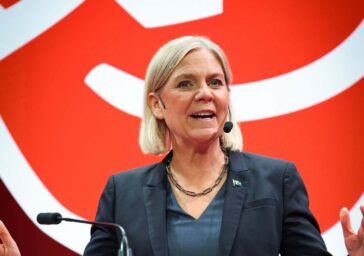
After multiple requests and wide-ranging criticism of the platform, Shein’s general counsel for Europe Yinan Zhu, finally appeared before European lawmakers on Tuesday.
The representative of the online retailer spoke to the Parliament’s Internal Market Committee (IMCO) amid concern about the spread of illegal and unsafe products online. This is the third time Shein has been invited amid a scandal over the sale of illegal products on its site, including child-like sex dolls.
Ms Zhu told MEPs that the company is taking steps to prevent illegal products entering the EU, but that it was far from the only e-commerce company with this problem. Zhu said bad actors are always trying to find ways to circumvent controls and suggested setting up a “serial offenders” list. She said that Shein is also rolling out an age-assurance tool to keep underage users away from inappropriate products.
Soft solutions not enough: consumers’ voice
But Cláudio Teixeira, Deputy Head of Digital Policy at BEUC, the European Consumer Organisation, said: “These so-called ‘soft solutions’ like age-assurance tools or ‘serial offenders’ lists fall short of what European consumers need. These measures rely heavily on self-policing and do not address the systemic risks the Digital Services Act (DSA) is designed to tackle. Effective consumer protection requires robust DSA enforcement and real tech accountability, not voluntary fixes that leave consumers exposed to harms.”
According to the organisation, it is important to note that the Shein hearing is about more than just compliance with the DSA and age assurance. Shein must also comply with EU product safety laws as well as anti-competitive practice.
Hazard for EU’s economy, consumers
Last month, a French court rejected the government’s request to suspend Shein’s platform for at least three months saying the government had not been able to show a “systemic breach” of the law. However the authorities are likely to continue to pursue the company amid growing concerns elsewhere.
The avalanche of cheap imports threatens to devastate the European economy and society and forces European businesses to close. – European Economic and Social Committee
In December, the European Economic and Social Committee (EESC) pointed to the urgent need to protect EU markets from ’an avalanche of cheap imports’ shipped by Shein and other third-country e-commerce platforms including Temu and Alibaba. It estimates as many as 12 million parcels costing under €150 are being shipped by such e-retailers to European consumers every day ’threatening to devastate the European economy and society and forcing European businesses to close.’ All while failing to follow EU on product-safety rules, labour laws, taxation rules or environmental obligations.
From 1 July 2026, a new law means parcels entering the EU valued at less than €150 will be subject to a fixed €3 customs duty.
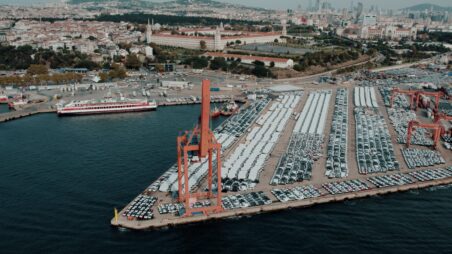
Last month the company opened a vast 750,000-square-meter logistics hub in Warsaw, Poland with the creation of thousands of local jobs. And according to European Commission officials an EU-wide ban is unlikely and the imposition of provisional measures is still far from certain as the Commission continues dialogue with the company.
Simplified documentation: a win for all?
On Tuesday, MEPs from the Internal Market and Consumer Protection Committee (IMCO) adopted two proposals aimed at simplifying product documentation for businesses while safeguarding consumer rights.
The simplification package updates a wide range of existing product legislation and promotes the use of digital options for product information. It also streamlines communication between economic operators and authorities. For example, the proposals introduce ’common specifications’ that the Commission can adopt under exceptional circumstances when no harmonised standards exist for a particular product, device, service, process or system.
In approving the proposals, IMCO MEPs specified that product instructions may be provided in electronic format, except for safety information, which should be available on paper or marked on the product.
Rapporteur Reinier van Lanschot (Greens-EFA/NLD) said: “Parliament’s mandate is a win for companies as more digitalisation means lower costs and easier communication with authorities. It is also a win for consumers who will receive less paper when buying a product, while vulnerable consumers will still benefit from high protection. Most importantly, it is a win for Europe’s strategic autonomy. We are on the brink of a new world order with high geopolitical tension and the Parliament had the courage today to lead by example.”