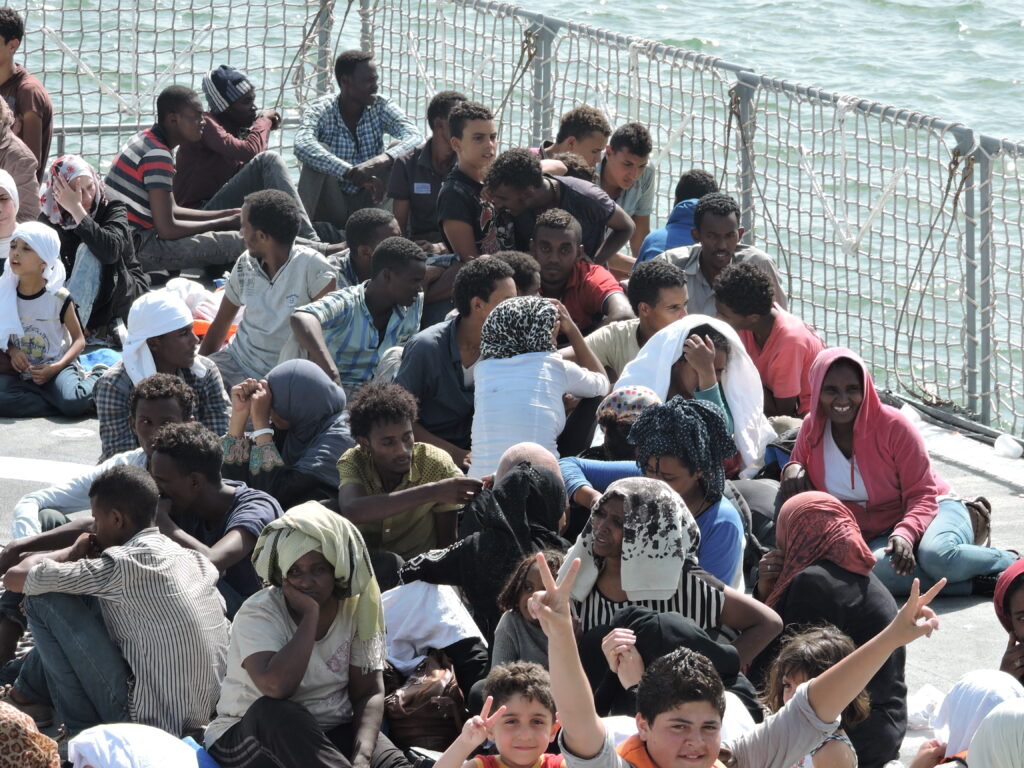
Migration strategy for the period 2026–2030 is based on preventing illegal migration, protecting people fleeing war and persecution, and attracting skilled workers to the EU. To achieve these goals, European Commission plans to strengthen migration diplomacy and improve controls and security on EU’s external borders.
On Thursday 29 January Commission has published its first European Strategy for Migration and Asylum. The strategy sets out the EU’s political objectives on asylum and migration and will serve as a compass with concrete priorities for the next five years (till 2030).
The document lists three main objectives. First, it aims at preventing illegal migration including breaking the business of criminal smuggling networks. The second goal is to protect people fleeing war and persecution while preventing abuse of the system. And last but not least, Commission hopes to attract talent to the EU to boost the competitiveness of European economies.
Five pillars
In order to achieve the above mentioned objectives, the document sets five major priorities (pillars). Commission wants to step up migration diplomacy by increasing cooperation with international partners. That includes promoting comprehensive and mutually beneficial partnerships that ensure an effective and rights-based cooperation on migration.
Second, strong EU borders should ensure effective control over who enters the EU. This is seen as the key for the EU’s migration policy and for preserving the Schengen Area.
Third, the asylum and migration system must be firm, fair and adaptable. The Pact on Migration and Asylum is the base of the EU’s asylum and migration policy, ensuring stronger external border protection, strict rules against abuse and a balance between responsibility and solidarity.
Fast, effective and dignified return is indispensable to the well-functioning and the credibility of EU’s migration and asylum system. – European Strategy for Migration and Asylum
Fourth, Commission hopes to create a more effective return and readmission system. “Fast, effective and dignified return is indispensable to the well-functioning and the credibility of EU’s migration and asylum system”, the document reads.
Fifth, the document calls for attracting skilled and talented people from non-EU countries to boost competitiveness. This move should help to fight skills gaps and labour shortages that—given the demographic dynamics—are expected in many key sectors.
Skilled workers welcomed
Magnus Brunner, Commissioner for Internal Affairs and Migration, and Henna Virkkunen, Commissioner for Tech Sovereignty, Security and Democracy, in a joint release stressed that the strategy “sets out a clear five-year political blueprint on migration”. According to Commissioner Virkkunen, the way how Commission will manage migration, “will shape public confidence.”
We face serious skills and labour shortages. Addressing them is key for our economic growth and our competitiveness. – Henna Virkkunen, Commissioner for Tech Sovereignty, Security and Democracy
“Preventing illegal migration is about the credibility of our system (…) Citizens expect Europe to fight abuse, manage migration and deliver concrete solutions,” Commissioner Virkkunen said. She also noted that “Europe needs a paradigm shift (…) We face serious skills and labour shortages. Addressing them is key for our economic growth and competitiveness.”