Kaja Kallas, EU diplomacy chief tried hard to downplay the perceived tension between the positions of the European Commission and NATO’s Secretary General Mark Rutte about how much Europe needs the US to defend itself. On Monday, media pressed the issue relentlessly.
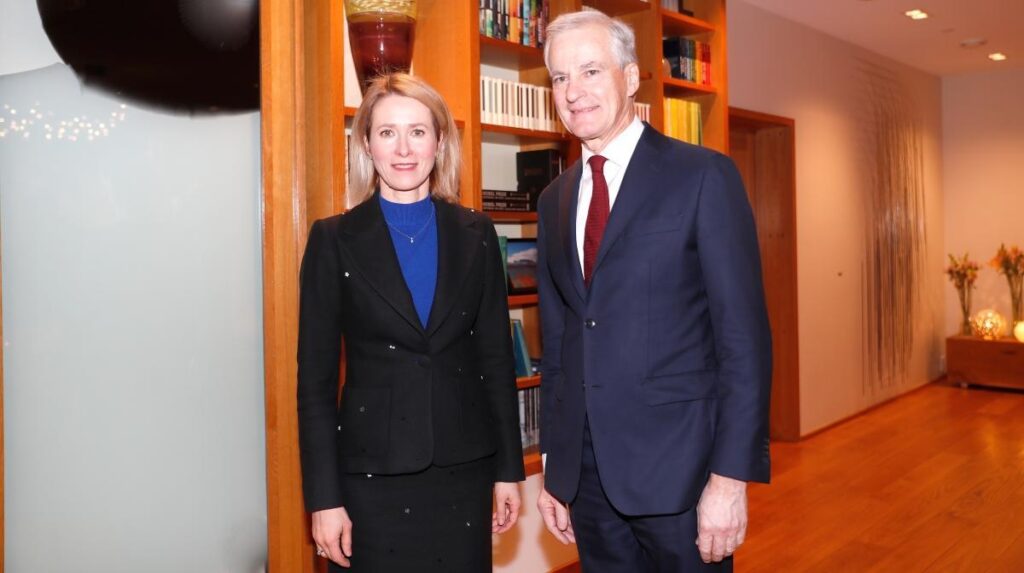
Norwegian chill set the stage aptly. On 2 February Jonas Gahr Støre, Norway’s prime minister welcomed Kaja Kallas, High Representative of the Union for Foreign Affairs and Security Policy and vice-president of the European Commission, to Oslo. Ms Kallas paused here on her way to the Arctic Frontiers conference in Tromsø. Talk of the melting sea ice, however, soon gave way to the subject of Europe’s defence, which is anything but melting.
Journalists’ curiosity centred on a perceived split between NATO’s Mark Rutte and Ms Kallas over how far the European Union should strike out on its own. The issue has nagged capitals since Mr Rutte warned that the continent still relies on Washington.
Fault-line, or fiction?
Mr Støre spoke warmly of allied unity. Yet the microphone quickly swung to the visitor. “There seems to be a deepening rift between NATO and the EU when it comes to European security, a rift between yourself and Sibelius and Mark Rutte. How do you see this? And in addition, How should Norway position itself in this sort of rift? Should it be closer to EU or just keep on holding US as a staunch ally?” asked one reporter.
Ms Kallas answered, “Well, I don’t agree that there’s a rift, actually. We are trying to do in European Union to help our member states to increase their defense spending and also do it together with all the other member states and also countries like Norway, so that we are ready. And also 23 members of the European Union are also part of NATO. So really, we are collaborating with NATO. It is in addition to what NATO is doing, and we really work hand in hand.”
A follow-up came at once. “But do you agree with Mark Rutte that Europe cannot do without the US? He was very clear on that.” Ms Kallas replied, “Well, right now the situation is such, but we are working to be more independent, also when it comes to security, because it’s clear that our vulnerabilities are our weaknesses, and that’s why we are working to invest more in defense and the capabilities. And (we also need to) consider it European, not only national.”
Bridging the rhetoric
The High Representative’s words sought to reassure both Atlanticists and advocates of European autonomy. Brussels, she implied, intends to spend more, pool more and still salute the Stars and Stripes. Her host offered no contradiction, mindful that Norway relies on the alliance’s nuclear umbrella yet sells most of its gas to EU buyers.
Tromsø will echo with talk of melting ice and rising tension. Before boarding her onward flight, Ms Kallas insisted that “we really need to stick together”. Whether Mr Rutte takes that as harmony or heresy will shape the next NATO summit—and, perhaps, Europe’s hard-power future.
That said, Ms Kallas has her work cut out in Tromsø anyway. Work in the Arctic Council, the conference organiser, has been constrained since Russia’s 2022 invasion of Ukraine. Norway’s 2023-25 chairship operated with Russian participation largely suspended.
I don’t agree that there’s a rift, actually. — Kaja Kallas, the EU‘s top diplomat
However, there has been no shortage of events. Greenland’s vast deposits of rare earths, graphite and other strategic minerals are drawing intensified interest from both Western and Chinese investors; last year, Greenland’s government publicly urged both US and European firms to accelerate investment to offset rising Chinese stakes. (That was before the US intensified its efforts to acquire the island, making Beijing look like a gentlemen’s club.)
Sanctioned shadow-fleet tankers are adopting flexible Arctic routes. A high-profile Russian tanker deviation in January underscored sanctions evasion and regional safety concerns. The LNG carrier Valera diverted to Norway’s Arctic waters instead of China, highlighting enforcement challenges.
‘Good luck in Tromsø‘
Record-low sea-ice, accelerating permafrost thaw and continued Greenland mass loss confirm the Arctic’s rapid transformation and its feedbacks on global climate. Cooperative norms of security architecture are fraying; Arctic governance must navigate sanctions-driven fragmentation, expanded military footprints and new observer ambitions in a largely post-exceptionalist era.
Energy and shipping opportunities persist but face higher capital, insurance and reputational costs under sanctions. Critical-mineral demand may shift investment northward, while logistical infrastructure races to keep pace with thaw-opened corridors. Without renewed multilateral engagement, the region risks becoming an arena where climate, commerce and great-power rivalry collide.
As Mr Støre put it: “Kaja, good luck in Tromsø.“ She will need it, both at the conference and later.