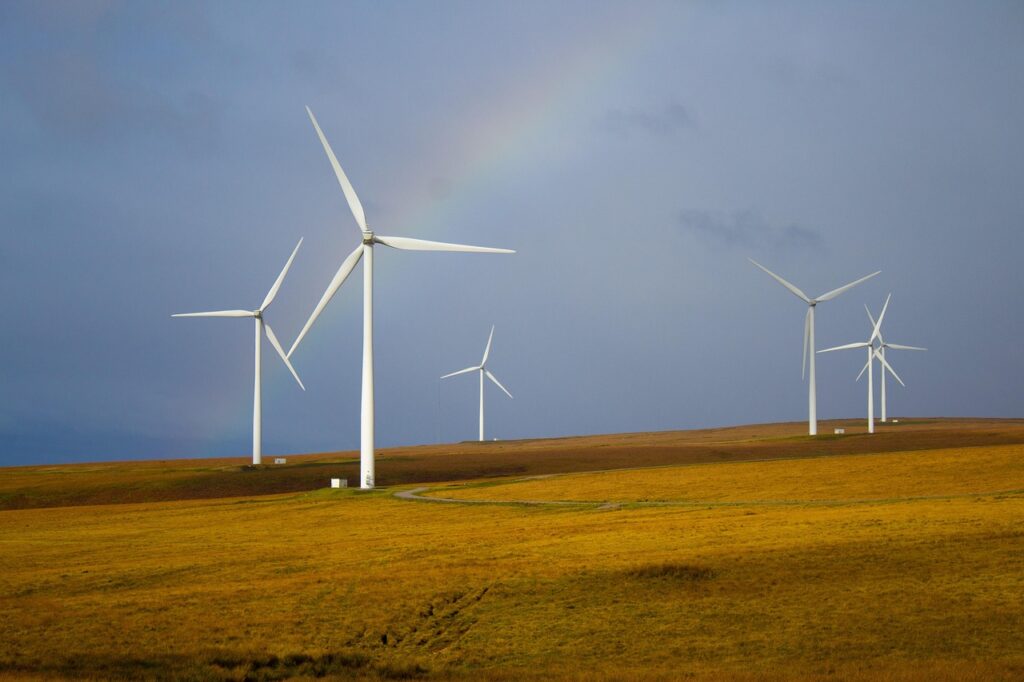
The European Commission has opened an in-depth investigation into Goldwind Science & Technology, China’s second-largest maker of wind turbines. The Union’s executive arm does so under the EU’s Foreign Subsidies Regulation (FSR).
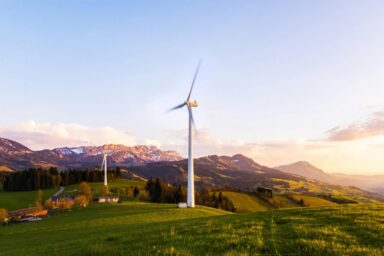
The Commission did not wait for a formal complaint and, under FSR rules, it did not have to. On 3 February it launched a probe into widely-held suspicion that largesse from Beijing has helped Goldwind underbid European rivals and win a toehold in the bloc’s green-energy market. If the suspicions stick, the probe could reshape the rules of engagement for every foreign bidder in Europe’s clean-tech boom.
“The possible foreign subsidies include grants, preferential tax measures, and preferential financing in the form of loans,” the Commission declared. Such support, officials fear, lets Goldwind mask its true costs when chasing contracts. The inquiry is Europe’s first full-blown FSR case in the wind sector and, by design, a showpiece.
Guarding the till
Goldwind’s accountants now face a tight deadline. They must hand over three years of financing data, broken down by each Chinese province and policy bank. Failure to persuade the Commission could invite fines of up to 10 per cent of global turnover or even exclusion from future EU tenders.
Goldwind’s rise has been brisk. Its share of new EU turbine orders, almost nil in 2022, reached about six per cent last year, mostly in cost-sensitive onshore projects. European manufacturers such as Vestas, Siemens Energy and Nordex complain that Chinese bids arrive 15-30 per cent cheaper, a gap they say cannot be explained by engineering prowess alone.
Behind that price edge, Brussels claims, lies a cocktail of state help. Direct grants fatten margins; tax breaks slice costs; ultra-cheap loans from state banks slash financing bills. An OECD study of renewable-energy support finds that Chinese turbine makers enjoy the world’s largest stock of below-market borrowings. If confirmed, such aid would breach the level-playing-field principle at the heart of EU competition policy.
“The Commission has preliminary concerns that these foreign subsidies may improve Goldwind’s competitive position in the internal market and may negatively affect competition for the supply of wind turbines and related services in the EU market,” the press release warned. The language is dry, the meaning blunt: subsidised exports could price European kitmakers out of their own backyard.
A new economic weapon
The FSR, in force since July 2023, arms Brussels with fresh tools. Any bidder in an EU public-procurement contract worth €250m or more must declare all foreign financial contributions received during the previous three years. Officials may also act ex officio, as they did last April when they sent detailed questionnaires to several Chinese suppliers, including Goldwind.
Having sifted the replies, the Commission pulled the trigger on an in-depth probe. The procedure is deliberate: a preliminary review, a formal opening, then up to 18 months of forensic accounting. At the end the company can offer remedies—such as repaying aid or pledging price adjustments—or face redressive measures imposed by Brussels.
The possible foreign subsidies include grants, preferential tax measures, and preferential financing in the form of loans. — The European Commission
Goldwind is the first turbine maker to run this gauntlet, but probably not the last. The Commission is already testing the FSR in solar panels, rail rolling stock and security scanners. Each case signals how keen Europe is to avoid repeating its solar-panel debacle, when cheap Chinese imports wiped out most domestic producers within a decade.
Strategic stakes
Wind-turbine manufacturing now sits on the EU’s list of Net-Zero strategic sectors. The bloc needs a rapid build-out to meet its 2030 renewables targets, yet officials blanch at the thought of swapping one dependency (Russian gas) for another (Chinese turbines). An industrial policy meant to spur green growth also wants to keep that growth at home.
European governments, hemmed in by strict state-aid rules, grumble that foreign competitors face no such fetters. The FSR aims to close that gap by importing domestic discipline to foreign subsidies. In practice, it turns the Commission into a global referee of state capitalism, at least for firms that covet European contracts.
Goldwind had installed 881.49 MW of wind-turbine capacity across Europe by 30 June 2025, the latest figure the company discloses regionally. The company’s footprint in the EU remains small relative to its global order book of over 50 GW. The company’s “bidding amount” in the EU is presently unknown to the public; the only known active bid is the one that prompted the Commission’s probe. Until either the Commission or Goldwind publishes details, investors and market watchers must rely on global backlog data and the 881 MW installed base to gauge Goldwind’s European exposure.
Hazy financials
Goldwind’s global turnover in fiscal 2024 (the latest available) was just under €7bn. There is currently no authoritative euro figure for Goldwind’s EU-specific signed contracts or bids. The only quantifiable evidence is the 881 MW of already-installed turbines. Given average on-shore turbine selling prices (roughly €1.0-1.3m per MW in 2025–26), that historic fleet would equate to about €0.9-1.1bn in delivered equipment, but this is an illustrative conversion, not an official contract value.
The stakes for Brussels are high. A heavy-handed ruling could invite retaliation and raise costs for Europe’s energy transition. A timid one would embolden subsidised challengers. Goldwind’s file, therefore, is more than a spat over turbine invoices; it is a test of the EU’s willingness to police its market without retreating into protectionism. Europe’s clean-tech future, and the rules that shape it, now hinge on ledgers being opened and numbers adding up.