The European Commission and the European Investment Bank (EIB) are expected to formally sign the EastInvest initiative on Thursday, 26 February, underscoring the EU’s commitment to strengthening not only its support for Ukraine but also the union’s own resilience, stability and cohesion.
Described by the Commission as both a “political responsibility” and a clear “technical necessity,” the initiative reinforces support for the EU’s eastern border regions —among the areas most affected by the impact of Russia’s war in Ukraine, facing economic strain, depopulation and migratory pressure— and marks the launch of the bloc’s broader strategy for these frontiers.
Nine border regions and one strategy
For these territories, “there is a before and an after 24 February 2022,” underlined EU Executive Vice-President for Cohesion Raffaele Fitto.
Developed in cooperation between the European Commission and the European Investment Bank (EIB), the strategy focuses on eastern border regions in nine Member States: Finland, Estonia, Latvia, Lithuania and Poland (bordering Russia and Belarus); Romania, Hungary and Slovakia (bordering Ukraine); and Bulgaria, on the Black Sea. “These regions have been significantly affected by heightened security risks, disrupted trade flows, reduced investment attractiveness, and mounting socio-economic and demographic pressures,” an EIB source told EU Perspectives.
At the core of the strategy — which does not rely on new financial resources — is the launch of the EastInvest platform, designed to facilitate access to credit from the EIB and other development institutions. According to Commission estimates, the platform could mobilise up to €28bn in public and private investment between 2026 and 2027, acting as a lever to unlock additional capital.
How to facilitate funding
To boost their resilience, infrastructure and economic opportunities, the Commission is proposing the set-up of an East Invest Facility to facilitate access to funding, lending and advisory support for promoters from the border regions.
The role of the EIB, alongside, is to promote existing lending and advisory support, with a focus on cohesion support, to the concerned regions and member states. They, as the EIB source explained, are also encouraged to explore the potential benefits of setting up new special economic zones in the eastern border regions, and to consider extending the list of facilities under the existing ones subject to the state aid rules. “If member states decide to do so, EIB can support with financing such new special economic zones – like we already do in Southern Italy ZES Unica. EIB and Intesa Sanpaolo to provide €700m to support access to finance and investment for companies”, added the EIB source.
Security and demographics
From security to regional growth, including digital and energy connectivity and the demographic challenge linked to depopulation, the strategy is structured around five priority areas that have guided the Commission’s work in close cooperation with the regions concerned.
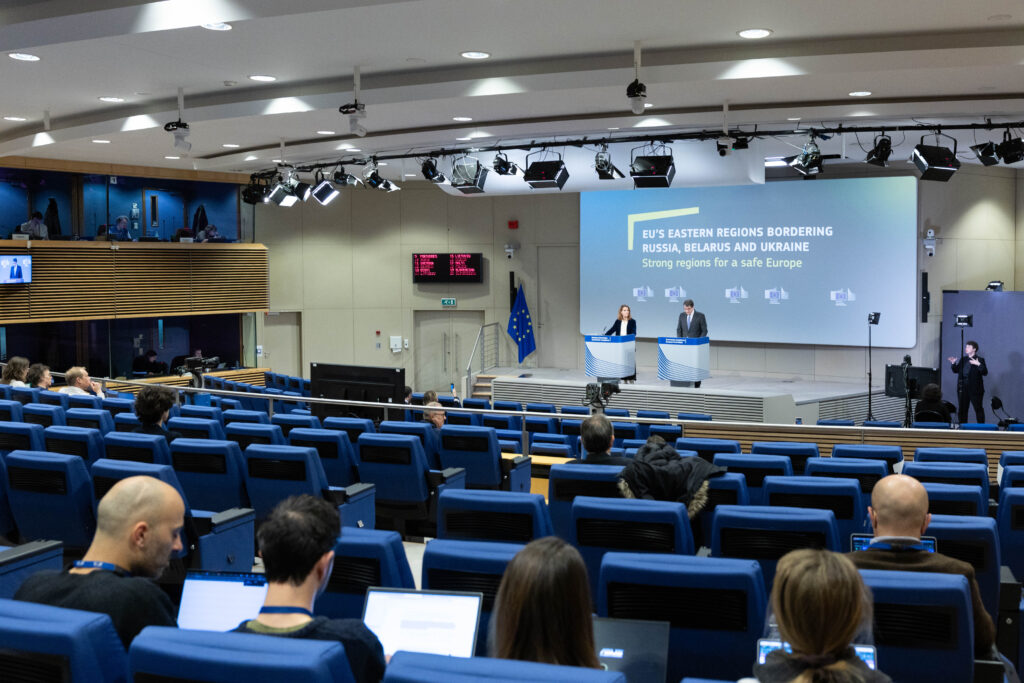
Described by Raffaele Fitto as a first “important political step,” the initiative will lead the European Commission to host a high-level conference tomorrow, 26 February, bringing together prime ministers and ministers from the countries involved. The meeting, opened by EC President Ursula von der Leyen, will provide an initial platform for discussion and will also see the signing of a declaration of intent to give operational momentum to the EastInvest platform.
On security, Brussels says it will support national authorities in developing the European anti-drone shield and the Eastern Flank Watch Observatory — two instruments announced in recent months to respond to the escalation of hybrid threats linked to Russia, including drone incursions.