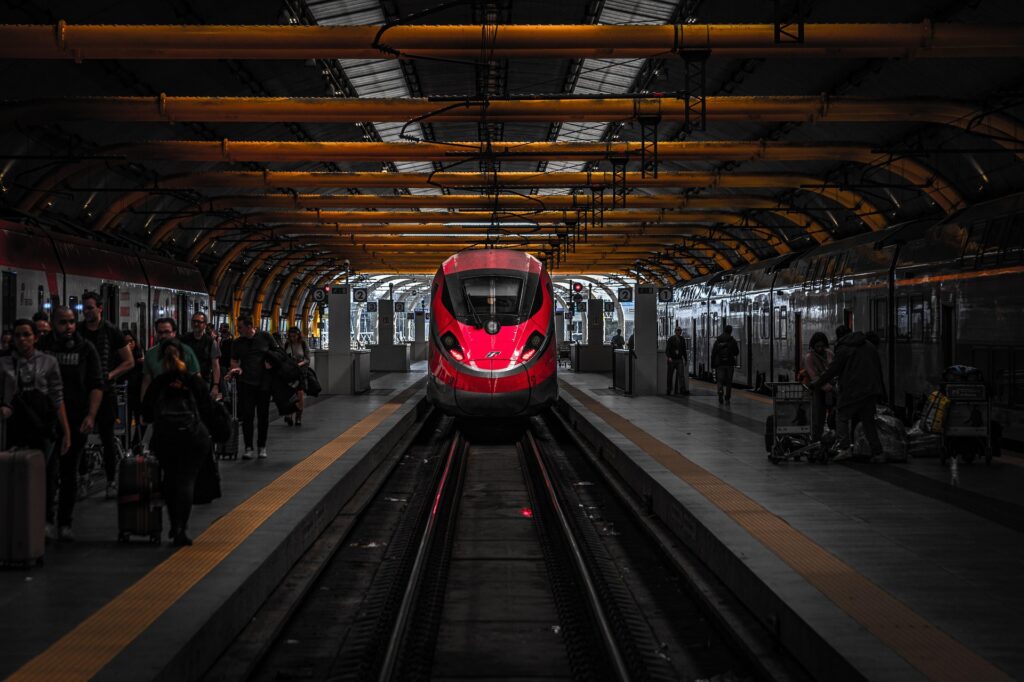
A proposal made by the European Commission on Tuesday to invest in the development of high-speed rail networks in order to reduce journey times between European capital cities to between two and four hours has been met with enthusiasm from members of the EU Parliament’s transport committee. However, doubts remain as to whether the Commission has the funds to back its ambitious plan, or indeed to even address concerns that a two-speed Europe may emerge in relation to high-speed rail transport.
The Commission’s director for land transport, Christian Schmidt, advocated for the benefits of a greater investment in cross-border rail networks, but there is a question mark over whether a European plan can convince member states to take part. An existing high-speed rail network across Europe is in place, Mr Schmidt said, but it features “a star radiating from Paris” or “a star radiating from Madrid” – there remains a need for cross-border links to connect European capitals. More importantly, he added, a truly European rail network is needed to give taxpayers value for money given the high cost of building new high-speed rail lines.
The money question
The cost of a plan to increase the ambition for Europe’s current rail network has been estimated at around €540.6bn. This is in comparison to a figure of €340.5bn for the delivery of the existing trans-European transport network (TEN-T) rail network. These figures dwarf the Commission’s proposed Connecting Europe Facility budget of €51.6bn over a seven-year period.
Such a huge financial cost came with an appropriate level of scepticism from MEPs regarding whether the Commission can deliver its promises. Matteo Ricci (S&D/ITA) warned of “fooling ourselves” over available resources. Valérie Devaux (Renew/FRA) called the plans “the cherry on top of the cake” for the rail sector but asked bluntly:
“Where is the money?”- Valérie Devaux (Renew/FRA)
Ticketing and the passenger experience
A more practical concern was raised by Ana Vasconcelos (Renew/PRT) who wanted to know if Europe is really on track to meet its rail ambitions. Currently, she said, rail travel across Europe is a fragmented experience. The Commission has talked of a plan for seamless ticketing but so far there is nothing concrete.
Director Schmidt said the committee is about to draw up a ticketing proposal ahead of the summer. Even there is no exact date for the ticketing proposal the aim will be to produce a scheme whereby travellers can book single or combined tickets on a single platform that will protect their passenger rights.
Cross-border rail network challenges
The EU Commission has made the case for a greater investment in cross-border rail networks, pointing to the benefits that such a system would give the European public and taxpayers.
The Commission representative did not deny that there are challenges ahead in trying to get every member state to come on board with such plans. Mr Schmidt said that it would need a holistic approach to bring about such improvements. It also remains to be seen whether the various concerns regarding funding, the territorial balance of benefits, and what the passenger experience will be like could eventually culminate in a lack of support for Commission plans from MEPs.
He argued that this is not a plan where you can pick and choose which parts of the system members of the Parliament want to see upgraded or connected to other member states’ rail networks. Unless all member states take part in cross-border rail initiatives, he said, there is simply no business case to mobilise the many billions needed to bring about a European high-speed rail network by 2040.