The European Parliament’s Committee on the Environment, Climate and Food Safety does not often linger over munitions. Yet on 25 February its members devoted two hours to the European Competitiveness Fund. It contains a contentious programme for defence research and innovation, sparking a lively debate before the May vote.
Introducing her draft opinion, rapporteur MEP Stine Bosse (Renew/DNK) set the stakes plainly. “We live in an increasingly uncertain geopolitical landscape, one that continues to surprise us,” she began. She reminded colleagues that “strategic competition with the US and China is intensifying, global supply chains are increasingly weaponised, and Europe remains exposed through critical dependencies from raw materials to clean technologies and clean supply chains.”
The new fund, Ms Bosse argued, must fuse climate prudence with hard-nosed security. She tried to square that circle by grafting green guidelines onto every bullet and bunker the fund might finance. “Finally, we introduced incentives for climate resilient military infrastructure and for the reuse of steel where relevant in the sector,” she said, hoping the prospect of recycled armour plates would soothe hurt green feelings.
A shot of pragmatism
“Environmental conditions must not block our key infrastructure for defence security,” replied MEP Antonín Staněk (PfE/CZE). For him, greening the barracks risked greying the economy. “Competitiveness has to come first,” he insisted, lest factories decamp to cheaper shores.
The hawks soon out-screeched the doves. Former MEP Alexander Vondra (ECR/CZE) a former defence minister, delivered a withering broadside. “Finally, regarding defence, we need a rapid deployment of technologies and accelerating permitting,” he declared. “The greening of defence investment and calls for low-carbon steel are not the way forward.” Brussels, he implied, must stop weighing warheads and start buying them.
Greens countered that climate security is national security. “I also think when it comes to the part of defence, yes, of course, we have to look at resilience, we have to look at the climate adaptation, which is crucial if you look at European security and resilience,” MEP Rasmus Nordqvist (Greens-EFA/DNK) offered some astute insight.
No to self-flagellation
Beyond the missiles, the committee fought over life’s wetter necessities. “Water is not only an environmental asset, it’s a strategic resource,” observed shadow rapporteur MEP Ingeborg Ter Laak (EPP/NLD). “Water is life.” She urged bigger allotments for “water resilience, pollution prevention and clean industrial processes”.
I also think when it comes to the part of defence, yes, of course, we have to look at resilience, we have to look at the climate adaptation, which is crucial if you look at European security and resilience. — MEP Rasmus Nordqvist (Greens-EFA/DNK)
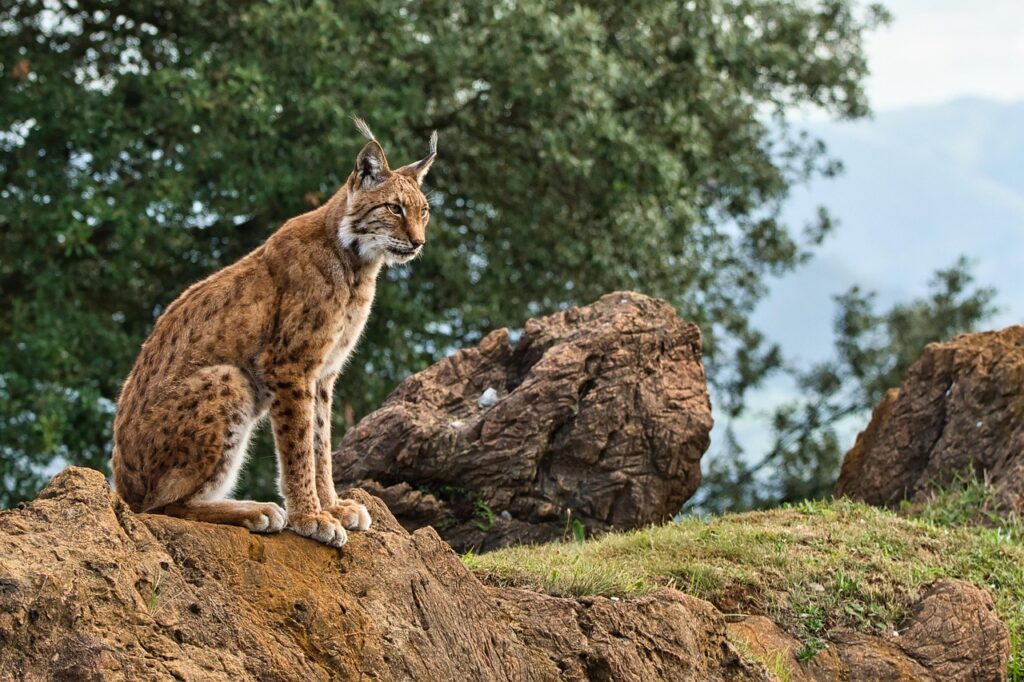
Biodiversity also elbowed its way into the armoury. “We talk a lot about competitiveness. I think we should be careful not to punish ourselves too much,” warned MEP Nicolás González Casares (S&D/ESP). He recalled, ever so helpfully, that the LIFE programme once rescued the Iberian lynx. Europe’s next miracle, he hinted, might be saving its own economy without skinning the natural world.
The Left chimed in. “Competitiveness is not an aim in and of itself,” insisted MEP Martin Günther (The Left/DEU). “It’s about the well-being of the people and the planet,” he observed shrewdly.
Numbers, notices and niceties
From the Commission side, a Deputy Head of Unit at DG GROW recited the dossier. “The proposed ECF totals an unprecedented €425bn budget, to boost European competitiveness and innovation,” she said. Forty-three per cent of that sum, she reminded sceptics, is ring-fenced for climate and environment. She added that “the Do Not Significant Harm principle is solidly anchored in the Commission proposal for the performance regulation.”
If you put the threat of terrorism in one sentence together with climate change, something is seriously wrong with assessment of the situation. — MEP Alexandr Vondra (ECR/CZE)
That reassurance satisfied few. Conservatives warned of Brussels’s “ideologically driven NGOs”; Greens feared life under a camouflage net. Mr Vondra, never shy, sharpened the edge: “If you put the threat of terrorism in one sentence together with climate change, something is seriously wrong with assessment of the situation.”
Ms Bosse tried to end on an olive branch wrapped in steel. “Thank you very much for your feedback at this stage and I look very much forward to continuing the good cooperation,” she said. Her optimism is infectious, if conditional.
Timelines and trip-wires
Agreement on timing proved elusive. The Commission hopes to finalise the fund before budget talks resume in June. Mr Staněk doubted any quick fix: “There is not a single way forward,” he warned.
For now the committee’s mood is clear: Europe must rearm; politically, economically and, yes, environmentally. Yet the paradox lingers. A fund conceived to revive competitiveness risks drowning in compliance forms. Meanwhile the Iberian lynx, blissfully unaware, roams its cordoned reserve, a furry testament to Brussels’s older priorities.
The deadline for amendments is 26t February at 11am. The ENVI is to vote on the opinion on 5 May, 2026. The next draft opinion will reveal whether sabres and saplings can truly share the same greenhouse.