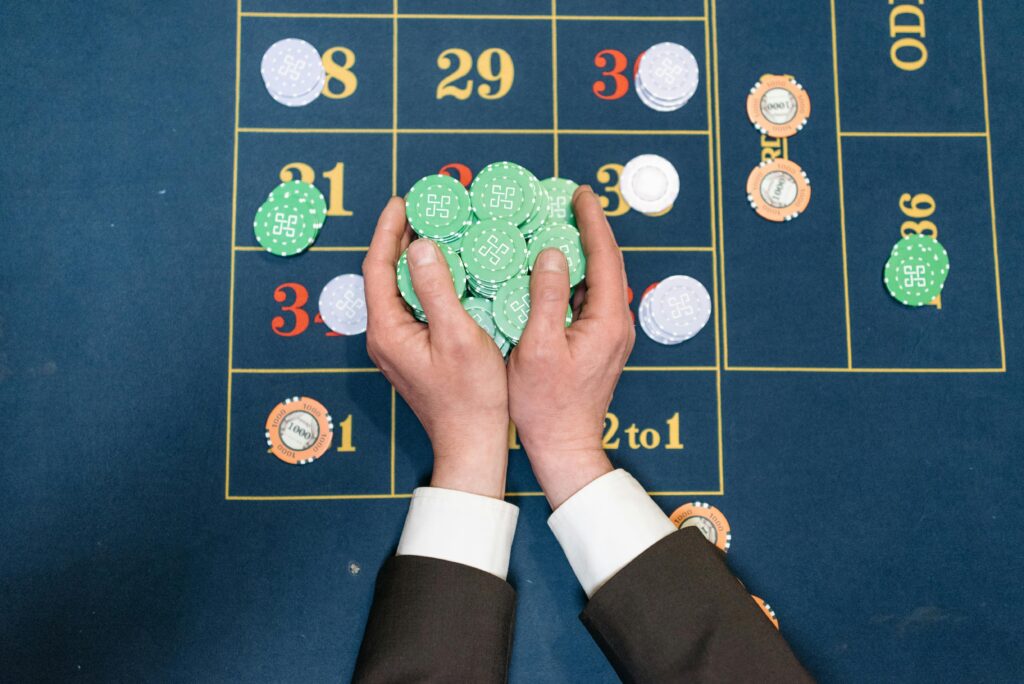
Whether EU money flows to your region’s hospitals, roads, or research labs depends on a budget deal struck every seven years, and the next one is already shaping up as a battleground. With member states reluctant to pay more and Brussels facing record spending demands, MEPs in Strasbourg debated an unlikely idea: making online gambling operators help fill the EU’s coffers. The proposal could raise up to €28bn between 2028 and 2034, but it has already divided Parliament sharply.
The gambling levy is one of several new ‘own resources’ under discussion as part of negotiations over the EU’s Multiannual Financial Framework (MFF) for 2028–2034. Among the options Parliament has asked the Commission to assess is a levy on online gambling and betting operators, a fast-growing, highly digital and increasingly cross-border industry.
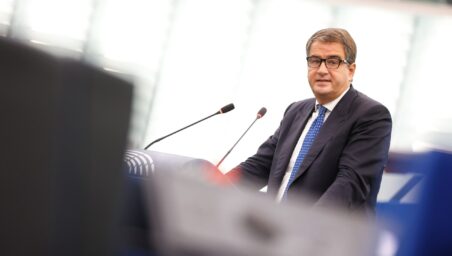
Mr Negrescu framed it as both a budgetary and social policy tool. The sector, he argued, benefits heavily from the EU single market while contributing little at European level.
Fair contribution?
“The idea is simple,” he said. “A fast-growing, highly digitalised and increasingly cross-border industry using the added value of the single market should make a fair contribution to support Europe’s social priorities and protect vulnerable people.”
According to Mr Negrescu, a modest EU levy of around one per cent could generate between €2bn and €4bn annually during the next budget cycle, potentially raising as much as €28bn between 2028 and 2034.
He also linked the proposal to broader concerns around consumer protection and illegal betting markets. “Illegal online gambling alone already represents around 71 per cent of the market in Europe,” he said. “Europe cannot pretend this problem does not exist.”
Budget politics
With Brussels seeking to repay joint pandemic debt while also spending more on defence, competitiveness and the green transition, pressure is mounting to find fresh revenue without asking member states to contribute more directly.
The European Parliament has been clear that it wants both: more spending and more EU-level income. But finding politically acceptable ways to raise that money is proving difficult.
“The only route towards an ambitious EU budget, an EU budget with enough resources to finance European policies, is through own resources,” Budget Commissioner Piotr Serafin told MEPs. “If we want funds for cohesion policy, agricultural policy, research and development, and competitiveness, it is not enough only to talk about how to spend money. We also need to talk about how to collect resources.”
European Commission President Ursula von der Leyen has also argued that “new own resources are indispensable” if the EU wants to avoid choosing between higher national contributions and lower spending capacity. The Commission last year proposed a broader package of five new own resources, but Parliament has urged it to explore additional options, including taxes on digital services, crypto-assets, and now online gambling.
Supporters of the idea argue that sectors that profit from the single market should help finance it. “Online gambling and sports betting are international businesses, and we need European answers here,” said Rasmus Andresen (Greens/DEU). “We should introduce a levy centred on online gambling and sports betting, so that we can finance strong EU priorities.”
Sovereignty concerns
Not everyone agrees. Opposition came primarily from the right, where MEPs argued the proposal risks undermining national fiscal sovereignty and damaging a sector already heavily taxed in many countries.
Julien Sanchez (PfE/FRA) accused the EU of once again trying to solve budgetary pressure through taxation rather than restraint. “Instead of trying to feed off people’s addictions, first have the courage to reduce unnecessary spending,” he said.
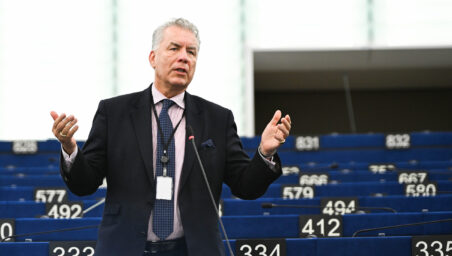
Others warned that taxing the sector at EU level could push operators into less regulated jurisdictions or strengthen illegal markets. David Casa (EPP/MLT), whose country hosts a large share of Europe’s online betting industry, called the proposal “one of the worst” ideas for own resources.
“This sector contributes more than 10 per cent of Malta’s GDP,” he said. “We Maltese would therefore suffer the most from this misguided policy.”
There is no perfect candidate for new own resources
— Piotr Serafin, Budget Commissioner
Even supporters acknowledge the politics are difficult. Mr Serafin repeatedly stressed that no proposal for new own resources comes without resistance. “There is no perfect candidate for new own resources,” he told Parliament.