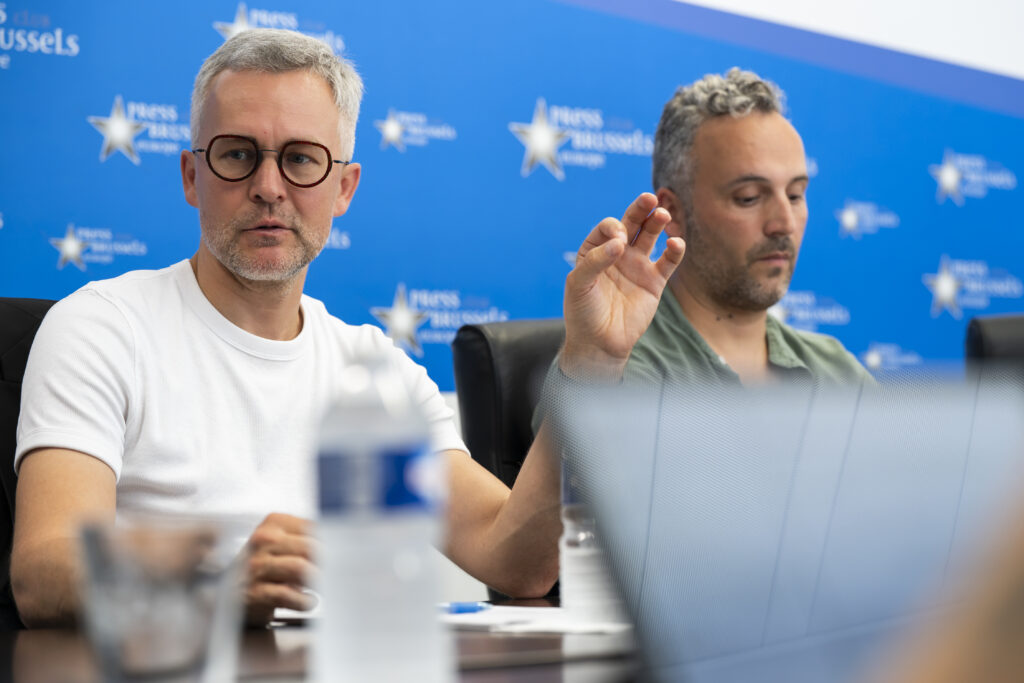
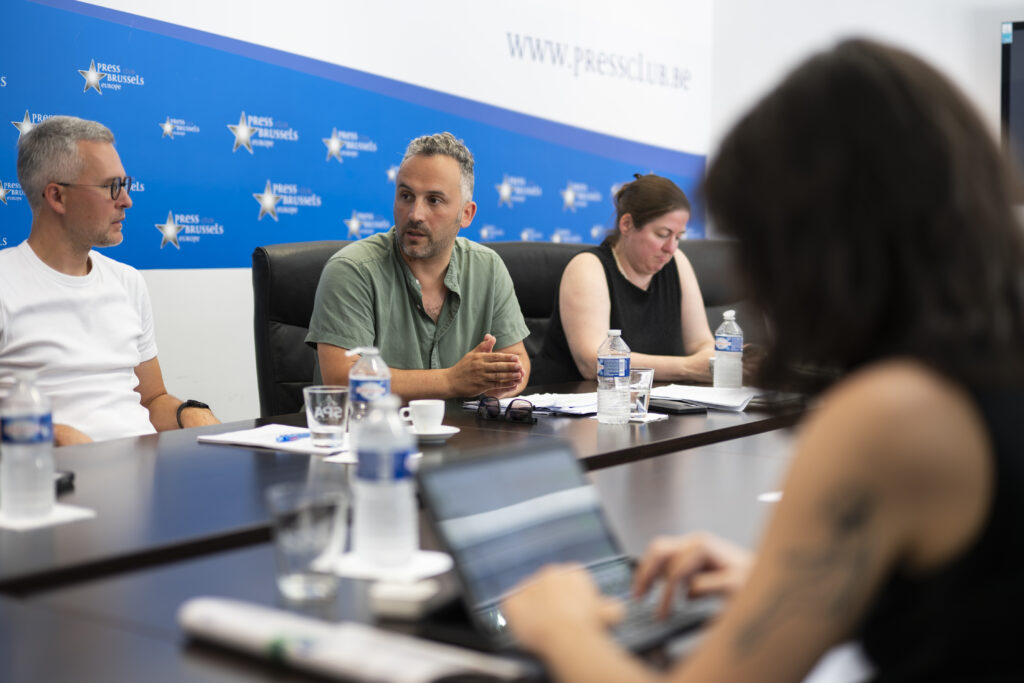
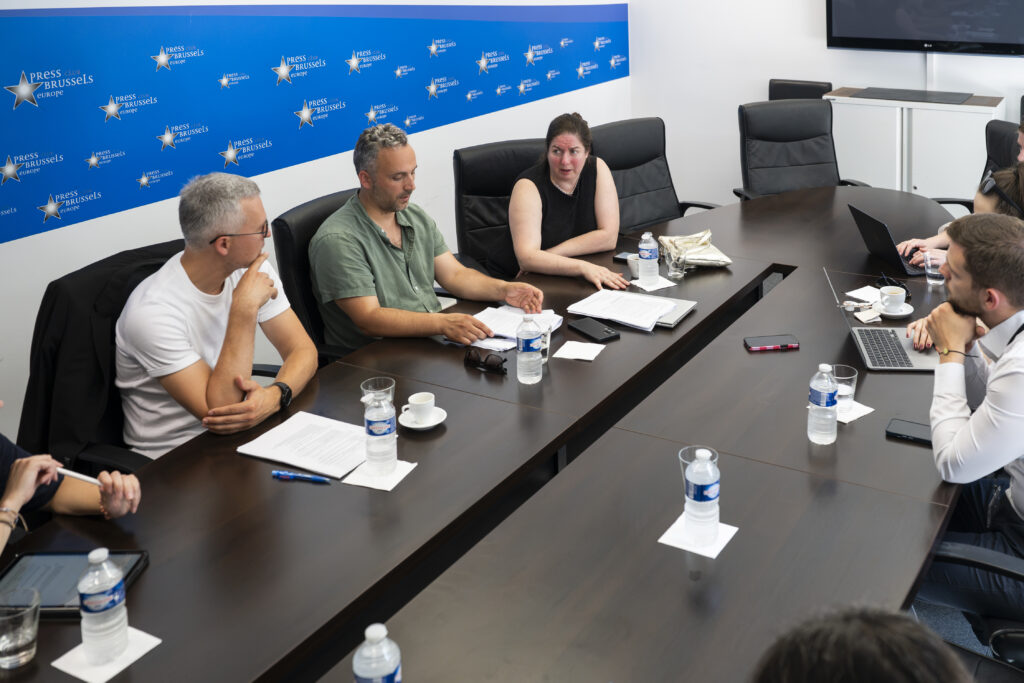
The European Commission’s proposal to create a new European company form may not solve every obstacle facing businesses in the Single Market, but rejecting it because it falls short would be a mistake. That was the central message from Member of the European Parliament Ondřej Krutílek during an EU Perspectives roundtable with Bruegel’s Rebecca Christie and BusinessEurope’s Pedro Oliveira.
For Krutílek (ECR/CZE), member of the ITRE Committee, which is among other topics in charge of small and medium enterprises and innovations, the debate surrounding the proposed EU Inc. regulation is less about the technical details of company law and more about Europe’s long struggle to complete the Single Market. “It’s definitely not enough,” the lawmaker admitted. “I would be supporting anything that is more radical.”
Yet despite acknowledging the proposal’s limitations, Krutílek remains optimistic. Compared with years of legislative stagnation, he sees EU Inc. as a significant political breakthrough. “I remember when I was an academic telling my students that the deadline for completing the Single Market was the end of 1992,” he said. “We are almost 34 years late.”
Against that backdrop, he argued, Brussels should welcome any initiative that genuinely lowers barriers for businesses operating across borders. “Anything which is pro-market and goes in the right direction should be supported.”
‘The first pro-market proposal in 20 years’
Krutílek believes the importance of EU Inc. lies in what it would do for startups as much as in the political signal it sends.
Compared with previous legislative initiatives, he described the proposal as a rare example of Brussels moving towards market integration rather than additional regulation. “If you compare this proposal with the Services Directive, then it is the first pro-market proposal which is on our tables since 2004,” he said.
Rather than viewing EU Inc. as the final answer to Europe’s competitiveness challenges, Krutílek sees it as the foundation for future reforms. “We need to work with the proposal as it is and tweak it only where necessary.”
“If there is no risk, there is no European way of life. I don’t want to live in Europe which is just a ‘museum’.”
— MEP Ondřej Krutílek (ECR/CZE)
That pragmatic approach was shared by Bruegel Senior Fellow Rebecca Christie, who argued that while EU Inc. may not address Europe’s broader investment challenges, lawmakers should do their best to improve the plan on the table and avoid trying to turn it into something it was never designed to be. “We should still go forward with it,” Christie said. “If you want people to use this thing, they have to be able to use the thing.”
Regulation, not another directive
One of Krutílek’s arguments concerned the legal form of the proposal. Although he said to generally favour directives over regulations, he believes this is one area where uniform European rules are essential.
“In this particular case, it is completely necessary to have this one in the form of a regulation,” he said.
If member states were left to transpose the legislation differently, Europe would effectively end up with “27 EU Incs”, undermining the objective of creating a single European legal framework.
He also dismissed concerns raised by some legal experts — including the Council’s legal service — questioning whether the Commission has the appropriate legal basis for a regulation. According to Krutílek, those arguments are largely political. “Most of those actors who are trying to put this into the centre of negotiations are against the 28th regime,” he said. “It’s a usual exercise when someone is challenging a proposal.”
“Gold-plating is cancer.”
— MEP Ondřej Krutílek (ECR/CZE)
BusinessEurope’s Pedro Oliveira agreed that a regulation offers the strongest guarantee of legal certainty, warning that even fully harmonised directives often lead to national “gold-plating” during implementation — meaning add-ons to the EU law, that often add bureaucracy and lead to fragmentation. Krutílek was even more direct: “Gold-plating is cancer.”
Europe cannot become ‘a museum’
When discussing criticism from trade unions, which have warned that the proposal could encourage social dumping by excluding labour law and taxation from the new European company framework, he argued that Europe has become reluctant to embrace risks even if every reform carries them.
“On one hand they would like to have the European way of life, but on the other they are not ready to accept any risk,” he said. “If there is no risk, there is no European way of life. I don’t want to live in Europe which is just a ‘museum’.”
Instead, he argued, maintaining Europe’s competitiveness requires accepting measured risks and making it easier for businesses to operate across borders.
BusinessEurope similarly rejected concerns that EU Inc. would weaken workers’ rights, arguing that existing labour law protections and employee participation rules would continue to apply. Christie also questioned whether social dumping should dominate the debate, noting that the regime is primarily intended for young businesses with relatively few employees.
Keep it simple
Looking ahead to negotiations in Parliament, Krutílek said his priority is straightforward: resist the temptation to overcomplicate the proposal. He pointed to conversations with startups in his home country, which have consistently delivered the same message. “They told me: ‘Please keep the proposal as it is.'”
Although he is not directly involved in the lead parliamentary committee handling the file, Krutílek said he is working with colleagues across the ECR group to preserve the Commission’s original approach.
“My only concern is that the rapporteur comes from the Socialist group,” he said, warning that lawmakers may be tempted to expand the proposal far beyond its original objective.
“If we manage to repel these efforts,” he said, “then EU Inc. will be a success story.”