The European Commission on Wednesday, 17 September, proposed a set of trade and sanctions measures aimed at pressuring the Israeli government over the war in Gaza. The move follows months of worsening humanitarian conditions in the territory, which has prompted allegations of man-made famine and violations of international law.
The EU’s foreign policy chief, Kaja Kallas, signalled the proposals following the Commission’s weekly College meeting, calling on member states to support increased tariffs on selected Israeli goods and impose sanctions on individuals deemed responsible for escalating the conflict. These include senior Hamas figures, Israeli settlers involved in West Bank violence, and Israeli cabinet ministers widely described as extremist: National Security Minister Itamar Ben-Gvir and Finance Minister Bezalel Smotrich.
Israeli Foreign Minister Gideon Sa’ar responded with a letter to Commission President Ursula von der Leyen, rejecting the plans and stating that Israel would not yield to political pressure.
“Pressure on the Israeli government”
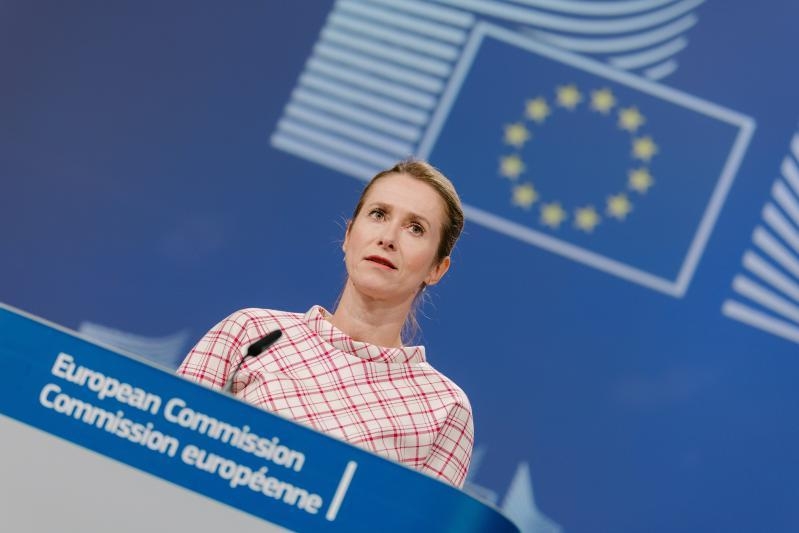
Speaking at a press conference following the meeting, Ms Kallas explained further that the actions targeted those responsible, not Israel as a whole, above all for humanitarian reasons.
“We are proposing these measures not to punish Israel or the Israeli people, but to put pressure on the Israeli government to change course and to end the human suffering in Gaza,” Ms Kallas said.
A day earlier she posted on X, that pressure was needed to change the tragic, unfolding narrative.
“Suspending trade concessions and imposing sanctions on extremist ministers and violent settlers would clearly signal that the EU demands an end to this war,” she wrote.
Human rights organisations and international leaders have raised the alarm over the dire humanitarian situation for months—and many, including EC President von der Leyen, have decried the continuing military offensive, calling for improved humanitarian relief while also insisting on the release of Israeli hostages taken during the Hamas-led attacks of 7 October 2023.
The horrific events taking place in Gaza on a daily basis must stop. — Ursula von der Leyen, President of the European Commission
“The horrific events taking place in Gaza on a daily basis must stop. There needs to be an immediate ceasefire, unrestrained access for all humanitarian aid, and the release of all hostages held by Hamas. The European Union remains the biggest donor of humanitarian aid and an unwavering champion of the two-state solution,” Commission President Ursula von der Leyen said.
EU an important trading partner for Israel
The EU is one of Israel’s most important trading partners in goods, and the proposed measures would partially suspend trade preferences granted under the EU–Israel Association Agreement. Tariffs would apply to goods currently imported tariff-free under that agreement, covering approximately 37 per cent of Israel’s goods exports to the EU.
Commission Vice-President Maroš Šefčovič, responsible for trade, said on Wednesday that, if approved by member states, reintroduced tariffs on Israeli goods exports would amount to an estimated €230m in duties annually. In 2024, the total EU–Israel trade in goods was valued at €42.6bn.
The future of the proposals now depends on the Council. Tariff changes—such as suspending parts of the EU-Israel Association Agreement—can be passed using qualified majority voting, which requires the support of at least 15 of the 27 member states representing 65 per cent of the EU’s population. In contrast, sanctions targeting individuals or entities require unanimity, meaning any single member state can block the measure. This makes political agreement far from guaranteed.
Approval unclear
Several member states, including Germany, Italy, Austria, Hungary, Bulgaria, and Czechia, have expressed opposition to the measures.
On Tuesday, Czech Foreign Minister Jan Lipavský reaffirmed to his Israeli counterpart that Prague would not support any punitive steps. Many question, with such marked opposition so far, whether the proposed sanctions and tariffs have a real chance of being approved.