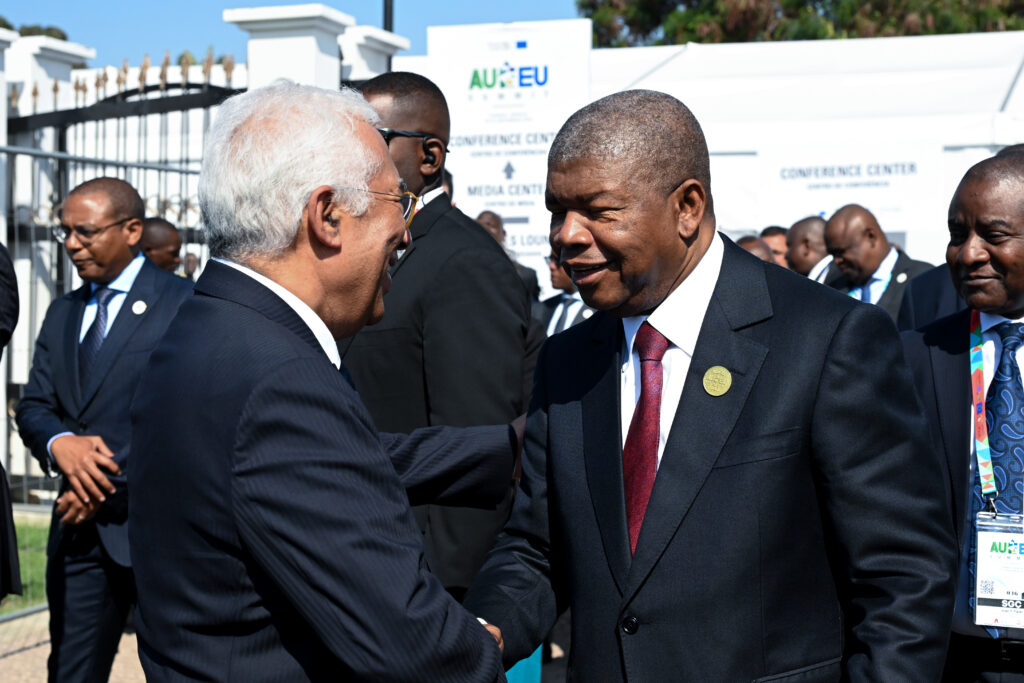
Migration emerged as the core topic for the future of cooperation between the EU and Africa at the seventh European Union-Africa summit in Angola. Focus was put on combating migrant smuggling and human trafficking, improving border-management capacities, and readmission procedures.
The issue of migration was at the centre of the summit’s work in Luanda. The two continental organisations, the EU and African Union (AU), focused on areas of agreement and on the search for a balanced partnership. Organised under the motto ’Promoting peace and prosperity through effective multilateralism’, the Luanda summit seeks to revitalise the EU-AU cooperation framework at a time marked by rising migratory flows and increasing pressure to accelerate African industrialisation.
Focus on border management, readmissions
The EU and AU agreed to intensify global and tailored partnerships aimed at preventing irregular migration and combating migrant smuggling and human trafficking. Priorities include strengthening border-management capacities and improving return, readmission, and reintegration procedures, ensuring these processes remain sustainable, safe, timely, effective, and respectful of human dignity, including through the promotion of voluntary returns. At the same time, both sides recognise the “need to address the root causes of irregular migration and forced displacement by promoting inclusive development, sustainable economic growth, and greater regional stability”.
Regarding asylum systems—where the EU is experimenting with new forms and waiting for the implementation of the future Pact for the Asylum and Migration—both Unions reaffirmed their commitment to supporting those in need of international protection as a result of conflict, violence, or persecution. From one side, national governments will work to strengthen asylum systems, improve migration governance, and provide greater assistance to internally displaced persons. From the other side, ensuring adequate reception, protection, and integration for those entitled to it remains a central focus of cooperation.
In this context, the summit highlighted the contribution of key African institutions such as the African Migration Observatory in Morocco, the Continental Operational Centre in Sudan, and the African Centre for the Study and Research on Migration in Mali. It also praised the role of major regional dialogues, including the Rabat and Khartoum processes.
Competing with China, Russia
The European Union remains Africa’s main economic and commercial partner, with trade in goods and services reaching $538bn in 2023. However, Europe faces growing competition from China, particularly through natural-resource trade agreements, and from Russia’s strengthened role as a security partner. The EU is also the continent’s leading humanitarian donor and a key supporter of humanitarian missions in Africa.
European Commission has recently approved €143m in humanitarian aid for the sub-Saharan region. The package includes €38m for the central Sahel countries, €35m for South Sudan, €30m for Somalia, €30m for Ethiopia, €8m for Nigeria, and €2.5m for the Central African Republic. The emergency funds will support food assistance, water supply and sanitation services, access to healthcare, and will help the most vulnerable communities meet their basic needs.
Investment in skills and education
In conclusion, African and European leaders underlined the importance of expanding and improving legal pathways for migration and mobility, particularly for students, researchers, academics, and higher-education staff. They reaffirmed support for the mutual recognition of qualifications and professional credentials. The partners will also support countries of origin by investing in skills, education, vocational training, capacity building, and economic opportunities, with a particular focus on young people. Addressing brain drain is considered essential, with circular migration highlighted as a mutually beneficial solution.
We will have to wait until 2030, as Council President Costa said, when the conclusions will be approved by the two Unions, to understand how to implement the so-called good intentions on the subject of migration establishing equitable partnerships, for everyone.