EU lawmakers bid to tame a scheme that many view as green overreach. The European Parliament’s environmental committee on Wednesday voted to dampen the most damaging attributes of the new-fangled emissions-trading system.
The European Parliament seldom misses a chance to keep the European Commission on a short leash. On 16 April its Committee on the Environment, Climate and Food (ENVI) voted by 58 to nine, with nine abstentions, to water down the Commission’s draft rules for the new emissions-trading system for buildings and road transport, known as ETS2.
The committee’s version would cut the delay before extra allowances are released, preserve spare permits for longer and, most strikingly, let governments postpone charges on household gas and coal. It is a bid, say its backers, to tame a scheme that many voters already view as green overreach.
Politics over climate
Both the policy’s supporters and detractors admit that ETS2 matters less for the climate than for politics. The system, due to start on 1 January 2028, is meant to deliver a 42 per cent cut in emissions from buildings and road transport by 2030 compared with 2005 levels. The Commission planned to limit the cost of carbon at €45 per tonne, in 2020 prices, until 2029, and to cancel every unused permit lodged in the market-stability reserve (MSR) after 2031. Parliament now wants more relief and more time.
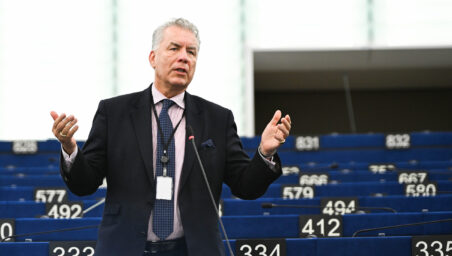
“Europe must do more to shield households from the potential negative social impacts of the ETS2. To push the revision of the MSR in the right direction we have proposed concrete measures to prolong the €45 cap beyond 2029 and to lower it through indexation to 2026 prices,” said MEP Danuše Nerudová (EPP/CZE), the file’s rapporteur.
The committee’s first tweak is speed. The Commission had said that once the carbon price tops €45 a tonne, extra allowances should flow out of the MSR after two months. Parliament cuts that lag to one. Faster relief, argue MEPs, would stop speculators whipping up price spikes. Critics—in Ms Nerudová’s native Czechia, they abound—worry that such nimbleness will pull prices down so often that the incentive to pollute less will fizzle.
“The Commission should also assess the possibility for member states to temporarily exempt residential buildings from the ETS2 and strengthen the social climate fund to ensure that the ETS2 is made for citizens, so they can help drive decarbonisation,” Ms Nerudová said.
Fast ride, gentle brakes
Second comes the fate of spare permits. Brussels wanted to scrap every allowance parked in the MSR after January 2031. MEPs demurred. They propose cancelling only half on 1 January 2034 and the rest on 1 January 2036, with a review four years after ETS2 begins. In theory that keeps prices steadier; in practice it risks leaving the market awash with cheap licences to pollute.
The third change bites deepest. Governments may gain the right to delay extending ETS2 to residential buildings if they have other ways to meet their climate targets. Householders could then dodge carbon charges while drivers, small boiler rooms and minor energy sources in firms pay up from 2028. Parliament calls the clause a social cushion. Environmentalists call it a loophole wide enough to undermine the whole scheme.
The vote exposes a broader unease. Parliament insists that tweaking the MSR alone will not soften the blow of ETS2. It urges “complementary decarbonisation measures”, from better insulation to more cash in the European Social Climate Fund. It also wants the Commission to run a full impact study of the new market and its social fallout. Such caution sounds sensible. Yet it also suggests that a majority of MEPs fear the plan they endorsed only last year.
Political realism or green retreat?
Opponents see a pattern. The original EU emissions-trading system, launched in 2005, grants heavy industry many free permits and relies on an MSR to prop up prices. Now its younger sibling may come hobbled from birth, its guardrails already thick with exemptions and caps. The risk, they warn, is that Europe trumpets bold green targets while ducking the hard choices needed to meet them.
Europe must do more to shield households from the potential negative social impacts of the ETS2. — MEP Danuše Nerudová (EPP/CZE)
Supporters claim the reverse. They argue that a gentle start secures public consent, which in turn allows tougher steps later. A €45 price ceiling, indexed to 2026 levels, may look soft. Yet it still raises fuel prices for motorists and heating bills for tenants. Better, they say, to phase in the pain than to court a backlash that could wreck the project altogether.
Hard facts back the caution. Parliament’s own text concedes that the MSR revision alone cannot “mitigate the negative impact of the ETS2”. It notes that member states may need to exempt households or boost the Social Climate Fund if prices soar. That fund, together with permit auctions, is meant to cushion vulnerable citizens. But its purse depends on revenues that will shrink if caps hold prices down and opt-outs trim demand.
Numbers, not promises
The committee also stiffens oversight. It orders the Commission to study whether the €45 cap should last beyond 2029 and to decide if the pace of cancelling allowances matches market reality.
Such reviews, though dull, have a role to play. The first emissions-trading system floundered for years because it sprayed out too many permits and slashed prices. MEPs vow not to repeat that error, even while demanding cheaper carbon for households.
Most contentious is the proposed breathing space for residential buildings. Energy bills hurt. Yet exempting homes means that other sectors must cut more sharply or the bloc must swallow higher overall emissions. Parliament says the opt-out is temporary. History suggests that ‘temporary’ tax breaks often linger once voters grow used to them.
A tight path ahead
The committee’s draft now heads to a plenary vote in late April. If adopted, it becomes Parliament’s mandate for trilogue talks with the Commission and member states. Capitals remain split. Some eastern countries still burn coal for heat. Others worry about rural drivers. Each sees in Parliament’s text a lever to shield its own voters while claiming green virtue.
The Commission, for its part, insists that the original design already balanced ambition and fairness. It points to the one-year delay to ETS2’s start date and the €45 ceiling as evidence of flexibility. Further concessions, officials mutter, may turn the market into a political camel, i.e., a horse designed by committee.
The Commission should also assess the possibility for member states to temporarily exempt residential buildings from the ETS2. — Danuše Nerudová
Still, the arithmetic is unforgiving. Without fresh measures Europe cannot reach net-zero by 2050. Yet without public support it cannot pass fresh measures. Parliament’s tweaks show how hard it is to steer between those walls. Whether they mark pragmatic realism or a retreat from climate duty depends on one’s taste for risk.
More heat than light
For the moment the sceptics have the wind. The committee’s vote frames the Commission as doctrinaire and positions MEPs as protectors of common folk. That narrative will tempt leaders facing elections and high energy prices. If the plenary backs the text, negotiators in the Council may feel emboldened to demand yet softer terms.
ETS2 is still slated to begin on January 1st 2028. The Commission hopes that by then higher fossil-fuel prices will look less menacing. Parliament bets instead on safety rails and stopgaps. Both sides talk of balance. Ultimately voters will decide whether Brussels has finally learned to marry green ambition with economic sense — or whether, once again, the Union’s climate zeal outruns its political reach.