Europe is not short on biotech talent or science. But while the EU designs strategies, competitors are already moving faster, warns Dr Montse Daban of the Council of European BioRegions. She argues that Europe’s real problem is fragmentation — and that the upcoming Biotech Act will stand or fall on execution rather than ambition.
Europe does not need to build a biotech ecosystem from scratch. It already has world-class science, strong regional clusters, public healthcare systems, clinical trial capacity and specialised innovation programmes. What it lacks is the ability to connect these assets into a single, visible and competitive European offer.
That is the central message emerging from a new EIT Health Think Tank report on the EU Biotech Act, Skills, scale and science: Uniting European Innovation Ecosystems through the Biotech Act. The report claims that Europe’s weakness is not a lack of capability, but fragmentation across funding, regulation, skills, clinical trials and market access.
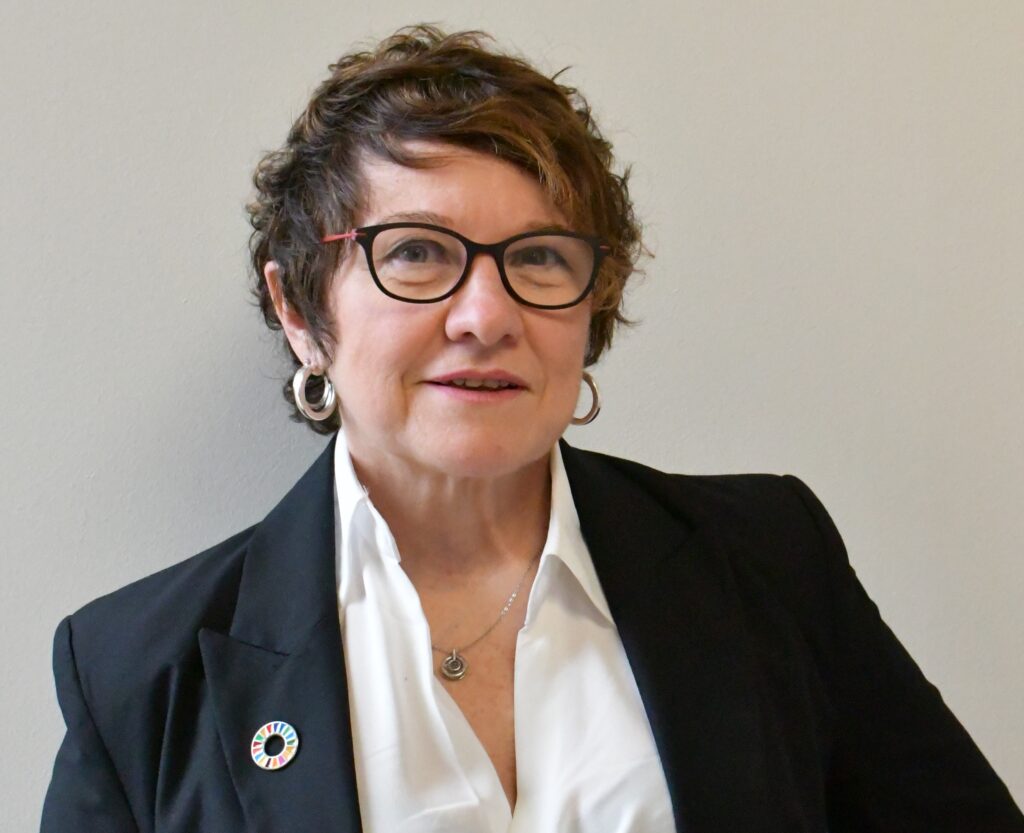
Dr Montse Daban, a contributor to the report and President of the Council of European BioRegions (CEBR) and a long-time biotech ecosystem builder at Biocat in Catalonia, says the Biotech Act is less about inventing something new than scaling what already works.
Our concern is that while Europe writes and tries to implement, other regions are already advancing in the fast lane. The Biotech Act works as a consensus text for a very diverse ecosystem. But it cannot just be a piece of paper.
In an interview with EU Perspectives, Dr Daban says the Act is a welcome shift in Europe’s competitiveness agenda. But she warns that its success will depend on execution, funding and whether Europe can finally act as one connected system.
Are you satisfied with the Biotech Act proposal?
We recognise the value of it. That is for sure. The Act changes the narrative in a very positive way. It aims to make Europe more agile, facilitate innovation and accelerate development.
But our concern is that while Europe writes and tries to implement, other regions are already advancing in the fast lane. The Biotech Act works as a consensus text for a very diverse ecosystem. But it cannot just be a piece of paper.
Implementation is the real challenge. It has to be implemented in a homogeneous way across Europe. It also needs actual funding and investment to support what Europe wants to do.
The EIT Health Think Tank report to which you contributed argues that Europe does not need to create a new ecosystem, but connect existing ones. Do you agree?
Yes. Connection happens at multiple levels. Cluster organisations have a systemic view. We connect stakeholders within our own regions, but also connect with other organisations that have the same view. This is key for the implementation of the Biotech Act.
When the first documents on the Biotech Act were published, we looked at what our members were already doing that matched its priorities. Many things were already in place before the Act was written.
For example, if the Biotech Act aims to make it easier to bring technology from the lab to the factory, we were already mapping gaps across the value chain and implementing programmes at regional level.
There are acceleration programmes, collaborative R&D programmes, public-private partnerships and clinical innovation platforms already operating across Europe. These things existed before the Biotech Act.
So what is missing?
The impact is still often local. That is the reverse narrative. The expertise exists, but it is not always EU-wide. When the European Commission puts a strategy in place and makes it a European priority, that is when it can have real impact.
The Biotech Act can build on expertise that already exists in cluster organisations. We are very happy to align what we are already doing with the strategic proposals coming from the Commission.
Is Europe’s talent base strong enough?
Europe has a lot of deep talent, but it is fragmented and uneven. Not all of the continent will advance at the same pace. That is a concern, because you can do this only if all of Europe does it.
It does not mean every region will be a frontrunner. You need drivers. You need top hubs. But you must make sure the benefit is for the whole Union and that nobody is left behind.
Where can Europe lead globally?
Europe has amazing science in advanced therapies. A lot of research is produced here. But when we look at clinical trials, Europe needs to increase its position because the US and China are leading.
Big money comes when expectations are delivered. You can say something once, but if you do not accomplish it, you cannot say it twice. You only have one chance.
We also need more visibility of European capacities. Sometimes European-developed products are tested or scaled elsewhere, and we do not even fully track where our capacity is being used. In the next years, Europe needs to claim visibility, find its own space in advanced therapies and attract the right investment.
But Europe also has to go back to leading in clinical trials, as it has done in some areas before.
How do you see the new centres of excellence in advanced therapies?
The Commission has been looking for 8 to 10 top hubs where major advances in advanced therapies can be achieved. That does not mean losing track of other regions. But Europe needs drivers and frontrunners while ensuring that the whole Union benefits.
Advanced therapies are one of the key areas in the Choose Europe for Life Sciences agenda. Clinical trials are another.
The centres of excellence call created a lot of movement. Stakeholders had to find the right partners and build alliances around where the strongest capacities in advanced therapies are in Europe.
Where should Europe go further?
More harmonisation is needed. Europe needs increased investment, but investment does not come by itself. You need to deliver what you promise. Big money comes when expectations are delivered. Europe has this huge Biotech Act, this movement and these hopes from every corner. But we are not going to attract big funds unless Europe really delivers.
Money goes where it is delivered. You can say something once, but if you do not accomplish it, you cannot say it twice. You only have one chance.
How important will the next EU budget be for biotech?
Biotech and biomanufacturing are priorities for the next Multiannual Financial Framework. There will be many instruments involved, including the European Competitiveness Fund and the European Investment Bank. These should support the sector and help bridge gaps.
But we need to move from macro figures and macro strategies to micro implementation. Big words mean nothing unless they are translated into actual work.
What is the Council of European BioRegions, and what role does it play in Europe’s biotech ecosystem?
The Council of European BioRegions is a network of entities that work at different levels to increase competitiveness at regional or national level in the life sciences industry. It is not only about the private sector. It is about the whole landscape involving all players and stakeholders in life sciences and health innovation.
We have around 50 entities, mainly across Europe. They are different types of organisations. Some are clusters, associations of 200 or 300 industry members in one region. Others, like Biocat in Spain, are connected to government, are not-for-profit and support the whole regional ecosystem.
The goal is shared: to be the voice of stakeholders, connect regions, enhance collaboration and advocate for the needs of the sector towards European institutions. At the same time, we also make sure that European policy priorities reach the regions. It is about making Europe more connected, more competitive and helping the industry grow in turnover, jobs and impact.
Did regional ecosystems and clusters feed into the Biotech Act process?
Yes. We have been collaborating with the European Commission for years at different levels. There are consultations, and at CEBR we always try to participate. We also have dialogue through projects and with Commission officers.
It does not mean there is direct attribution, but we have certainly contributed to texts and discussions through regional and national stakeholders. This has been a multi-level collaboration with the Commission over years.
What are the biggest needs of regional ecosystems and clusters today?
Cluster organisations need long-term sustainability. Things do not happen from one year to the next. Interpreting stakeholder needs and translating them into concrete programmes is central to our work. We focus on talent, funding, technology transfer, adoption of innovation into health systems, scale-up, sustainability, digital transition, technological independence and resilience.
At its core, our role is to connect actors, monitor ecosystem assets and advocate for stakeholders, while also pushing authorities beyond their comfort zone.
The Commission increasingly expects cluster organisations to help implement policy because we are close to the end users.