Europe’s energy transition is running into a growing problem: the continent is building renewable power faster than it can expand the electricity grids needed to transport it. As grid bottlenecks drive up costs and raise concerns about future blackouts, policymakers and industry representatives clashed over who should control Europe’s infrastructure planning during a roundtable discussion hosted by EU Perspectives on the European Commission’s proposed European Grids Package.
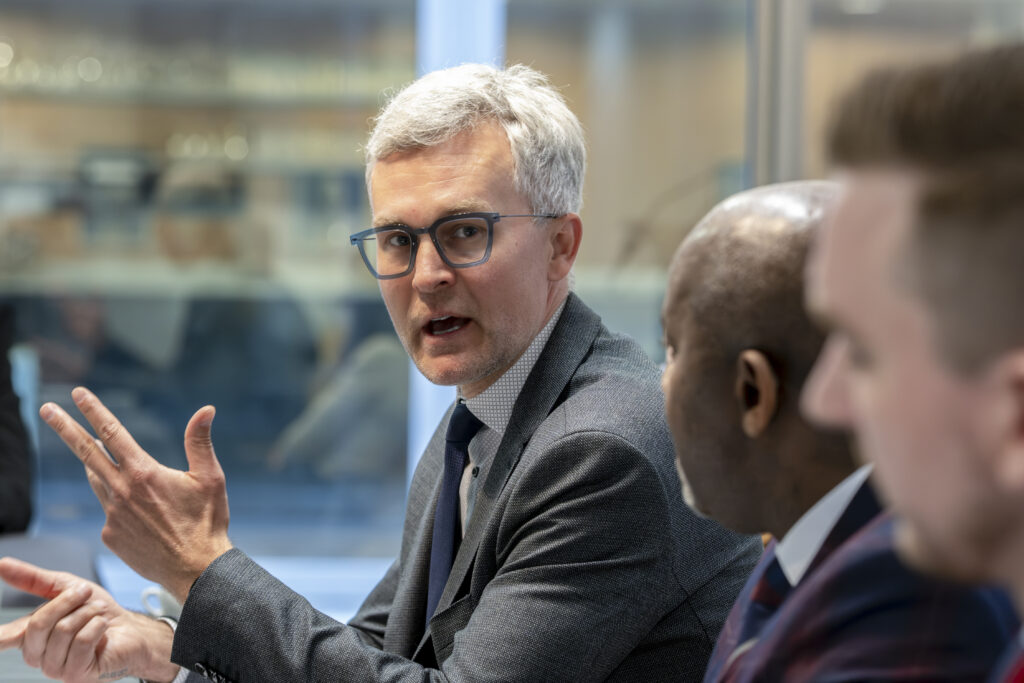
Recent blackouts in Spain and Portugal should not be seen as isolated incidents but as a warning sign of growing stress across Europe’s electricity systems. According to Ondřej Krutílek (ECR/CZE), member of the European Parliament’s Committee on Industry, Research and Energy (ITRE) and the shadow rapporteur for the package, such disruptions could become more common if infrastructure fails to keep pace.
He warned that Europe’s energy debate can no longer focus solely on generation capacity. “We are facing the problem that the energy issue is not just about sources, but also about grids,” he said, pointing to the growing strain on Europe’s electricity networks.
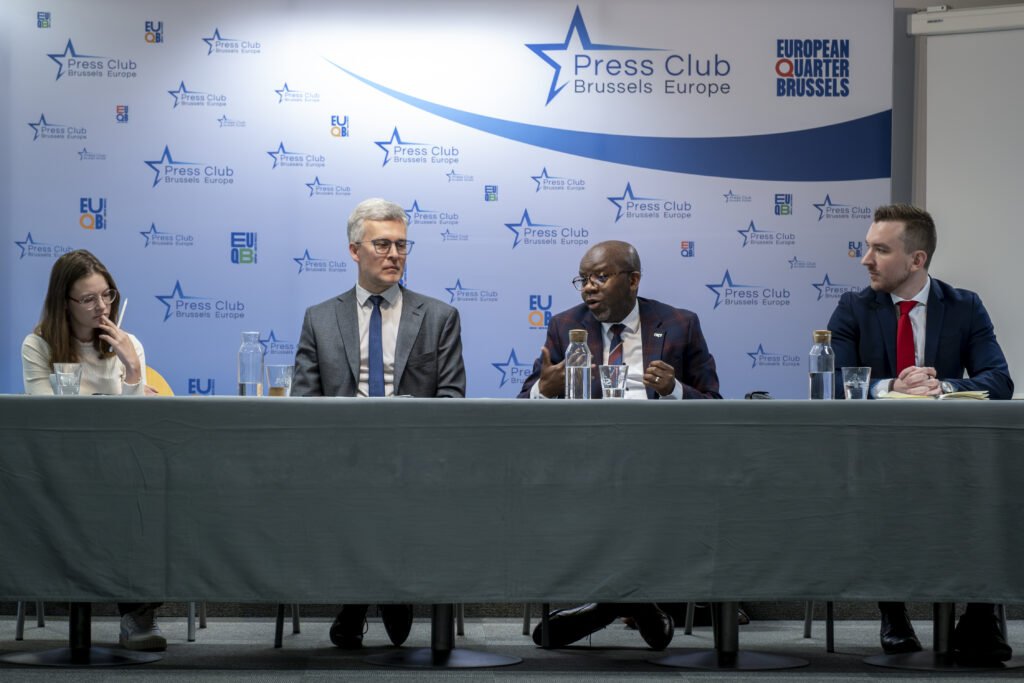
Regarding the regulation, Mr Krutílek stressed the need to address the institutional shift in planning that had already been debated, particularly whether the Commission should take charge or whether responsibility should be shared through implementation plans.
Growing costs
Andrew Kasembe, head of the Transmission System Development Department at ČEPS, the Czech member of ENTSO-E, argued that Europe’s current bottleneck is no longer the European grid planning and renewable deployment itself, but the timely and efficient rollout of resilient energy infrastructure across the EU. “The main structural issue is that renewable, storage, data centres and other large projects are growing faster than grid expansion,” he said. “They are outpacing the realistic grid delivery.”
That mismatch between energy production and grid capacity is already producing concrete financial consequences. Daniel Vig, Senior Policy Officer at Energy Storage Europe, pointed to the growing cost of curtailment — situations where renewable electricity is available but cannot be transported or used because the grid lacks capacity. “Curtailment costs reached €8.9 billion,” he said, noting that on many days Europe now produces more renewable electricity than existing networks can absorb.
Who controls Europe’s grids?
One of the main points of contention during the debate involved governance. The Commission has proposed a stronger coordinating role at European level, particularly regarding infrastructure planning scenarios. But both industry representatives expressed caution about transferring too much authority to Brussels.
We are facing the problem that the energy issue is not just about sources, but also about grids.
— Ondřej Krutílek (ECR/CZ)
“The European Commission wants to take the scenario into their own hands,” Mr Vig said. “But how do they know how to build these grids?” he asked.
Mr Kasembe argued that transmission system operators possess detailed system knowledge, adequate tools, resources and practical experience in national, regional, and European planning. Through ENTSO-E, Transmission System Operators are also expected to apply these scenarios in subsequent Ten-Year Network Development Plan steps. “We have the technical expertise, are responsible for national infrastructure plans and delivery track record,” he said.
Mr Krutílek attempted to draw a distinction between national systems and genuinely European projects. “The European Commission should play a role in interconnectors and main backbone projects. But in principle it is the prerogative of member states to choose their own energy mix and the sources and grids derived from it,” he said.
The MEP also warned against overly centralised redistribution mechanisms at EU level. “We need to find a balanced solution,” he said. “Sometimes the congestion revenues do not encourage investments into grids. But I don’t think a fully central redistribution mechanism is what we need now.”
Storage as the faster solution
While all speakers agreed Europe needs major grid expansion, the debate also highlighted a second pathway: energy storage. Mr Vig argued that battery deployment can move significantly faster than major grid construction projects, which often take more than a decade from planning to operation.
One solution is to build more grids, but that takes time because of permitting and financing. Energy storage can be deployed much faster.
— Daniel Vig, Senior Policy Officer at Energy Storage Europe
“Renewables have grown faster than the grids,” he said. “One solution is to build more grids, but that takes time because of permitting and financing. Energy storage can be deployed much faster.”
The nuclear question
One of the clearest political dividing lines during the debate concerned the future energy mix underpinning Europe’s grid strategy. Krutílek repeatedly emphasised that the European Grids Package should not become legislation designed exclusively around single group of sources. “I don’t want a grids package for renewables only,” he said.
For the MEP, the objective should be a stable and reliable electricity system operating continuously, regardless of generation source. “What we need is stable, reliable energy all day long,” he argued. “We should also include other sources, such as nuclear.”
He warned that limiting the legislative framework exclusively to renewable deployment risked producing a package that ultimately fails to deliver the resilience Europe needs. “And the part of the network are many energy sources,” he added later in the discussion, “including batteries, but also nuclear sources — not only large ones, but also small modular reactors which are to be commissioned in years to come.”
The comments reflected a broader political divide within European energy policy, where some member states continue pushing for a more technology-neutral framework rather than one centred overwhelmingly on wind and solar.
The debate around the European Grids Package, however, is no longer only about climate targets or generation capacity. It is increasingly about whether Europe can physically build the infrastructure needed to sustain its ambitions. And whether it can do so fast enough to remain competitive, avoid supply disruptions and secure affordable energy.