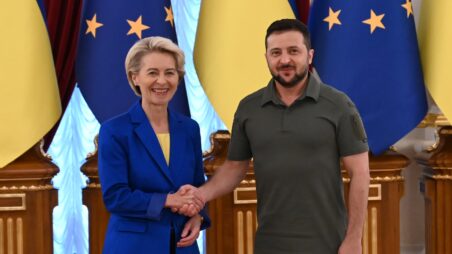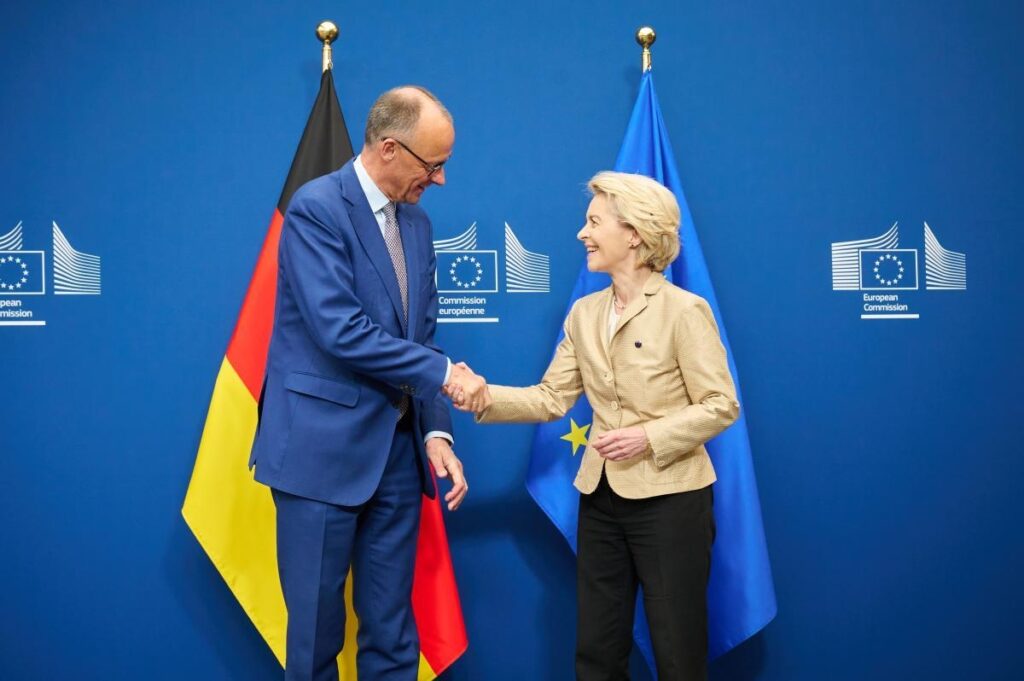
Germany has put forward an idea that could reshape the rules of Ukraine’s path to the EU. And Europe is already divided. Chancellor Friedrich Merz has proposed giving Kyiv associate membership: a seat at the table, but no vote. Slovak Prime Minister Robert Fico dismissed the proposal outright, and Ukrainian President Volodymyr Zelensky has long rejected anything short of full membership.
Merz sent a letter to Brussels describing a status that goes beyond Ukraine’s existing association agreement but stops short of full membership. Kyiv would attend meetings of the European Council and the Council of the EU without voting rights, with representatives in the Commission and the European Parliament on the same terms. The letter includes a reversibility clause: if Ukraine weakens the rule of law or slows its reforms, the status could be revoked.
Several member states already oppose rapid admission. Merz acknowledged that fast-tracking Ukraine is unrealistic. His proposal aims to fill that gap.
A signal, not a shortcut
The Commission welcomed the letter. It called for the debate to move to the level of the European Council. President Ursula von der Leyen wants progress on opening Ukraine’s accession clusters before the European Council meets in June. The legal implications of Merz’s proposal remain open. Brussels says it is too early for that discussion.
Fico was direct. “Either we take someone into the European Union or we do not,” he told reporters. There is no appetite in the bloc for such a step, he added.
Zelensky has consistently rejected any form of partial status. Merz argued that the proposal would send a strong political signal that Ukraine and its citizens urgently need in their fight against Russian aggression. Zelensky has made clear that for Kyiv, anything short of full membership is not enough. The question of when to open Ukraine’s negotiating clusters has dominated EU summits for weeks.
What makes the proposal unusual is its combination of institutional access and a binding security commitment. Offering a candidate country a seat in EU decision-making bodies before accession, alongside a formal invocation of Article 42.7, the mutual defence clause, would break with the established logic of EU enlargement.
Security guarantees at the core
Under Merz’s plan, Ukraine would align its foreign and security policy fully with that of the EU. In return, the 27 member states would commit to applying Article 42.7 to Ukraine. “It would not be membership light, but it would go beyond an association agreement and further accelerate the accession process,” Merz wrote. He described this as “a significant security guarantee.”
It would not be membership light, but it would go beyond an association agreement and further accelerate the accession process.
— Friedrich Merz, German Chancellor
The proposal also addresses other candidate countries, calling for “innovative solutions” to bring them closer to full membership, including privileged access to the single market and observer status in relevant EU bodies. Western Balkan states, which have been waiting far longer than Ukraine, are not offered the same associate status.
The debate now moves to the European Council in June. Leaders will have to decide whether the rules of EU enlargement can bend to the realities of war, or whether Ukraine must wait for Europe to find consensus on its own terms.