Heads of the European Union’s member states on Thursday broadly welcomed Ukraine’s EU membership efforts. The caveat: Kyiv craves accession clusters opened now while Brussels offers praise but no calendar.
Leaders arriving in Cyprus expressed generally positive views of Ukraine’s EU membership ambitions but sought to temper Kyiv’s expectations. The informal gathering on Cyprus’ Mediterranean coast—in Agia Napa, or Holy Forest—on 23 April set the stage for Friday’s European Council summit.
As journalists caught presidents and prime ministers upon arrival, Ukraine topped the agenda. President Volodymyr Zelenskyy was outspoken, as he tends to be. “We want (the membership) very much,” he said. “I always share that it doesn’t depend on the decision of Ukraine and Ukrainian people. We already decided we want to be as quick as possible in the EU.”
Kyiv is eager
Mr Zelenskyy pressed for dates. “I always love specific things. I love the dates,” he told reporters. “A lot of things depends not only on President Costa and President von der Leyen. We need unanimity from all the allies. I think that we will be ready with clusters. We are ready with six clusters. I hope that we will open them and our allies will support this.”
Ukraine sees mutual gain. “And EU helps us during this war and helped a lot. And we will share our knowledge and our experience now to strengthen Europe. Everybody is understanding that we have such unique experience. So we are ready for opening clusters and I think EU also is ready to support us in it.”
Kyiv’s deputy prime minister Taras Kachka echoed the plea. “2027 is really good, at least for closing majority of chapters. And of course, also to start to even draft the treaty of accession,” he said. “Ukraine is pursuing a full classical, normal accession to the European Union according to methodology.”
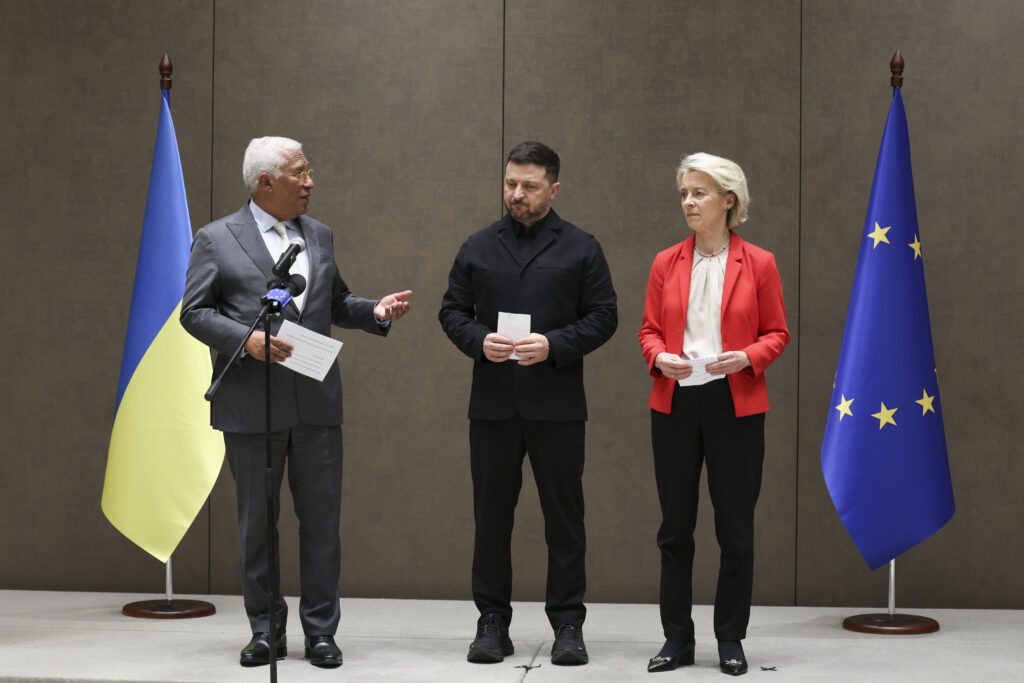
European Commission President Ursula von der Leyen met Mr Zelenskyy, along with European Council President António Costa, just before the summit. Her subsequent statement struck a similarly enthusiastic note. Hailing the significant progress Ukraine has made on its EU accession path, she called for the opening of negotiation clusters without delay.
Enthusiasm meets caution
Mr Costa captured the consensus. “The Presidents commended the significant progress Ukraine has made on its EU accession path. They called for the opening of negotiation clusters without delay. Furthermore, the Presidents welcomed the recent adoption of necessary legislation by the Ukrainian Parliament that will unlock further funding under the Ukraine Facility. They highlighted the reform progress Ukraine has achieved so far under challenging circumstances and called for further efforts,” he said.
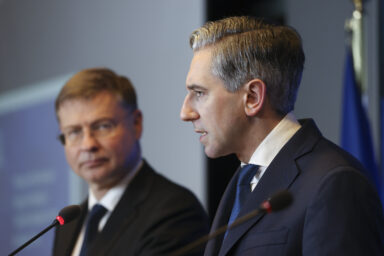
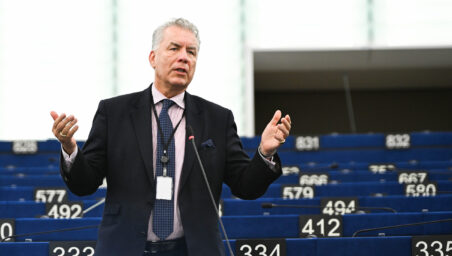
French President Emmanuel Macron demanded clarity. “It’s important to give a precise timeline to Ukraine and Moldova,” he said. Estonian Prime Minister Kristen Michal agreed. “Focus on enlargement also with Ukraine and Moldova,” he urged, stressing the change brought about by Hungarian strongman Viktor Orbán’s departure from top-level politics.
I always love specific things. I love the dates. — Volodymyr Zelenskyy, President of Ukraine
Cyprus’ President Nikos Christodoulides signalled readiness. “What I can say is that, as president, we have completed all our preparations, and if the political conditions are right, we are ready to open the chapters. There may be some,” he said.
Clusters in the crosshairs
Others were more cautious. German Chancellor Friedrich Merz played his card close to the chest. “We are here on the beautiful island of Cyprus to discuss the issues of our time with the Council Presidency. We will be discussing Ukraine. I am very grateful that the European Union loan has now finally been approved. But we will also be discussing the conflict in Iran and the European Union’s medium-term financial plan. There are many topics to cover,” he limited himself to saying.
Clusters dominate talk. The new framework replaces old chapters, and opening them signals seriousness. Yet hurdles persist. Croatia’s Prime Minister Andrej Plenković laid out realities. “We support Ukraine’s accession. I don’t think it’s realistic that it will happen on the first of January 2027. I said this during my visit to Kyiv to President Zelenskyy,” he told members of the press.
“We are the latest member. We know how difficult the complex process is. If no clusters have been opened by now, and we are now basically almost first of May, no enlargement process was so abridged that it can be done in seven months,” the Zagreb leader continued.
Good will ‘in general’
“Croatia was relatively fast and it has taken us six years to negotiate. So from the moment that we triggered the intergovernmental conferences, so it was the period between 2005 and 2011. But I think there is generally a goodwill to accelerate the process. But also I think from my knowledge, experience and what I can hear, full membership with all the classical procedures in eight months is unlikely, but we are supporting Ukraine,” Mr Plenković said.
Mr Plenković dodged date-setting. “Well, I will never try to again speculate with the dates. It’s a very ungrateful exercise. We were doing this with Croatia. We thought we were going to be ready in 6, 2006, 7, 8, 9, 10, 11, hop. It ended up in 2013. So very ungrateful to make recitation on which is the date. But what we are now trying to do is trying to think of a concept that would send clear political messages to Ukraine that the future full membership is there. But let’s do some creative steps in the meantime,” he said.
If the political conditions are right, we are ready to open the chapters. — Cyprus’ President Nikos Christodoulides
Hungary looms large. “The next step is to discuss how to proceed with the enlargement process. I don’t know if the discussion has been already conducted when it comes to the obstacles to opening the clusters. You know that the negotiating process is now not anymore the chapters, but it’s the clusters. There were some reservations also by Hungary. Whether this is now removed. We shall, I guess, hear as soon as we have the new Prime Minister among us,” Mr Plenković added.
Paths to membership
Ukraine applied in 2022, days after Russia’s invasion. Talks opened in 2024. Progress accelerated, yet unanimity has blocked opening the clusters. Mr Zelenskyy now counts on allies, and Mr Costa and Ms von der Leyen praise reforms under fire. Yet no one promises 2027 membership.
I don’t think it’s realistic that it will happen on the first of January 2027. — Croatia’s Prime Minister Andrej Plenković
Security lurks beneath. Mr Plenković stressed guarantees. “I think what Ukraine needs is strong security guarantees that are much wider than the European Union, given especially the experience that Ukraine has with the unfulfilling of the commitments stemming from the Budapest memorandum from 32 years ago. Those who know it know who are the signatories. And that’s why the overall peace deal needs to include security guarantees by strong members of the international community,” he said.
Agia Napa’s talks preview formal debates. Leaders want progress. Ukraine offers battle-tested insights. Europe offers cash and clusters, if Hungary relents. Mr Zelenskyy loves dates; most leaders shun them. Mr Plenković calls speculation ungrateful. Full membership for Kyiv appeared likely a matter of years, not months. Agia Napa—often alternatively spelled Ayia Napa in English—hosts the choreography while Ukraine watches from trenches.