When disaster strikes, aid often takes too long to reach the people who need it most. With wars spreading and funding under growing pressure, the EU wants more help to go directly through local organisations already on the ground instead of getting stuck in a slow and costly international system.
Humanitarian aid should become faster, cheaper and less dependent on external actors under a new proposal by the European Commission. More of the already shrinking funds would go directly to local groups, as the EU prepares for a world with more crises but less money to respond to them.
The pressure on the global humanitarian system has grown further after drastic cuts to programmes such as those run by the US Agency for International Development (USAID).
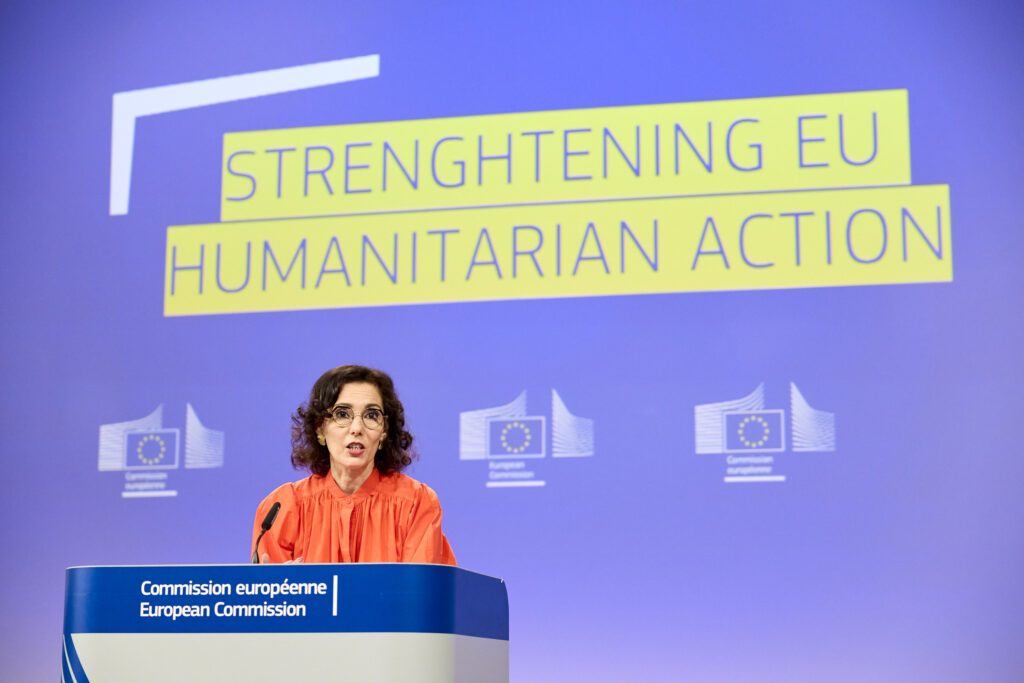
Nearly 240 million people need humanitarian aid to survive, the equivalent to the entire population of Germany, France, Italy, and Belgium combined. — Hadja Lahbib, Commissioner for Equality, Preparedness and Crisis Management
The international aid network “has been shaken to its core with the outbreak of armed conflicts, the disastrous humanitarian situation in Gaza, Ukraine, and Sudan, and severe funding cuts”, the Commission stated.
Whole “country” of people in need
According to Commission’s data, the number of forcibly displaced people or people seeking asylum has doubled in the last decade, reaching 117.3 million in 2025. EU member states currently provide the largest share of global humanitarian funding, approximately 35 per cent.
“Nearly 240 million people need humanitarian aid to survive. If these people formed a nation, it would be the fifth largest country in the world, equivalent to the entire population of Germany, France, Italy, and Belgium combined,” said European Commissioner for Equality, Preparedness and Crisis Management Hadja Lahbib.
“Today, there are around 130 conflicts raging around the world. This figure has doubled in 15 years. Last year, 120 million people were forced to flee their homes. These are figures not seen since the Second World War,” she added.
Moving towards shared aid logistics
The EU proposes to disburse a quarter of its humanitarian funds as directly as possible to local actors by 2027. It will also present a “supply chains charter to reform the way humanitarian support is made more available at the local level”.
One of the actions in this area is to coordinate the pre-positioning of supplies before crises erupt, create shared logistics platforms across the sector, and give greater autonomy to groups on the ground.
Logistics represent approximately 60-80 per cent of total humanitarian spending worldwide, with many organisations still runnin parallel supply systems. To avoid the duplication of effort, higher costs, and longer delivery times, the EU wants to promote a more coordinated and collaborative approach with joint procurement, transportation, and storage among organisations.
Strengthening the “humanitarian world revolution” will also involve diplomacy, used to negotiate humanitarian access. The effort would involve collaboration between the 27 EU governments, the European Investment Bank, and the European Bank for Reconstruction and Development (EBRD) through the Team Europe approach.
Debates on MFF still ongoing
The plan also calls for better collection and analysis of reliable data on violations of international humanitarian law, which the Commission says is “essential to support fact-based diplomacy, counter information manipulation, including disinformation, and promote accountability”.
There are around 130 conflicts raging around the world, 120 million people were forced to flee their homes. These are figures not seen since the Second World War. — Hadja Lahbib, Commissioner for Equality, Preparedness and Crisis Management
Beyond today’s announcements, no specific resources have been released. But EU says the planned changes should help save costs and make spending more efficient. Talks on the next long-term EU budget, known as the Multiannual Financial Framework (MFF), are still ongoing.
However, according to Ms Lahbib, the EU will ask its partners how they plan to involve local organisations more effectively. She reiterated that a “robust accountability system” for these funds is in place to ensure they do not end up in the wrong hands.