Beijing has extended some of its export curbs for another year. The measure, announced on the first day of Donald Trump’s state visit to China, brings a modicum of relief to European companies and governments alike. Other than that, the European Union has precious little to celebrate.
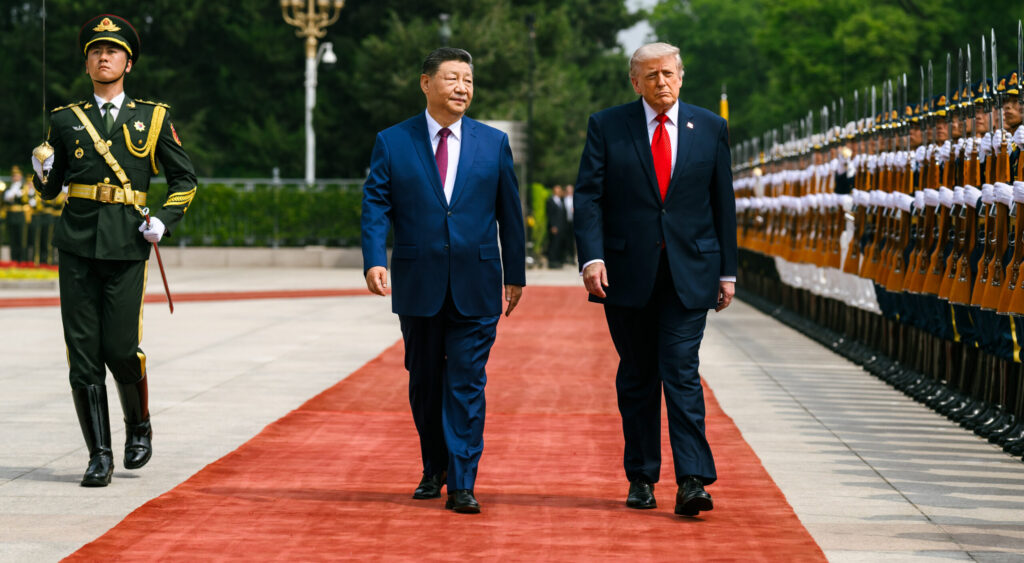
To both the US president and Xi Jinping, his Chinese counterpart, Europe was quite understandably an afterthought. Mr Trump landed in Beijing beneath a blaze of cameras, marched past a guard of honour and entered the Great Hall of the People to the clang of gongs. But for all the pomp, his trip underlines the weakening of the American—and, by extension, vis-à-vis China, the West’s—negotiating clout.
European officials’ attention focused on the trade maze they navigate. Since October the two superpowers have observed a tariff truce: Washington froze planned hikes, Beijing eased its curbs on rare-earth exports. Both measures were extended for another year on Thursday.
A breathing space
A red-and-gold banner reading “Welcoming Banquet” hung above tables laid with jade chopsticks. At dinner Mr Xi told his guest that “China–US relations are the most important bilateral relations in the world”. Mr Trump replied that “It was a great honour to be with you”. Behind the toasts lay the first substantive meeting of the two leaders since 2019 — one watched in Europe with a mix of relief and unease.
The Beijing summit preserved a rollback of America’s March 2025 20 per cent ‘fentanyl tariff’ to 10 per cent and a one-year waiver on Washington’s 50 per cent ownership cap for Chinese ventures. The development pleases European multinationals embedded in Sino–US supply chains. Yet the same concessions may divert Chinese exports from America to Europe, intensifying price pressure on EU producers. That, along with the rare-earths extended break, is as detailed a takeaway for Brussels as the summit brought.
In October, Chinese outlets hailed the relieved European response as a gesture that “highlights EU reliance” on Chinese supply chains. Europe, which buys about 98 per cent of its permanent-magnet rare earths from China, gained some more breathing space on Thursday.
Other than that, Thursday’s festivities masked a lack of hard results. No trade deal was signed; the “Board of Trade” announced by the White House remains notional. Mr Trump still calls the encounter “the biggest summit ever” and promises “a fantastic future together”. Mr Xi insists that “the great rejuvenation of the Chinese nation” and “Make America great again” can proceed in tandem. Warm words, cold detail.
Limited accommodation
Chinese commentators depict the meeting as managed stability, not a reset, People’s Daily opined. The phrase signals limited accommodation: enough to steady markets, not enough to alter rivalry. European strategists read a warning.
The selective détente between Washington and Beijing may leave Brussels sidelined in rule-setting for artificial intelligence, data flows and telecoms. CGTN—international division of the government-run China Central Television (CCTV)—already touts the TikTok joint-venture finalised in January as a template for settling tech rows. Any bilateral carve-out that loosens American export controls on mid-tier chips while EU firms face Chinese retaliation would tilt the playing field.
Europe’s defence planners felt another prod when China suspended, for one year, new export licences on gallium, germanium, antimony and graphite. These metals are vital for batteries and precision munitions. Again, Chinese commerce ministry’s notice keeps Beijing’s leverage very much alive.
Birch and fir
Should talks sour, Beijing could re-impose curbs overnight, hobbling Europe’s nascent missile stockpile or its gigafactories. The European Union Institute for Security Studies argues that the pause underlines the urgency of stockpiles and diversification.
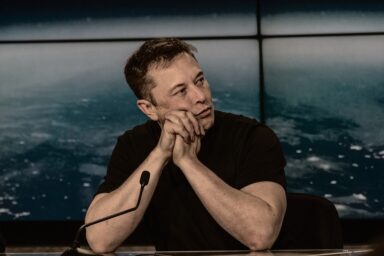
Military eyes also scanned the guest list. Elon Musk chatted beneath chandeliers; Jensen Huang of Nvidia slipped in after a late invitation. Their presence hints at future carve-outs on AI safety.
China–US relations are the most important bilateral relations in the world. — China’s President Xi Jinping
A Chinese editorial—actually an opinion piece penned by a Polish-born Oxford professor for CGTN—described “competition above, cooperation below”: two tree species, birch and Douglas fir, fight for sunlight yet share nutrients underground. Brussels has good reasons to fear the shade.
A warning to Taipei
Amid the chandeliers Mr Xi repeated that Taiwan remains “the most important issue in China–US relations” and warned of “clashes and even conflicts” if mishandled. European diplomacy walks a tightrope: backing the island’s de-facto autonomy while deeper Sino-American tensions could up-end Indo-Pacific trade routes on which EU exporters depend.
Day one of the visit delivered stagecraft, not statecraft. Mr Trump disembarked to ceremonial trumpets, toured the Temple of Heaven and later proclaimed he had received a “magnificent welcome like no other”. The banquet’s Golden Room, hung with lanterns and a painted dusk sky, saw cabinet secretaries hover beside Tim Cook and Mr Musk. Yet the communiqués that followed listed mostly discussions—oil, Iran, technology—without specifying outcomes.
For European energy firms eyeing liquefied-natural-gas sales to China, the vagueness matters. Treasury secretary Scott Bessent mused that Beijing may soon place a large order for Boeing aircraft and buy more American energy. If those flows rise, Europe’s surplus cargoes could chase lower prices elsewhere, squeezing margins.
Unequal détente
Chinese outlets trumpet Mr Xi’s promise that “China’s door to opening up will only open wider”. People’s Daily links the line to easier market access for foreign firms. But EU negotiators note that Brussels still battles Chinese electric-vehicle subsidies and 5G security risks. A US-centric thaw that leaves European grievances untouched could embolden Beijing to dangle access selectively, rewarding Washington while penalising Brussels for its anti-subsidy probes.
It was a great honour to be with you (Xi Jinping). — US President Donald Trump
The tariff truce likewise favours American soyabeans and LNG. Europe’s farmers and energy traders gain little. Worse, lower American duties could let Chinese manufacturers reroute goods south of the 49th parallel and then east across the Atlantic, undercutting EU rivals. The Atlantic Council warns that Europe must brace for “continued Chinese overcapacity”.
Mr Xi spoke of building “guardrails” to avoid escalation. Yet those same rails allow economic leverage. Beijing’s pause on critical minerals, Washington’s eased tariffs, and potential US–China tech clubs all expire or adjust within a year. Brussels faces a moving target. It can neither assume mercantilist peace nor bet on prolonged hostility. Instead it must press on with its own de-risking: subsidy investigations, supply-chain reshoring and joint procurement of strategic raw materials.
A tactical truce
The European Commission will weigh whether to speed its Critical Raw Materials Act, enlarge strategic stockpiles and court suppliers from Australia to Namibia. Capital markets may have to foot heftier up-front costs; failure to do so risks shocks when Sino–US courtesies lapse. The summit gives Europe time—measured in months, not years—to act.
The Beijing pageant offered a glimpse of a rivalry kept within ornate boundaries. For the European Union the message is plain. A tactical truce between the world’s two heaviest economies may settle nerves today, but it also shifts the fault-lines. Needless to say, the shift does not go in Europe’s favour.