Brussels is preparing to cast a wider net with its carbon border tax after warnings that companies may be exploiting loopholes in the system. New measures backed by member states would extend the levy from raw materials to a broader range of products, making it harder for importers to avoid climate-related costs.
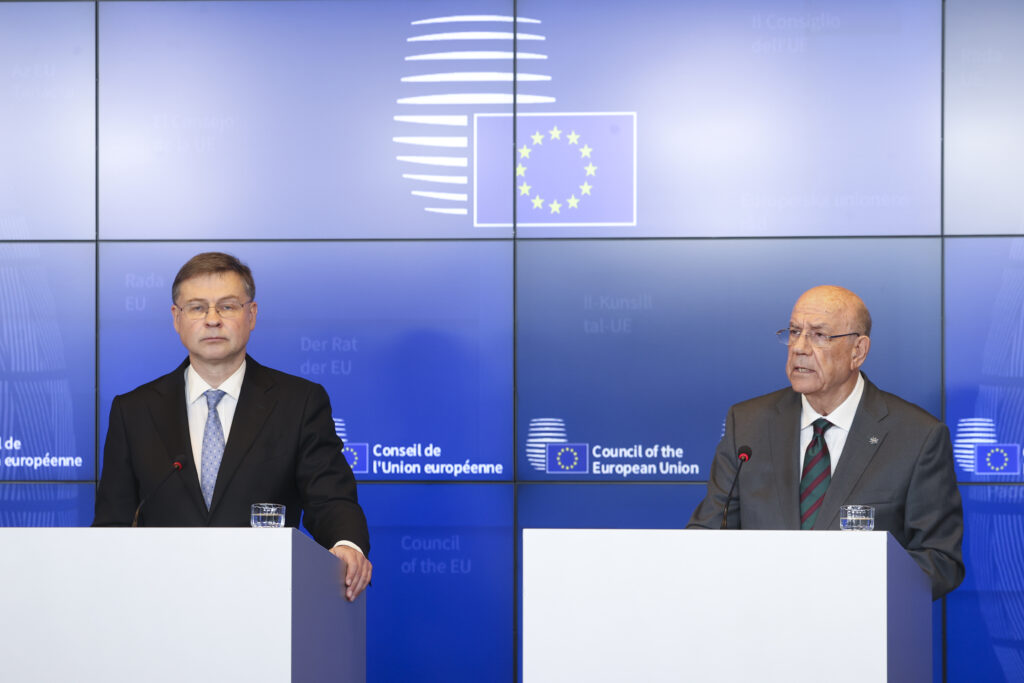
EU finance ministers on Friday agreed the Council’s negotiating position on a proposal to strengthen the Carbon Border Adjustment Mechanism (CBAM), the EU’s system for charging a carbon price on certain imported goods.
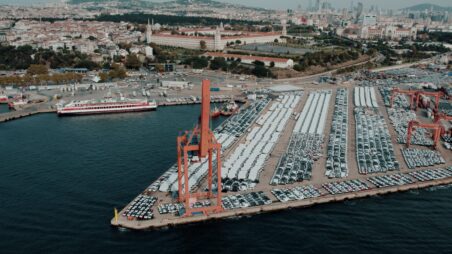
The new proposal would extend the mechanism to a broader range of downstream products that contain large amounts of steel and aluminium. The aim is to prevent companies from avoiding the levy by importing finished or semi-finished products instead of the raw materials already covered by CBAM.
“The EU remains committed to reducing climate emissions both within the Union and globally. Strengthening the CBAM and closing loopholes that can circumvent our rules is a key part in fulfilling that goal,” Makis Keravnos, Minister of Finance of the Republic of Cyprus said. “The position agreed today is the first step in making the system more robust.”
Economy Commissioner Valdis Dombrovskis welcomed the Council’s position to strengthen CBAM. “This will help close loopholes and strengthen CBAM’s efficiency, ensuring European industry competes on a level playing field with international competitors,” he said.
The Council’s position supports a significant expansion of the EU’s tool to fight carbon leakage and promote global decarbonisation. CBAM currently applies to carbon-intensive sectors such as steel, aluminium, cement, fertilisers, hydrogen and electricity.
Warnings
The reform follows warnings from European steel and aluminium producers that loopholes in the current system could undermine the effectiveness of the carbon border levy. Industry groups have argued that imports of downstream products and certain forms of scrap metal could allow foreign manufacturers to gain a competitive advantage while avoiding equivalent climate costs.
Supporters see the policy as a crucial tool for maintaining the competitiveness of European industry while pursuing ambitious climate targets. Critics, however, warn that the mechanism could increase costs for importers, create trade tensions and place additional burdens on developing-country exporters. Several trading partners, including China and other major manufacturing economies, have closely scrutinised the measure since its introduction.
Products expected to fall within the expanded scope include certain machinery, construction materials, household appliances and industrial equipment. The proposal also introduces stricter anti-circumvention measures to tackle attempts to underreport emissions or restructure supply chains to avoid the carbon charge.
Increased costs
CBAM is designed to prevent so-called “carbon leakage” — the risk that production shifts outside the EU to countries with weaker climate regulations. CBAM entered its full implementation phase at the start of 2026 after a transitional reporting period that began in 2023. Importers are now required to purchase CBAM certificates reflecting the carbon emissions embedded in the goods they bring into the EU.
The mechanism aims to ensure that imported goods face a carbon cost comparable to that paid by European manufacturers under the EU Emissions Trading System (ETS). It is intended to gradually replace the free emission allowances that many European industries have received under the ETS.
The Council and Parliament will now begin negotiations on the final shape of the legislation. If approved, the revised rules would make the EU’s carbon border levy broader in scope and harder to evade, reinforcing one of the bloc’s most closely watched climate policies.