A delay to stricter AI rules and a long-awaited ban on so-called nudifier apps — tools used to generate non-consensual intimate images — moved a step closer after parliamentary committees backed the compromise Digital Omnibus. The proposal now heads for a final vote in the European Parliament.
The European Parliament’s Internal Market and Civil Liberties committees backed the agreement on Digital Omnibus this Tuesday with 93 votes in favour, 4 against and 15 abstentions. For supporters, the result is proof that the EU can still adjust its rules quickly to technological advancements.
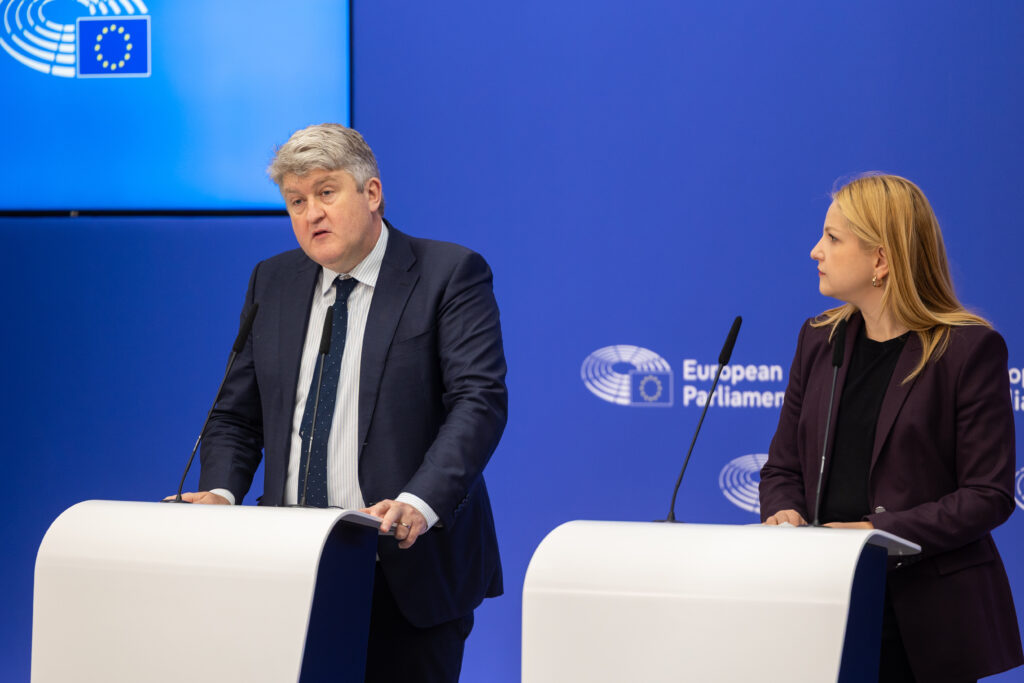
“It shows that politics can move just as fast as technology,” rapporteur Arba Kokalari (EPP/SWE) wrote after the vote. To the lawmaker, the package would “cut red tape”, make Europe’s AI rules “more workable in practice”.
During the meeting, Ms Kokalari called the vote “a big day for AI in Europe”. “We’re showing that we’re taking European startups and scale-ups who are developing and building AI seriously. And that we want them here!” she told MEPs before the vote.
The text concerned the agreement reached after the May trialogues. The package postpones the application of high-risk AI requirements scheduled for August 2026. With this proposal, stand-alone systems would face the relevant obligations from 2 December 2027. Those embedded in regulated products would follow from 2 August 2028.
Co-rapporteur Michael McNamara (Renew/IRL) defended the compromise as a balance between legal certainty and rights protection. “From the start, our objectives were clear: to give companies and innovators the legal certainty they need to grow while firmly protecting fundamental rights of our citizens,” he said.
Mr McNamara added that the final text “cut unnecessary complexity” while preserving safeguards. “In my view, this text is a win for both innovation and the protection of fundamental rights,” he told MEPs.
Nudifier apps ban
The simplification package also adds a ban on systems designed to generate non-consensual intimate material. That part of the agreement became one of the most visible elements of the file.
From the start, our objectives were clear: to give companies and innovators the legal certainty they need to grow while firmly protecting fundamental rights of our citizens. — Michael McNamara (Renew/IRL)
AI tools capable of creating realistic sexualised images of identifiable people without consent, often called nudifier apps, would fall under the prohibition. The ban is expected to apply from 2 December 2026.
“Double regulation” criticism
Another important change concerns machinery. AI-enabled machinery products would be moved away from the direct application of the AI Act’s high-risk regime and handled under a more sector-specific approach.
This would avoid what the industry calls “double regulation”, as companies making AI-enabled products, such as medical devices, machinery, toys, or other regulated goods, already have to comply with EU product safety laws. Under the original AI Act, some of those same systems could also be treated as high-risk AI, adding another layer of documentation, testing, and conformity assessment.
Supporters of the change argue it avoids duplication and makes compliance more predictable for manufacturers. But critics see it differently. For them, the AI Act is not simply repeating product safety rules, but it covers AI-specific risks, such as bias, lack of transparency, poor robustness, cybersecurity weaknesses, and unpredictable model behaviour.
June plenary vote
The committee vote is not the final step. The Digital Omnibus still needs approval by Parliament in plenary and formal adoption by the Council before it can enter into force. But today’s result makes rejection unlikely.