For years, Ukraine’s EU ambitions have been framed around what Kyiv stands to gain from membership. As accession talks are set to begin, a different question is emerging: Could Europe need some of what Ukraine has to offer just as much?
Hungary has lifted its two-year veto on Ukraine’s EU accession, clearing the way for formal talks to open on June 15. With new talks comes a renewed focus on what Ukraine brings to the EU — in defence technology, agriculture, critical minerals, and energy.
“Fantastic news — all EU member states have given the green light to open Cluster 1 in accession talks with Ukraine and Moldova,” Ukrainian Prime Minister Yulia Svyrydenko wrote. “We are one step closer to EU membership: steadily moving towards our goal.”
Cluster 1 is the first stage of the EU’s six-cluster accession process and the one that matters most. It covers the judiciary, the rule of law, public procurement and financial control. It opens first and closes last.
Breakthrough in Budapest
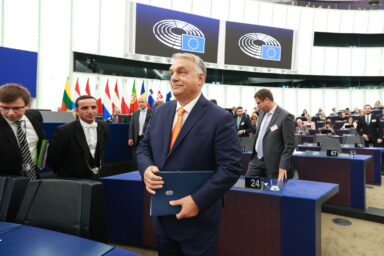
The breakthrough came due to the political shift in Budapest. With the new Magyar government, Kyiv committed to expanding the educational, linguistic, cultural and political rights of the roughly 100,000 ethnic Hungarians in Transcarpathia. While lifting the veto to move the process forward, Prime Minister Péter Magyar still opposes fast-tracking Ukraine’s membership.
“Uncertainty regarding Ukraine’s European future, intensified by Hungary’s blockage of the accession process, has increased geopolitical risks for Ukraine and the region, undermined reform incentives, and fueled concerns about the EU’s long-term commitment,” said Svitlana Taran, a policy analyst at the European Policy Centre.
That uncertainty drove a search for workarounds. Last month, German Chancellor Friedrich Merz floated giving Ukraine “associate member” status, where Ukraine would get a seat at the table, but not a voice. Ukraine would be able to attend EU summits and ministerial meetings, hold a commissioner post and MEPs, but cast no votes.
“I was positively impressed by the letter in the sense that it makes very clear that this is going to be about full membership at some point,” said Susan Stewart, a senior fellow at the German Institute for International and Security Affairs (SWP). Though she was “a little disappointed” that the letter came from Merz alone, with no other member states on board.
President Volodymyr Zelenskyy rejected it outright, calling the prospect of a “voiceless” member unfair.
Part of the eagerness across the EU to see Ukraine progress is what Ukraine brings to the bloc. Beyond a battle-hardened army and drone dominance, the economic case is substantial: a combat-proven defence sector, the third largest source of the EU’s agri-food imports, and reserves of critical raw materials.
The defence benefit
“I think the tipping point [for how Europe views Ukraine] was when Ukraine became one of the world leaders in the drone industry,” said Taran. “This was the moment when countries started to look at Ukraine not only as a taker of security but also as an emerging security provider.” For Taran, defence tech is the number one strategic sector for Ukraine’s accession — linking security, industrial development, innovation and economic integration.
Ukraine fields the largest land force in Europe—roughly 800,000 to 900,000 active personnel—and its defence production has grown twelvefold since the full-scale invasion. Underpinning its new defence ecosystem is a tech ecosystem Europe increasingly depends on: IT exports reached $6.66 billion in 2025, the country’s largest service export, built on a workforce of roughly 300,000 professionals.
The breadbasket
Ukraine is also the third largest source of EU agri-food imports, supplying almost half of the bloc’s imported cereals and 80 per cent of its sunflower oil. Accession would expand the EU’s arable land by roughly a third — and lift its share of global wheat exports to around 30 per cent, overtaking Russia as the world’s dominant supplier.
But the benefit of course comes with drawbacks for EU member states with agricultural sectors they seek to protect. France and Poland chief among them, see Ukrainian accession as direct competition on price and volume, a reality that is hard to overlook given the politically loaded resistance from farm lobbies in both countries.
Taran acknowledges the tension but argues the benefit runs in both directions. Ukraine’s reconstruction will generate major demand for agricultural machinery, fertilisers and processing technology — sectors where European producers are strong. On processed agricultural products, the trade balance already favours the EU, with Ukraine importing significant volumes of European meat and dairy.
For Taran, the sector cannot be weighed in isolation: “Ukraine’s agri-food accession should be considered within the broader framework of European economic and security integration, including its impact on European strategic autonomy, food security, supply-chain resilience, and geopolitical stability,” she said.
Critical minerals
Critical minerals are the most contested entry on the ledger. Ukraine holds deposits of 25 of the 34 raw materials the EU classifies as critical—including Europe’s largest reserves of graphite, titanium and manganese—at a moment when Brussels is scrambling to reduce its dependence on China.
“Bringing Ukraine into the EU is homeshoring — inside the EU, without long supply chains through oceans that can be disrupted at any time,” Taran said.
Not everyone, however, shares the same enthusiasm. “I think that the whole critical raw materials sector should be taken with a grain of salt,” Stewart noted. “One should be very careful about assuming a certain amount is to be gotten out of it — or if there is, then in what timeframe.”
Much of the data on Ukraine’s deposits is outdated, often Soviet-era, she points out — and many of the known deposits sit in areas that are inaccessible or difficult to reach because of Russia’s invasion. The narrative, she argues, gained traction largely as a way to tempt the US into deeper engagement with Ukraine by offering something tangible.
The energy case
Energy is the quieter entry on the list. Ukraine’s electricity grid has been synchronised with the EU’s since 2022, enabling exports to the bloc, particularly from its large nuclear plants. Its storage facilities offer another buffer: Kyiv can make up to 10 billion cubic metres of gas storage available to EU customers — roughly an extra 10 per cent on the bloc’s existing capacity.
The longer-term offer is renewables and gas. Ukraine holds the second largest natural gas reserves in Europe behind Norway, much of it untapped, with transit infrastructure to Europe already built. Its land and wind potential could also make it a meaningful contributor to the EU’s energy transition — if reconstruction and investment follow.
The risks
Despite all of the benefits, comes a benefit versus risk analysis that has left European leaders in limbo. At the centre of it, is the depth of Ukraine’s rule of law problems. Anti-corruption institutions operate in a parallel track within a largely unreformed justice system. As a result of Russia’s war, power has centralised further in the presidential office.
“Ukraine since independence in 1991 has developed a rather entrenched oligarchic system,” Stewart said. “My fear is that that’s the default many people have in their heads as a model for Ukrainian governance.”
Bulgaria and Romania entered with unresolved rule of law issues that resurfaced after accession — as they did in Poland and Hungary. And the external pressure that once reinforced democratic reform is fading. “The US pulling back weakens this coalition,” Stewart said.
Path ahead
Whether any of Ukraine’s economic benefits can be captured short of full membership remains an open question. Just as much as the question of Ukraine in the EU at all. But in the interim, Stewart sees real value in Merz’s proposal — Ukrainian voices inside EU institutions would make coordination on defence and agriculture more efficient even without voting rights, with more impact “than it might sound like on paper”.
But the bulk of the dividend—single market access, CAP integration, investment at scale in minerals and energy—only arrives with full membership. The talks opening on June 15 are the start of that path, and there European leaders will need to reckon with a simple question: are the standards of EU democracy and rule of law more important than the economic competitiveness and military security that Ukraine would bring with it? Most of all, in an increasingly hostile world…