Drugs pouring through Europe’s ports, criminal networks operating across borders, disputes over Russian tourists and the growing battle over access to digital data. Across the EU, security threats have long outgrown national borders, and governments are now searching for new ways to respond.
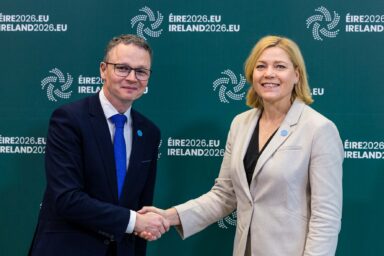
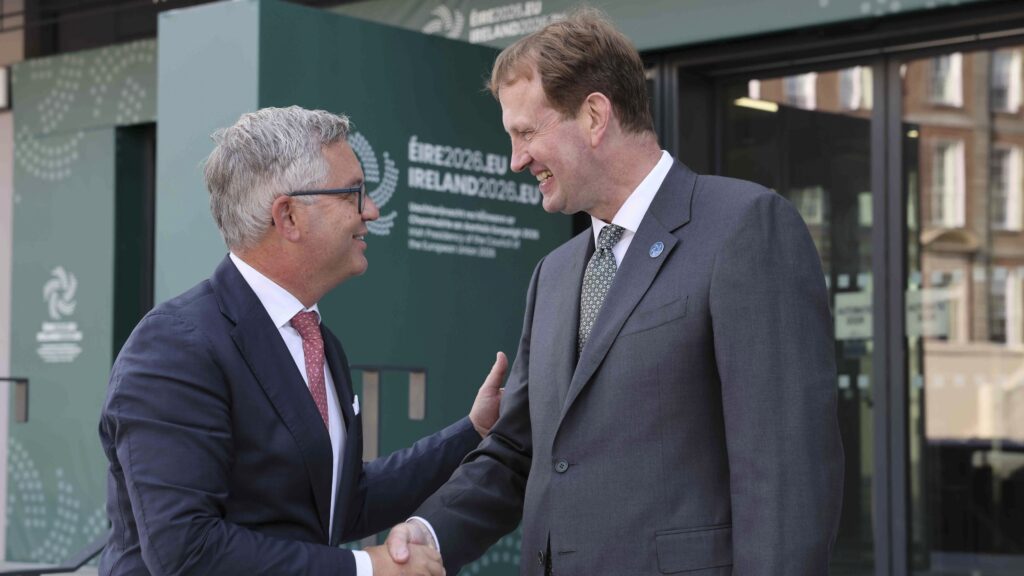
Security issues dominated an informal meeting of EU justice and home affairs ministers in Dublin this week. One of the central topics was organised crime, particularly the trafficking of drugs, weapons and other illicit goods. Criminal networks constantly shift routes, move operations between countries and adapt quickly whenever authorities tighten enforcement.
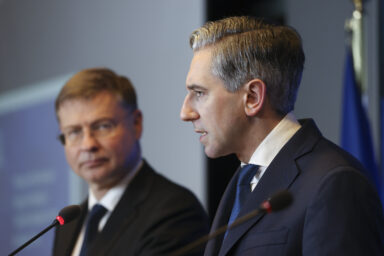
“Europe is one of the safest regions in the world, everyone knows that. But we are also aware that criminal networks are thriving. They’re getting more international, more cross-border, more sophisticated and we have to react to that,” said European Commissioner for Internal Affairs and Migration Magnus Brunner, who represented the European Commission at the meeting. He also outlined plans to expand Europol‘s powers, allowing the agency to play a more active role in cross-border investigations.
Criminal networks are thriving. They’re getting more international, more cross-border, more sophisticated and we have to react to that. — Magnus Brunner, European Commissioner for Internal Affairs and Migration
Europe’s ports received particular attention. They have become key gateways for illegal trade, particularly cocaine trafficking from Latin America, which has emerged as one of the biggest challenges for European law enforcement.
Drug traffickers increasingly avoid the continent’s largest ports in favour of smaller ones, where inspections are often less rigorous. That trend has prompted the expansion of the Ports Alliance initiative, which now brings together 50 European ports.
Polish Deputy Interior Minister Maciej Duszczyk stressed that cooperation between countries and ports remains essential. “Exchange of data is very difficult, especially with different countries but for fighting organised crime it is absolutely crucial,” he said.
The battle over data
Data and how it is handled emerged as another major theme. Police forces across Europe argue that electronic data is now indispensable in investigating serious crime. The challenge is finding a legal framework that gives investigators the tools they need without undermining citizens’ right to privacy.
“There was broad recognition amongst member states that there is a need for some form of legal instrument to ensure that data retention is available for the purpose of law enforcement,” said Irish Justice Minister Jim O’Callaghan. He added that any new system must respect fundamental privacy rights.
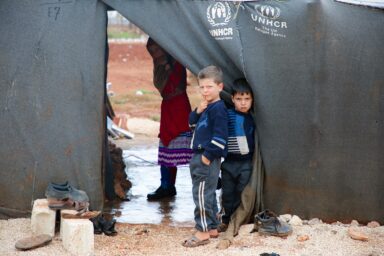
Migration also featured prominently, alongside a growing belief that the EU’s visa policy should serve not only as a travel regime but as a geopolitical tool. Brussels increasingly wants to use visas as leverage in negotiations with third countries, particularly over migrant returns and security cooperation.
“A visa is important to protect the security of the Schengen area but also to strengthen our partnerships with third countries and to support the competitiveness of the European Union,” said Belgian Minister for Asylum and Migration Anneleen Van Bossuyt. According to her, visa-free travel is not a right but a privilege, which must be governed by clear and transparent rules.
Russian tourists in Europe
The debate over Russian visitors added a distinctly political dimension. Several member states continue to push for tighter restrictions on tourist visas for Russian citizens while the war in Ukraine continues.
Estonian Interior Minister Igor Taro described the issue as both a security concern and a moral question. “Ukrainians are dying, then Russians just come and spend their holidays in Europe. Which is just not logical at all.”
He pointed out, without wanting to name specifically, that the countries through which Russians enter the Schengen area are located neither in Eastern nor in Northern Europe. “But the Schengen area is common. So when someone lands in other parts of it, they can travel everywhere. We have to do something,” he remarked. Lithuanian minister Martynas Kateynas has taken a similar position, arguing that issuing tourist visas to Russian citizens is unacceptable.
Ukrainians are dying, then Russians just come and spend their holidays in Europe. Which is just not logical at all. — Igor Taro, Interior Minister of Estonia
Ministers also reviewed the Schengen area’s external border controls and the rollout of the EU’s new Entry/Exit System, designed to register non-EU nationals entering and leaving the bloc. Although the launch has faced repeated technical difficulties, governments insist the system remains crucial for strengthening the Union’s external borders.
“We have managed to get it to work in Sweden, so I would encourage everyone to really put all their efforts into it because it’s not really that much of a rocket science,” said Anders Hall, State Secretary to Sweden’s Minister for Migration.
According to Commissioner Brunner, the system has already recorded nearly 110 million border crossings. It has detected around 45,000 attempts to enter using fraudulent documents and identified more than 1,000 people considered security threats, including individuals with links to terrorism. “We actually see that it works, it makes the difference and it improves the security situation for all member states and for the EU in general.”
Children also on the agenda
Security was not the only issue on the table. Ministers discussed children’s rights, covering both their role in family court proceedings and the spread of child sexual abuse material online. Mr O’Callaghan said Europe must ensure that “the voice of children is heard in family court proceedings”, following discussions that included young people with first-hand experience of family courts.
The European Parliament has also called for closer cooperation between governments and technology companies to tackle online child sexual abuse more effectively.
The Dublin meeting produced no new legislation nor immediate breakthroughs. It did, however, offer a clear picture of how Europe’s security agenda is changing. From organised crime and migration to digital surveillance and child protection, the EU is trying to keep pace with threats that now cross borders far faster than governments can.