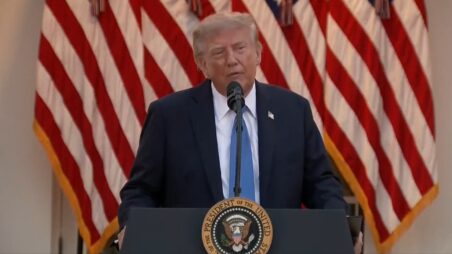
Europe still builds the cars, trains the engineers and writes some of the world’s most advanced rules. But in the race for self-driving cars, it risks becoming a spectator rather than a leader. For Pierfrancesco Maran, Chair of the European Parliament’s Committee on the Environment, the challenge is not just technological: it is also political.
The EU has yet to treat autonomous driving as a strategic priority, Pierfrancesco Maran (S&D/ITA) argues. Instead of creating a single framework for testing and deployment, the bloc remains divided into 27 national systems. That fragmentation makes investment harder, slows innovation and risks leaving Europe dependent on American and Chinese technologies.
In an interview with EU Perspectives, Mr Maran said Europe still has time to catch up, but only if it moves faster on rules, testing and bringing the technology onto European roads.
Europe has advanced carmakers and strong tech companies, but autonomous driving is still developing faster in the US and China. What is holding Europe back most: regulation, investment, testing capacity or political caution?
I think all those issues are evolving together. Autonomous driving is still not considered an important topic on the political level, so we have not created a proper European framework. It is particular because we often say that EU is very good at regulation. But in this case we still have 27 national frameworks, and that is a problem.
Of course, the sector needs funding, mainly from private companies. But the investors need to know that they will eventually be able to deploy the technology. So regulation and investment go hand in hand.
I think something has started to change. If we look at the United States, for example, Chinese technology is restricted for national security reasons. So Europe should ask itself if it wants to become merely a consumer of American and Chinese technologies. I believe we still have time to develop and deploy a European solution.
Do you think the EU needs a single European framework for self driving vehicles, instead of different national rules across member states?
Yes, I do. We should create a European Mobility Agency. We should remove borders and have a single situation for mobility.
Europe should ask itself if it wants to become merely a consumer of American and Chinese technologies.
But there’s something we can do right now with the autonomous driving: the Omnibus package. That could give the European Commission the mandate to introduce measures that create conditions for good investments.
How can Europe allow large-scale testing of autonomous vehicles while still guaranteeing road safety and public trust?
All the datas we have say that autonomous vehicles are much safer than human driving. Of course, we have to test the technology. But we should also allow it in the streets because these systems improve through real-world experience.
We propose a sort of intermediate type approval. When the technology is ready, let’s go on the streets, let’s provide services and check, check, check. If any problems appear we can solve them. Waiting until everything is perfect is not realistic. If we do that, probably American and Chinese comanies will overtake.
Is there any real risk for jobs if Europe implements self-driving cars?
It’s something we should not underestimate, which is why we invited the trade unions into the discussion. But at the moment, Europe is facing shortage of truck drivers and bus drivers. The change will not happen in one or two years, it will take decades. That gives us time to adapt. Autonomous systems will also create demand for other type of workers.