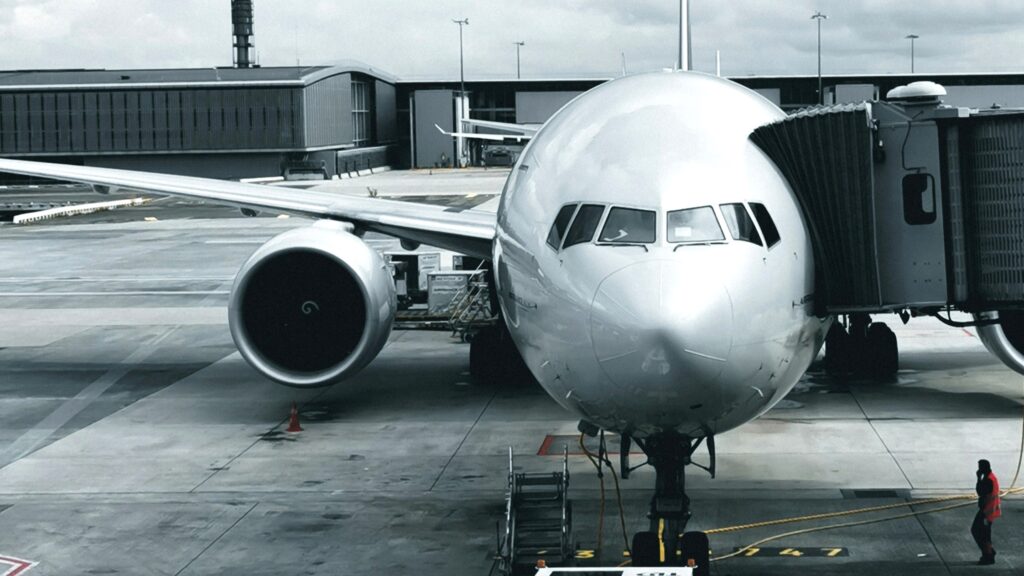
Europe’s ambitions for cleaner aviation are running into a more immediate challenge: securing enough jet fuel. The latest fuel shock is putting pressure on airlines, routes and ticket prices, raising concerns that Europe’s reliance on imported petroleum products could make flying less affordable for millions of Europeans.
The European aviation sector has entered the Middle East crisis already weakened by its reliance on imported feedstocks for jet fuel‚ shrinking number of oil refineries‚ rising prices and growing competition from the rest of the world. Those vulnerabilities have become more visible as geopolitical tensions have disrupted a region that has long been a key supplier of oil.
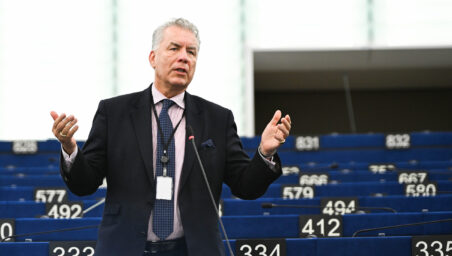
Experts warned the European Parliament’s Committee on Transport and Tourism (TRAN) that the crisis had driven up jet fuel prices‚ disrupted flight schedules‚ and highlighted weaknesses in the EU’s energy security planning․
The Middle East crisis exposed the vulnerability of the Strait of Hormuz for the supply of the middle distillates used to produce kerosene jet fuel and diesel fuel. — David Chiaramonti, Polytechnic of Turin
While much of the debate focused on aviation fuel supply, prices, air networks and fares for passengers, the bigger question was whether Europe has a strategy for keeping aviation competitive during repeated fuel shocks.
Jet fuel prices jump
The European jet fuel market was already vulnerable before the crisis, David Chiaramonti of the Polytechnic of Turin argued. Total demand for jet fuel in the EU is around 50 million tonnes per year. The majority of petroleum products used to produce jet fuel is imported from the Middle East and Asia-Pacific region‚ while European jet fuel refining capacity has declined in recent decades․
The number of ordinary refineries in Europe‚ reduced from 113 in 2009 to 73 in 2025‚ no longer makes this just an industrial problem‚ Mr Chiaramonti says. It is a security matter. “The Middle East crisis exposed the vulnerability of the Strait of Hormuz for the supply of the middle distillates used to produce kerosene jet fuel and diesel fuel”. He estimated the Hormuz crisis to have cost Europe 400‚000 barrels per day.
Imports from the United States and higher output from Africa helped offset part of the loss, but Europe remains short during the summer period.
Jet fuel prices also rose sharply. Chiaramonti said sustainable aviation fuel prices increased by six per cent compared with the previous day, 54 per cent compared with the start of the conflict and 71 per cent compared with a year earlier, reaching €1,258 per tonne.
Stocks handled the shock‚ but only for now
“Security cannot be handled just with urgency,” Chiaramonti told MEPs. “Of course, there are urgent measures to compensate spikes, but it needs a medium term policy addressing a structural change.”
A second wave of pressure may develop if the crisis persists into 2027‚ Chiaramonti reported‚ particularly if stocks and refining rates decline in the first half of that year. That would not only raise prices but could also cause demand destruction‚ and put yet more pressure on Europe’s refineries.
Aisling Reynolds-Feighan from University College Dublin focused on the impact on airlines and airports. The closure of airspace over Iran‚ Iraq and several other Middle Eastern countries narrowed long haul flights to Europe‚ Asia‚ and Australasia to two corridors: one through Türkiye‚ Georgia and Azerbaijan‚ the other through Saudi Arabia and Oman. This increased the flight distance‚ fuel consumption and emissions․
In April 2026‚ jet fuel prices set new all time highs. In Europe‚ jet fuel prices were 10–15 per cent higher than the US at the peak of March and April 2026. Ms Reynolds-Feighan warned that fuel prices could rise by 5–10 per cent for European airlines by 2026 due to the crisis.
The passenger market also changed: reports that airlines would run out of jet fuel meant that people were booking flights later‚ and fares were reduced in order to fill empty seats. This was just when revenues began to fall.
Climate costs add to competitiveness debate
The hearing also exposed a political tension over climate policy. According to Ms Reynolds-Feighan‚ the European Union’s Emissions Trading System (ETS)‚ the Sustainable Aviation Fuel (SAF) mandate and proposed energy taxation measures risk increasing the cost base of EU airlines compared to their competitors.
The additional costs related to the ETS and SAF mandates in Europe will further pressure carriers and lead to reduced profitability in 2026. — Aisling Reynolds-Feighan, University College Dublin
She warned that higher costs would adversely affect profitability and would delay investment in fuel efficient aircraft. “The additional costs related to the ETS and SAF mandates in Europe will further pressure carriers and lead to reduced profitability in 2026.”
Several MEPs raised similar concerns, arguing that European carriers were being placed at a disadvantage to non-EU airlines‚ especially in long haul services. This exchange highlighted how fuel security‚ aviation competitiveness and climate policy were increasingly interlinked in the EU debate․
Sustainable aviation fuel is not yet a quick fix
Sustainable aviation fuel is important for the decarbonisation of the aviation sector in the EU. But experts cautioned that it cannot address the immediate supply issues. The prices of SAF are 3–10 times higher than conventional kerosene depending on the production process. Its supply is still limited. Mr Chiaramonti said SAF production capacity should be enough for the EU’s 2030 goals as set by ReFuelEU aviation‚ but 2030–2040 may be more difficult․
Feedstock volume is a major limiting factor. SAF produced from lipids (HEFA) is expected to dominate through the medium-term. Its feedstock is limited and politically sensitive since biomass can be used in other industries.
Mr Chiaramonti called on Europe to broaden its feedstock lists. It should also include all parts of sustainable agricultural management‚ intermediate crops‚ marginal land and GHG balance in the discussion. He said this could tap more potential in Europe‚ without reducing food and feed production․
What policymakers could do
The experts suggested several policies. According to Ms Reynolds-Feighan, EU oil stockpiling rules helped during the crisis but, given how important air travel is, Europe may need to keep dedicated reserves of jet fuel to avoid future disruptions.
She also called for increased public transparency on jet fuel prices and quantities and sustainable aviation fuel supply. Much of the public data on these topics is behind a paywall. That makes it difficult for policymakers to track the market in real time.
Mr Chiaramonti argued that Europe needs more stability with medium term policy‚ more diversity in supply chains‚ domestic production capacities‚ and realistic roadmaps for alternative fuels rather than just targets․
The crisis has exposed an inconvenient truth for aviation: Europe wants greener flying‚ lower emissions and gradually more sustainable fuels. But it also wants affordable jet fuel‚ resilient supply chains and airlines capable of investing in greener‚ newer equipment․