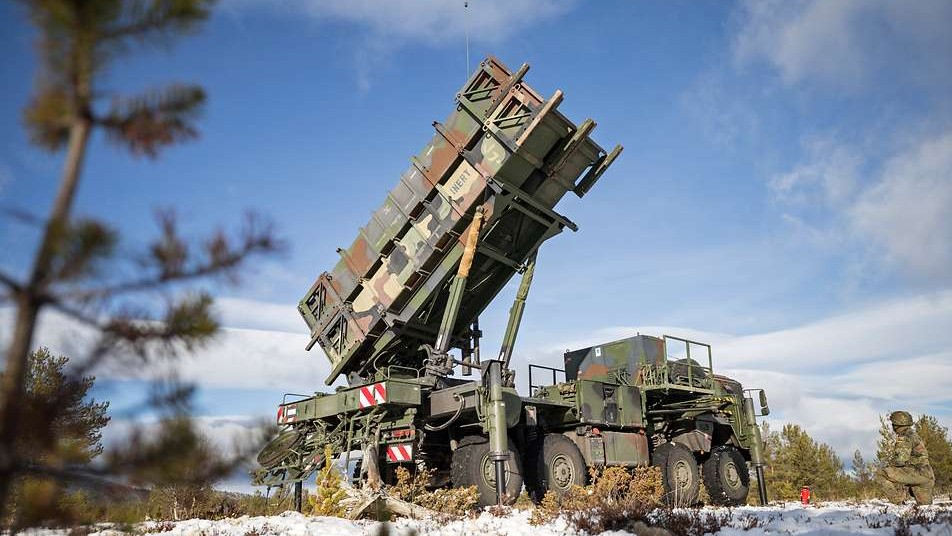
Brussels wants Ukraine to buy European. Nine governments say that is not always possible. They push the European Commission to fast-track an exemption allowing Kyiv to use money from the bloc’s €90bn loan to buy US-made Patriot interceptors and other weapons that Europe’s defence industry cannot delivery in time or cannot supply at all.
The defence ministers of the Netherlands, Germany, Finland, Sweden, Lithuania, Estonia, Latvia, Denmark and Poland made the appeal in a joint letter to EU foreign policy chief Kaja Kallas and Defence Commissioner Andrius Kubilius. They warned that a strict “Made in Europe” approach could slow deliveries of critical equipment.
They want the Commission to make full use of an exemption that allows purchases under the new €90 billion loan from third countries, as Ukraine continues its fifth year of defence against Russia’s war of aggression, with its air defences under growing strain from repeated missile and drone attacks.
“Ukraine clearly stated that there are urgent needs for which there is no EU alternative or that European industries cannot accommodate in a timely fashion,” the ministers wrote. They specifically highlighted PAC-3 interceptors for Patriot air defence systems, as well as AIM-120, ATACMS, ADM-160 MALD and AGM-88 HARM missiles. They stressed that “Ukraine’s urgent needs should be front and centre”.
The ministers also urged the Commission not to wait for its mapping of Europe’s defence industrial base or ask Kyiv for additional market studies before approving the purchases. “Making full use of the available instruments will help maintain momentum and enable Ukraine to obtain urgently needed capabilities without unnecessary delay. This will help keep Ukraine in the fight and support it in protecting human lives,” the letter says.
The rules already allow exemptions
The Commission insists the current rules already provide enough flexibility. Commission spokesperson Balázs Ujvári said the programme gives priority to purchases from EU member states, Ukraine and the European Economic Area. However, if the required equipment is unavailable there, Ukraine can seek approval to purchase elsewhere.
“If ever a scenario arises where the equipment concerned cannot be found in those countries, a derogation request can be submitted,” Ujvári said. He added that the Commission had already approved such an exemption for the programme’s first defence disbursement, which financed drone purchases.
Ujvári also rejected suggestions that the process creates unnecessary delays. He stressed that Ukraine decides which weapons it needs, while the Commission assesses requests and contracts of “thousands of pages very quickly”. “We know what is at stake and that’s why we are going as rapidly as possible,” he said.
The dispute centres on the military arm of the EU’s new €90 billion Ukraine Support Loan for 2026 and 2027. The package sets aside €60 billion for defence procurement and €30 billion for macro-financial assistance to support Ukraine’s budget. This year alone, the Commission plans to disburse €28.3 billion through the defence component.
The dispute highlights a growing tension at the heart of Europe’s defence policy: building up its own industry while ensuring Ukraine gets the weapons it needs fast enough. For the nine countries behind the letter, battlefield urgency must come before industrial preferences.