Germany’s growth outlook has improved sharply as government spending and stronger exports revive the economy. Yet 83% of German industrial companies report growing pressure from Chinese competitors, exposing a deeper problem: the country’s recovery may be strengthening even as its traditional industrial advantage erodes.
The Ifo Institute now expects the German economy to grow by 1.4% in 2026, substantially above its previous forecast of 0.8%. It also raised its projection for next year from 0.8% to 1.2%.
“The recovery of the German economy is continuing,” Ifo economist Timo Wollmershäuser said, pointing to “glimmers of hope” for its crisis-hit industry. Government spending on infrastructure, climate measures and defence, alongside stronger foreign demand, has helped offset the effects of high energy prices.
China has already eaten much of German industry’s lunch and is preparing to start on dinner.
— Brad Setser and Sander Tordoir, economists
The stronger outlook also comes with fiscal and inflationary pressures. Ifo expects the budget deficit to rise from 3% of GDP in 2025 to 4.6% by 2028, while inflation is forecast to reach 3% next year as energy prices continue to weigh on households
Industrial companies demand EU response
Despite the brighter forecast, a survey of 1,300 German companies suggests that the country’s underlying competitiveness problems remain unresolved. Two-thirds said they face growing pressure from Chinese competitors, a figure that rises to 83% among industrial businesses, according to Reuters.
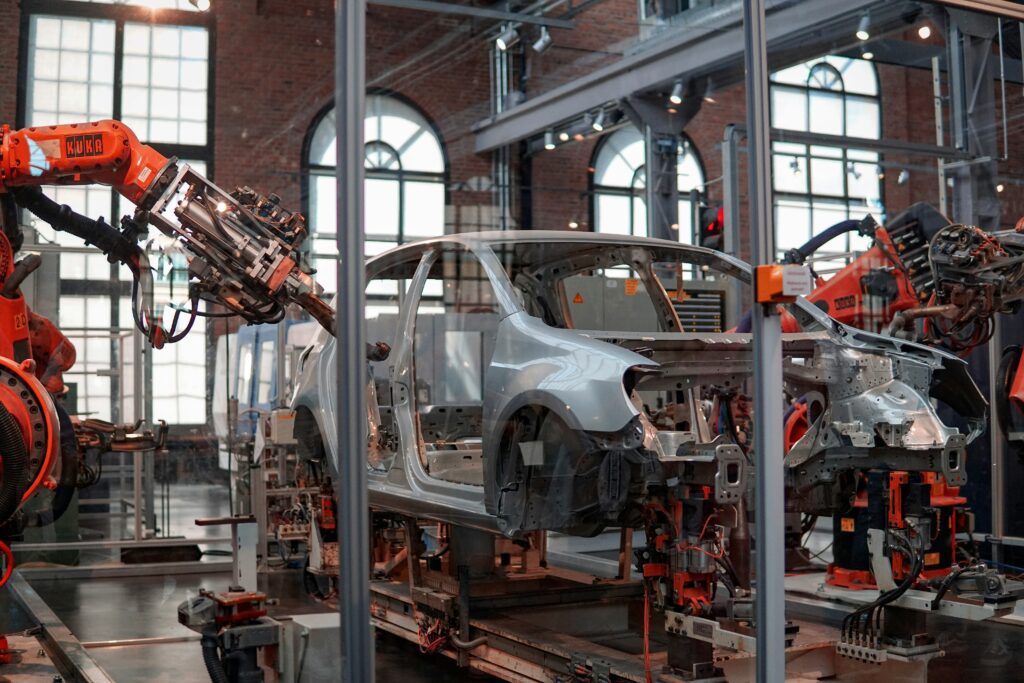
The shift is particularly significant because China was once a major market, rather than a major competitor, for German industrial exporters. Germany now imports more from China than it exports there in categories where its companies once dominated, including cars, trains, aircraft, factory machinery and medical equipment, according to the Associated Press. “China has already eaten much of German industry’s lunch and is preparing to start on dinner,” economists Brad Setser and Sander Tordoir wrote. Chinese manufacturers increasingly compete through technology and product quality as well as lower prices.
The survey found that 55% of German companies supported stronger EU action against market distortions, even if measures produced higher costs, tariffs, supply disruption or retaliation. Businesses nevertheless favoured a coordinated European strategy rather than a broader trade confrontation. As EU Perspectives previously reported, China argues that its export growth reflects international demand, particularly for green technologies, and has criticised European measures restricting foreign investment.
The findings add urgency to the debate over the EU’s proposed Industrial Accelerator Act, which would allow selected public contracts and subsidies to favour goods manufactured in Europe. Germany’s recovery may be gaining momentum, but stronger public spending cannot by itself resolve the deeper challenge facing its industrial model: competing with China in the technologies and markets that once underpinned its economic strength.