Wildfires, floods and other disasters don’t stop at borders. Brussels is now bringing in team of rescue workers and academics to work out how can Europe together better prepare for future crises. And Europeans are firmly on board with more joined-up response.
No European country can count on tackling the next major disaster alone. When nature strikes, saving lives and protecting property often depends on how quickly neighbouring countries can step in. The EU therefore wants to strengthen not just its joint response to crises, but also its ability to prepare for and prevent them.
On Friday, Brussels announced the creation of a new advisory group, PreparEU. It will advise Commission President Ursula von der Leyen and European Commissioner for Crisis Management Hadja Lahbib on how to improve Europe’s preparedness.
The exceptional is no longer exceptional. We must prepare for everything. — Hadja Lahbib, Commissioner for Preparedness and Crisis Management
The group will bring together 11 experienced civil protection and crisis management experts, alongside six scientists and academics from across the bloc. Its first meeting is scheduled for early November.
Wildfires showed why cross-border help matters
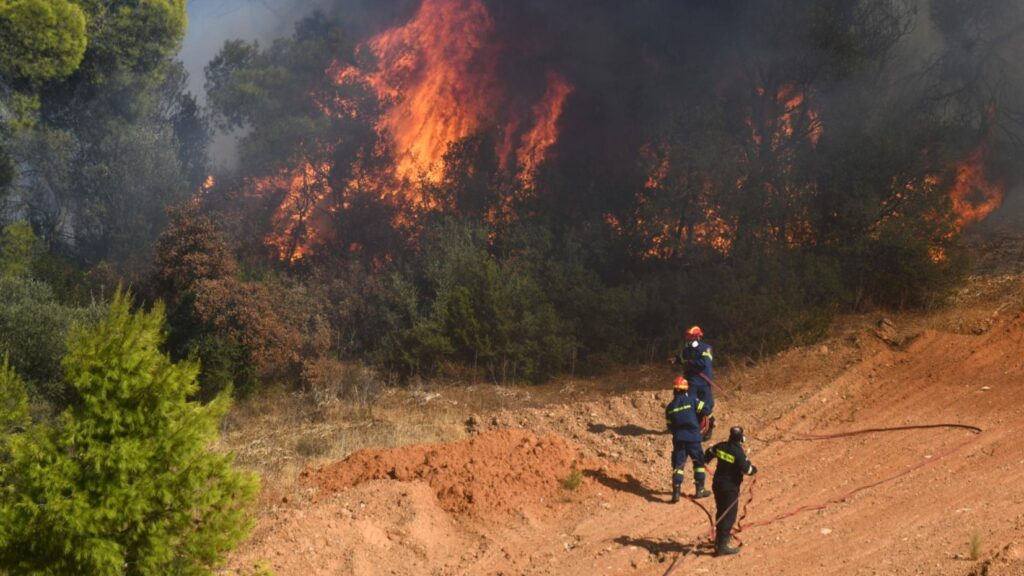
The case for closer cooperation is growing stronger. This summer, devastating wildfires swept across Europe, claiming dozens of lives and destroying more than 686,000 hectares of land. The damage went far beyond forests and natural habitats. Europe also lost around 12 million tonnes of agricultural production.
The EU Civil Protection Mechanism was activated ten times over the summer to tackle fires within Europe and twice for operations outside the continent. The response involved 41 aircraft and 18 ground-based firefighting teams. Planes and firefighters crossed borders to support local services in countries struggling to contain the blazes on their own.
“The exceptional is no longer exceptional. We must prepare for everything,” Ms Lahbib said. European countries, the Commissioner argued, must get ready for a much wider range of risks than they have traditionally faced.
European solidarity is more than just a political slogan. The EU Civil Protection Mechanism allows member states and participating countries to request help during disasters and coordinate the response. It also has a 24/7 coordination centre, which mobilises the equipment, specialists and other resources needed on the ground.
New group to identify gaps in Europe’s defences
PreparEU will look beyond how to get firefighters and equipment to disaster zones faster. It will also assess whether member states have enough resources of their own and what additional capabilities Europe needs.
The 17 experts include a former fire service chief, civil protection and crisis management officials, and researchers from across the bloc. Their fields of expertise range from wildfires and risk assessment to the protection of critical infrastructure. The group should draw on the experience of people on the front lines to help the bloc respond better to future threats.
We need to think bigger and learn faster. — Ursula von der Leyen, European Commission President
It will examine not only immediate threats but also the longer-term fallout from disasters. A major crisis can trigger population displacement, overwhelm healthcare services, leave people without emergency shelter or disrupt communications and critical infrastructure.
Another priority will be closer cooperation between civilian and military services. Experts will discuss the potential development of new European capabilities, including equipment that can serve both civilian and military purposes. A joint European firefighting aircraft fleet could also be on the table.
Ms Von der Leyen expects concrete proposals to make Europe’s civil protection system more effective. “We need to think bigger and learn faster,” the Commission President said.
9 in 10 Europeans want a stronger joint response
There is strong public backing for closer cooperation. A new Eurobarometer survey found that 94 per cent of Europeans agree that other EU countries should help a member state when a disaster overwhelms its ability to cope alone.
Some 91 per cent want even closer coordination of European emergency responses, so the bloc can tackle future disasters and crises more effectively. The same proportion believe EU assistance should also reach countries outside the bloc when they face major disasters.
Europeans want a Europe that stands by them when disaster strikes, neighbours helping neighbours, solidarity crossing borders. — Hadja Lahbib, Commissioner for Preparedness and Crisis Management
Support for joint action is therefore close to unanimous. More than nine in ten Europeans also consider it important for the EU to coordinate disaster responses both within Europe and beyond its borders.
“Europeans want a Europe that stands by them when disaster strikes, neighbours helping neighbours, solidarity crossing borders,” Ms Lahbib noted.
To prevent disasters, not just respond to them
PreparEU forms part of a broader strategy the Commission unveiled in March 2025. Its Preparedness Union Strategy sets out 63 measures and aims to ensure Europe can handle a broad range of threats, rather than prepare for disasters one by one.
The key shift is towards prevention. Until now, the focus has often been on responding once a crisis has already struck. The EU now wants to put more emphasis on risk assessments, planning and preparing the public.
In March this year, the Commission also presented a strategy for integrated wildfire risk management. It covers the entire disaster cycle, from prevention and preparedness to emergency response and recovery. On 27 October, the Commission adopted a new framework for climate resilience. It is also planning a European heatwave plan for next year.
Preparing for crises should not be the sole responsibility of governments and emergency services, either. This year, the Commission brought 150 citizens from across the member states into the debate. Together, they drew up 20 recommendations for improving public preparedness. Their proposals cover crisis communication, volunteering, self-sufficiency and education, among other issues.
They will be presented at the upcoming European Civil Protection Forum in Brussels on 3–4 November.
The new advisory group is expected to help turn Europe’s ambitions into practical measures. Whether that means more shared equipment, better coordination between emergency services or a stronger focus on prevention remains to be seen. Its recommendations are due in spring 2027.