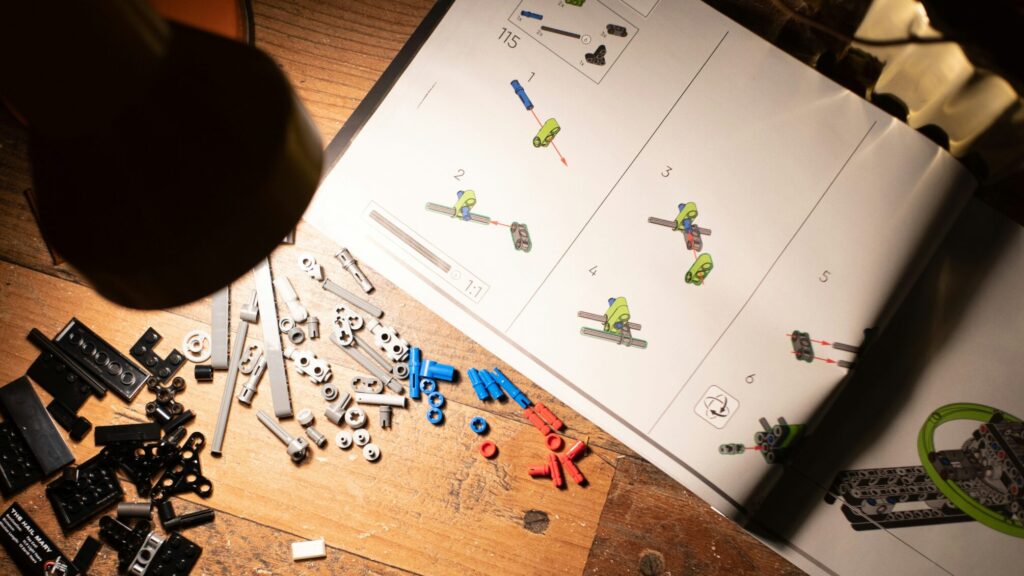
Bulky instruction booklets could soon give way to QR codes and digital manuals, saving businesses €300 million a year and reducing paper waste. But consumers who prefer printed versions will still be able to request them for up to two years after purchase.
European lawmakers have overwhelmingly supported new rules that let manufacturers replace paper product documentation with digital alternatives. The two legislative files, part of the EU’s Omnibus IV simplification package, were steered through Parliament by Dutch Volt MEP Reinier van Lanschot. The directive was adopted by 627 votes in favour, 4 against and 36 abstentions. The accompanying regulation received 622 votes in favour, 2 against and 38 abstentions.
No one will be left behind: if you still want paper, you can have it. — Reinier van Lanschot (Green-EFA/NLD)
The changes will allow manufacturers to provide certain product instructions digitally rather than in printed manuals. The proposals cover sectors like machinery, electrical equipment, batteries and personal protective equipment.
You might be interested

Reacting to the previous Council and Parliament agreement, Mr van Lanschot pointed to the thick paper manuals supplied in multiple languages that consumers often discard. The MEP argued that replacing them with digital alternatives would reduce waste and bureaucracy.
“But no one will be left behind: if you still want paper, you can have it, and now for two full years instead of six months, thanks to a strong push from the European Parliament,” he underlined.
€301 million in savings
The European Commission estimates the measures could reduce administrative costs for businesses by approximately €301 million per year. Around €300 million would come from allowing manufacturers to replace printed instruction manuals with digital alternatives. The remaining €1 million would result from simpler electronic documentation and communication with national authorities.
Mr van Lanschot also highlighted the environmental benefits. He estimated that the changes could save 900,000 trees and 50,000 tonnes of paper. According to his comparison, enough to circle the globe 74 times.
Digital by default, but what about consumers?
For consumers, one of the most visible changes could be the replacement of paper instructions with digital versions, accessible online or through QR codes. Nevertheless, under the agreement, consumers can request paper instructions at the time of purchase or for up to 24 months afterwards. Essential safety information must be provided on paper or displayed on the product.
The agreement also introduces a requirement for manufacturers and other economic operators to provide direct digital contact details, such as an email address or online contact form. Consumers and authorities can reach them without registering, sharing personal data or downloading a dedicated application. Automated replies, chatbots and telephone lines alone will not satisfy this requirement.
A first step towards broader reform
The legislation comes as the EU prepares wider changes to its product regulation, including the European Product Act.
Following Parliament’s approval this week, the two texts still require formal adoption by the Council before entering into force. The new rules are expected to start applying 30 months after their entry into force.