The European Parliament has stepped up pressure on the European Commission to act on conversion practices, holding a formal public hearing after a citizens’ initiative cleared the one-million-signature threshold required under EU law.
Under the European Citizens’ Initiative (ECI) mechanism, one of the bloc’s participatory democracy tools, the Commission must examine and publicly respond to any proposal that gathers at least one million verified signatures across a minimum number of member states. Organisers submitted the initiative on 17 November 2025. It collected 1,128,063 verified statements of support and reached the threshold in 11 member states. The Commission has until 18 March 2026 to state whether it will propose legislation or take alternative measures.
Campaigners want binding EU rules prohibiting practices aimed at “changing, repressing or suppressing” a person’s sexual orientation, gender identity or gender expression. Eight members —Belgium, Cyprus, France, Germany, Greece, Malta, Portugal and Spain— have already enacted national bans, but protections remain uneven across the bloc.
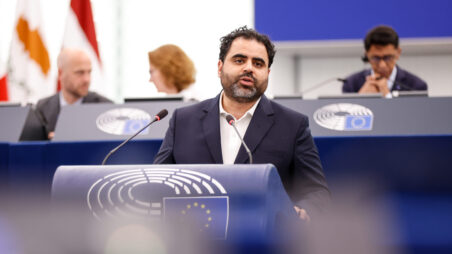
Three parliamentary committees — civil liberties (LIBE), petitions (PETI) and women’s rights (FEMM) — convened a public hearing on the issue on Monday 2 March 2026, bringing together MEPs, Commission officials, organisers, survivors.
Commission acknowledges seriousness of threat
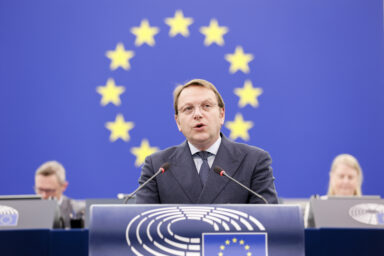
Speaking on behalf of Equality Commissioner Hadja Lahbib, Commission representative Deputy Director-General Irena Moozová of the Directorate-General for Justice and Consumers recognised the documented harm associated with the practices, even if the executive has not yet taken a formal position.
“There is nothing to cure. Conversion practises are based on the false idea that LGBTIQ+ people are somehow sick. They are not.”
She underline the fact that such practices caused real harm, could lead to deep psychological trauma, and could involve physical damage. “Above all,” she said, the practices attacked peoples’ dignity
“One in four LGBTIQ+ people and almost half of transgender people report having been subjected to these practises.”
She confirmed that the Commission has launched a study to assess their scale and impact and pointed to coordination under the EU’s LGBTIQ+ equality strategy. At the same time, she noted that member states retain primary responsibility for health policy — a reminder that legal design will be central to any EU move.
“These practises cause real harm. They can lead to deep psychological trauma. They can cause physical damage. And above all, they attack person’s dignity.” — Irena Moozová, Deputy Director-General, DG Justice and Consumers
Organisers frame issue as fundamental rights
For organisers, the case for legislation rests squarely on human dignity and fundamental rights.
Francesco Stocco, co-president of ACT (Against Conversion Therapy) said the group considered all conversion practises to be “all the interventions in the changing, repressing or suppressing the sexual orientation, gender identity and or gender expression of LGBTI plus people.””
“Let me be clear, these are barbaric attempts to deny LGBTI plus people of our fundamental rights. The UN considers conversion practises torture because this is the issue on hand today, torture.”
Mr Stocco reminded lawmakers that the World Health Organization removed homosexuality from its list of illnesses in 1990 and removed trans identity in 2019, arguing that the underlying premise of such practices lacks medical basis. Meanwhile, Mattéo Garguilo, ACT co-president and one of the architects of the initiative, cast the campaign as an example of citizen mobilisation at EU level. “This represents what direct democracy is at its best,” he said.
“People may have different views and feelings toward the LGBTIQ+ community, but at the end of the day, everyone agrees that we remain human, and that no human should be tortured for who they are or who they love.”
Survivor testimony highlights long-term impact
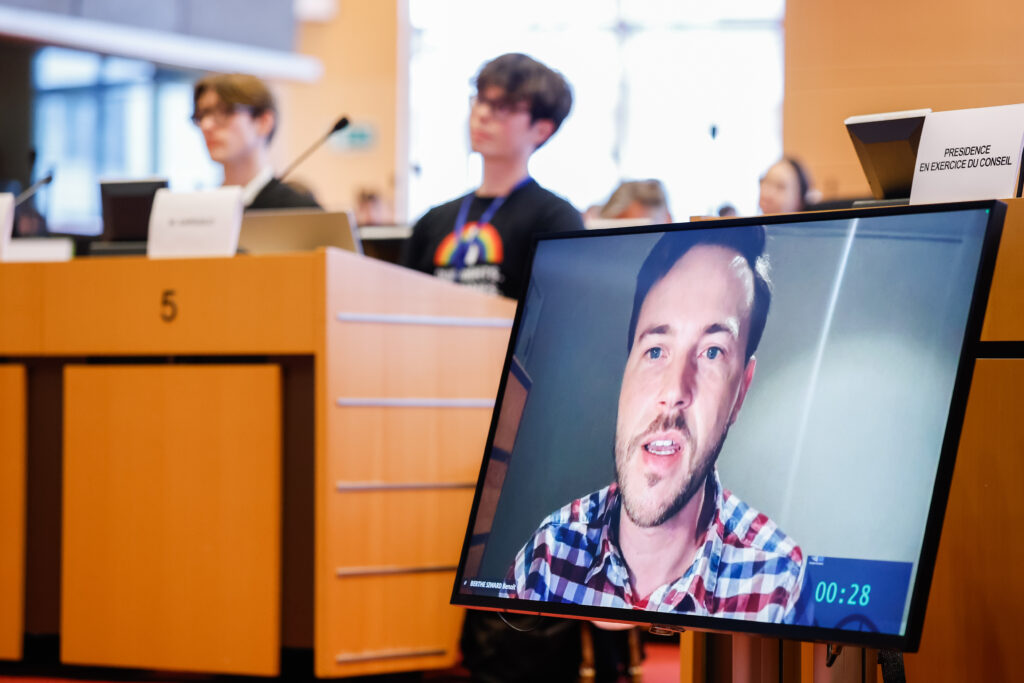
French survivor Benoît Berthe addressed MEPs by video on behalf of the collective Rien à guérir. He described being taken as a minor to religious “healing retreats”, where adults isolated him and subjected him to intrusive sessions.
“I was isolated, forbidden to speak, subjected to deprivation and forced into intrusive and abusive one-to-one sessions where even as a minor, I had to discuss my most intimate sexual thoughts with a priest and pseudo-experts,” he said.
He said homosexuality was portrayed to him as “depravity, something dirty and dangerous” and that he was warned it would lead to “loneliness, hell, HIV, hell to death”. “Conversion practises do not end when session ends, they stay with you,” Berthe added. “But no one is free to harm our bodies and our minds in the name of that belief. That is the line the law must draw clearly.”
MEPs focus on principles but also legal tools
Lawmakers across major political groups voiced support.
Lina Gálvez Muñoz, chair of the FEMM committee, underlined:
“Human dignity is not negotiable and no human being should be tortured for any purpose,” linking conversion practices to violations of bodily autonomy and non-discrimination.
Juan Fernando López Aguilar of the S&D group called them “a gross violation of human rights.”
“They are against United Nations resolutions. They are against the Council of Europe standards. And they are against, of course, the Charter of Fundamental Rights,” he said, urging the Commission to examine criminal, civil and administrative options and ensure that EU funds do not support conversion-related activities.
Members from the centre-right European People’s Party welcomed the mobilisation while pressing for clarity on treaty bases, subsidiarity and how to build consensus among member states. One intervention stressed the need for precise drafting to avoid unintended consequences for legitimate medical practice.
“Conversion practises do not end when session ends, they stay with you.” — Benoît Berthe, survivor and spokesperson, Rien à guérir
The debate was not about whether to act but about how.
With more than one million verified signatures and several member states already legislating nationally, the political momentum now shifts to the Commission — and whether it translates that pressure into an EU-wide proposal.