The European Commission has turned to AI to watch over dinner plates. TraceMap, a data-crunching platform promises to expose food fraud, spot contamination and quash outbreaks of food-borne disease faster than ever.
The Commission launched the tool on 10 March. It is to sift the sprawling databases that underpin the EU’s agri-food regime and serves up graphic maps of supply chains. This aims to reveal the hidden links between operators and consignments.
Officials say the new system marks a leap beyond today’s manual document checks and laborious phone calls between national authorities. It draws on the Rapid Alert System for Food and Feed (RASFF), the Trade Control and Expert System (TRACES) and other networks, then uses algorithms to detect patterns that humans might miss. The pilot version already proved its worth when it helped track down infant milk formula laced with contaminated ARA oil from China.
Sharper eyes on the supply chain
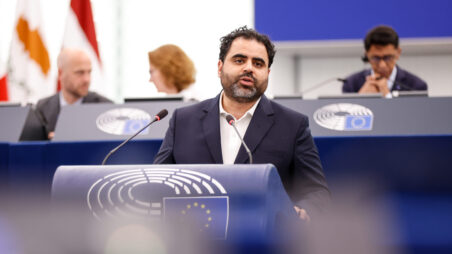
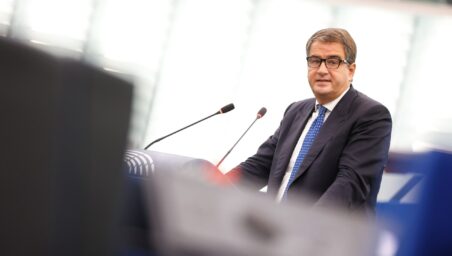
Commissioner for Health and Animal Welfare Olivér Várhelyi left no doubt about the ambitions. “TraceMap is a breakthrough which will revolutionise the EU’s capacity to react to food safety crises and to clamp down on food fraud,” he declared at the unveiling.
If TraceMap works as advertised, national inspectors will be able to query the system in seconds, target controls more precisely and pull suspect products from the market before harm spreads. The Commission promises “rapidly” drawn links between traders, consignments and origins, turning labyrinthine supply chains into neat diagrams that expose rogue actors. That, in turn, could shore up consumer confidence at a time when ever-longer supply chains make tracing harder.
The tool also serves an economic purpose. Agri-food is a €1.3tn segment for the EU, and fraud—think adulterated olive oil or mislabelled honey—erodes both margins and trust. By tightening the net, Brussels hopes to deter cheats and protect honest farmers. Mr Várhelyi insisted, “It will allow faster detection of food fraud and of those trying to circumvent our import conditions.”
Because TraceMap plugs straight into existing data flows, the Commission argues that member states will not need extra people or money. That will please treasuries but could worry officials who fear being outpaced by a black box. The Commission counters that inspectors remain in charge; the system merely guides them to the most suspicious leads.
From farm to fork, faster
Speed matters. The longer a contaminated batch stays on shelves, the greater the health risk and the steeper the recall bill. RASFF already circulates alerts round the clock, yet matching them to precise shipping documents can still take days. By automating that paper chase, TraceMap should shave crucial hours off response times. In a crisis, hours save lives.
The platform may also toughen checks on imports. Once an anomaly pops up—say, a spike in aflatoxins in nuts from a given trader—customs officers across the bloc can home in. Mr Várhelyi told colleagues, “It will provide better coordination between Member States and stronger protection of both EU farmers and consumers.” Unified screening ought to seal cracks that fraudsters currently exploit.
TraceMap is a breakthrough which will revolutionise the EU’s capacity to react to food safety crises and to clamp down on food fraud. — Olivér Várhelyi, EU health commissioner
For all the enthusiasm, TraceMap faces two tests. First, algorithms are only as good as the data they ingest. Some national systems remain patchy, and not every operator logs consignments with equal rigour. Second, the tool’s diagrams must translate into swift legal action. Catching a crook on screen does little if prosecutors cannot prove intent or trace assets.
Digital divide
Another risk lurks in the disparate digital capacities of member states. Larger countries may integrate quickly, while smaller ones struggle with legacy software. The Commission says that TraceMap’s interface is intuitive, but training and bandwidth still matter. A two-speed rollout would blunt the pan-European promise.
Industry groups will watch closely. Legitimate firms welcome stricter policing in theory, but fear false positives in practice. If an algorithm flags a compliant operator, trade could snarl. The Commission insists that human officers make the final call, yet the pressure to act on algorithmic hints will be strong.
Still, the early success with the infant-formula incident hints at the potential. There, TraceMap mapped a convoluted supply chain within minutes, letting inspectors trace the contaminated oil back to its source and yank the formula from shops before any infant fell ill. The episode demonstrated how AI can convert data points into life-saving leads.
Eyes on the horizon
Looking ahead, Brussels sees TraceMap as part of a wider ‘Vision for Agriculture and Food‘. By bolting AI onto existing rules, it hopes to future-proof a regulatory model that dates from the BSE scare of the 1990s. That model, focused on end-product testing, now shifts towards real-time surveillance across the chain.
Success could inspire copycats. Other sectors—from medical devices to chemicals—also wrestle with complex supply webs and fragmented oversight. If TraceMap proves its worth, the Commission may replicate the template elsewhere, further entwining AI with regulatory muscle.
This is critical infrastructure for crisis prevention and control and should help boost all stakeholders’ confidence in our robust food safety systems. — Olivér Várhelyi
For now, the platform’s fate rests on take-up. Member states must feed it fresh, accurate data and act decisively when red flags appear. As Mr Várhelyi summed up, “This is critical infrastructure for crisis prevention and control and should help boost all stakeholders’ confidence in our robust food safety systems.” If national authorities heed the call, Europe’s plates may soon be safer; and fraudsters hungrier for new tricks.