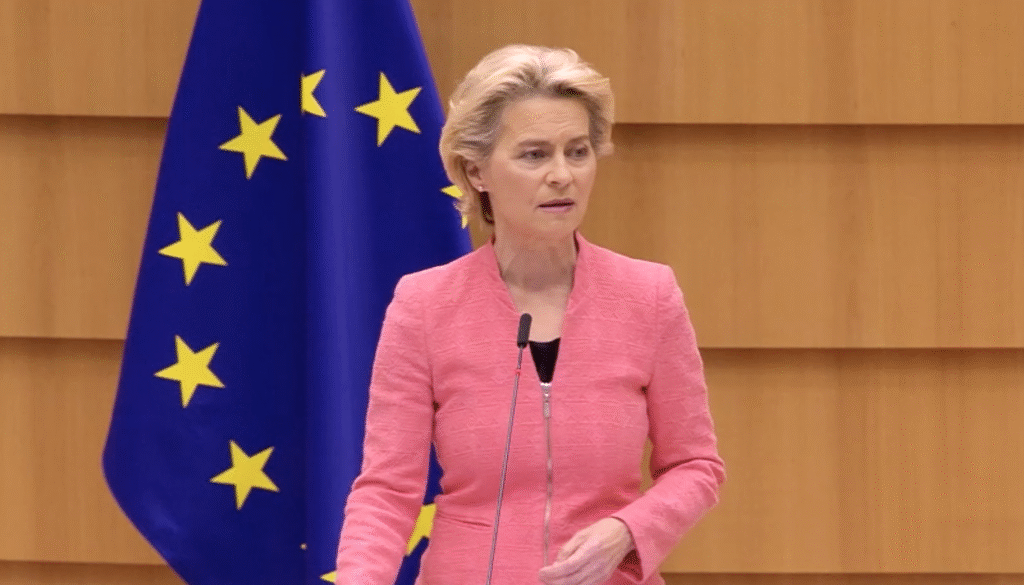
A war in the Middle East is sending energy prices soaring, and Europe is once again exposed. European Commission president Ursula von der Leyen used Tuesday’s Nuclear Energy Summit to declare that backing away from nuclear power was a “strategic mistake”—and to announce a €200m push into Small Modular Reactors as part of the EU’s answer to the crisis. The message was blunt: renewables alone will not be enough.
To foster energy independence and combat high energy prices, the Commission wants to focus on a combination of renewable energy and nuclear. The ongoing Middle East crisis, Ms von der Leyen said, is a “stark reminder” of the vulnerabilities created by Europe’s reliance on fossil fuels. “Together, they can become the joint guarantors of independence, security of supply, and competitiveness—if we get it right,” she added.
The bloc’s vulnerability to energy shocks is not new. It first became painfully apparent after Russia’s invasion of Ukraine, when prices skyrocketed across the continent.
Small Modular Reactors
Small Modular Reactors (SMRs) are a class of nuclear reactors smaller in both size and power output than traditional plants. On Tuesday, the Commission unveiled its strategy for their development and deployment across Europe.
Ms von der Leyen announced a €200m guarantee to support private investment in innovative nuclear technologies, adding that the Commission wants the technology “to be operational in Europe by the early 2030s, playing a key role alongside conventional reactors in a flexible, safe, and efficient energy system.”
SMRs have long been a source of controversy. Supporters argue they could provide reliable low-carbon electricity and complement renewables; critics warn the technology remains largely untested at commercial scale and could prove expensive.
Black hole
“Nuclear power is a black hole for taxpayers and consumers. High upfront costs, long construction times, and government bailouts make nuclear projects a burden on public coffers and a threat to credible climate action,” said Lorelei Limousin, Greenpeace EU political campaigner. “Wind and solar are already much cheaper, and their cost is declining. Not a single euro of EU public money should go to nuclear power.”
Emmanuel Brutin, Director General of NuclearEurope, welcomed the strategy. “The publication of the SMR strategy is a clear recognition of the important role which SMRs will play in Europe,” he said, adding that more funding would be needed “given the investments required in all nuclear technologies, including lifetime extension and new large reactors.”
In its response to the SMR strategy, the European Environmental Bureau argued that it lacks transparency, democratic legitimacy, and economic rationale. Instead of pursuing “costly, unproven, and risky nuclear technologies”, the EU should prioritise renewables, the EEB said.