As the war in Ukraine grinds on with no clear end in sight, its shockwaves are increasingly felt in the Middle East. Fedir Serdiuk, entrepreneur and Forbes Europe ‘30 under 30’ for social impact, explains how Kyiv manages to rapidly advance its military capabilities under fire — and why Europe cannot afford to ignore its experience.
Mr Serdiuk, co-founder of MOWA Defence, places the conflict within a broader global shift, where overlapping crises and emerging alliances are reshaping geopolitical balances. “Our experience has come at a very high cost. Europe has a unique opportunity to benefit from it without paying that same price,” he says in the interview with EU Perspectives.
How are things on the ground in Ukraine right now? What do you think the coming year might bring?
We carry on. It’s an awful war, unprovoked and extremely bloody, very violent from the Russian side. But we are witnessing many developments. Not only the individual heroism of our combatants, public servants, manufacturers, and civil society, but also significant progress in our defense capabilities.
Russia’s willingness to violate our borders, freedom, and independence is partly driven by a broader global trend of using force to attack others and impose values violently. The rule-based world order that once existed is no longer in place.
We continue to resist, and unfortunately, it does not seem to be over yet. However, every day, we achieve seemingly impossible things to preserve our independence. I do not think we are getting any closer to a resolution at this stage.
How has the war between Russia and Ukraine influenced global politics, particularly in relation to the Middle East?
I believe that the global agenda determines Russia’s ability to continue waging this war. Russia’s willingness to violate our borders, freedom, and independence is partly driven by a broader global trend of using force to attack others and impose values violently. The rule-based world order that once existed is no longer in place. From my perspective, we will increasingly witness the consequences of this shift.
Secondly, whether we like it or not, we now live in a world where malign actors are building strong alliances. While those on the other side often suffer from serious miscommunication. The more blurred the lines between us become, the easier it is for destructive forces to succeed. Chaos—whether through missile strikes in Ukraine or instability in places like the Strait of Hormuz—is part of a broader strategy to destabilize the world.
There are also direct negative consequences for Ukraine. For instance, we rely heavily on air defense. Systems such as the PAC-3 missile interceptor are a crucial tool to protect our skies from ballistic missiles. Even before the escalation in the Middle East, demand for these systems exceeded production. Now, shortages are a real risk.
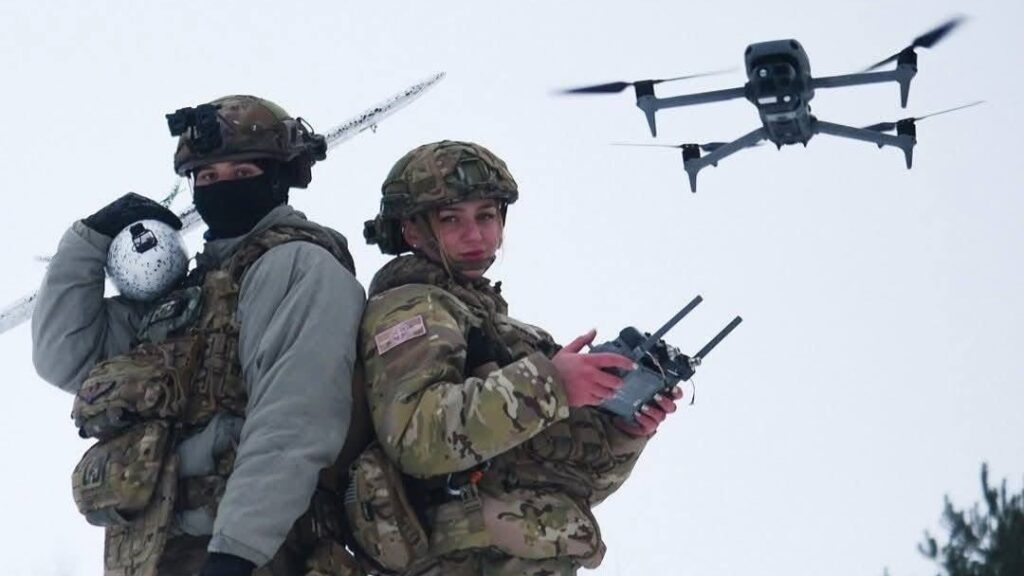
On the other hand, Ukraine has developed valuable expertise such as countering drones that other countries now seek. More broadly, we are entering a period marked by increasing conflict, violence, and instability.
Who are the ‘malign actors’ you mentioned?
I generally avoid labeling but in this case… Iran has transferred Shahed drone technology to Russia, which is used extensively against our civilian population and infrastructure. From my perspective, Russia is clearly the aggressor, and those supporting it with such capabilities are aligned with it.
Chaos—whether through missile strikes in Ukraine or instability in places like the Strait of Hormuz—is part of a broader strategy to destabilize the world.
I oppose the idea of people killing each other in general. However, I have often heard statements from Iranian leadership denying Israel’s legitimacy and calling for its destruction. While I cannot fully judge the situation, it appears that one side has carried out large-scale violence against civilians, which contradicts my values.
On the other side, while not flawless, systems exist where governments can be elected rather than imposed through violence. So the issue is not simply Iran versus Israel, but the systems allowing political choice versus those suppressing it.
Are Western powers managing the crises in Ukraine and the Middle East consistently, including from a military perspective?
I think the challenge to Western values did not begin in 2022, nor in 2014, but earlier, around 2007, when Vladimir Putin openly challenged these values at the Munich Security Conference. This was followed by actions in Georgia, Ukraine, and Syria.
Ukraine has gained valuable expertise that could benefit other nations. However, more importantly, we expect partners, especially in the EU, to be willing to learn from us.
So today, the question is no longer about crisis management efficiency. It is about whether there is genuine willingness to defend the right to live in freedom against actors such as Russia, Iran, or North Korea.
Regarding Russia and Iran, could Putin shift focus to the Middle East and reduce pressure on Ukraine?
According to the Ukrainian General Staff, Russia has recently suffered around 8,000 casualties in just a few days. That indicates extremely intense fighting. There is no sign of a slowdown: on the contrary, intensity has increased. We do not see any shift in strategy. At present, the Middle East does not appear to be Putin’s primary focus; he remains heavily engaged in Ukraine.
Are there any new developments in the military equipment or tools Ukraine is using?
We are constantly evolving across all dimensions of warfare: from interceptor and radar integration to the design of cruise and ballistic missiles. From training and leadership to command and control systems. From uncrewed naval systems to deep-strike drones and geospatial software. Given our limited resources, especially manpower, we must rely on technological innovation and creativity.
I would add that we are awaiting a government decision to allow the export not only of military equipment but also services. Ukraine has gained valuable expertise that could benefit other nations. However, more importantly, we expect partners, especially in the EU, to be willing to learn from us. Middle Eastern countries have already sought Ukrainian experience, while the EU has not fully done so yet.
We hope for stronger partnerships involving governments, private companies, NGOs, and Ukrainian veterans. Our experience has come at a very high cost. Europe has a unique opportunity to benefit from it without paying that same price. Learning from Ukraine could help them better prepare and avoid being caught off guard.