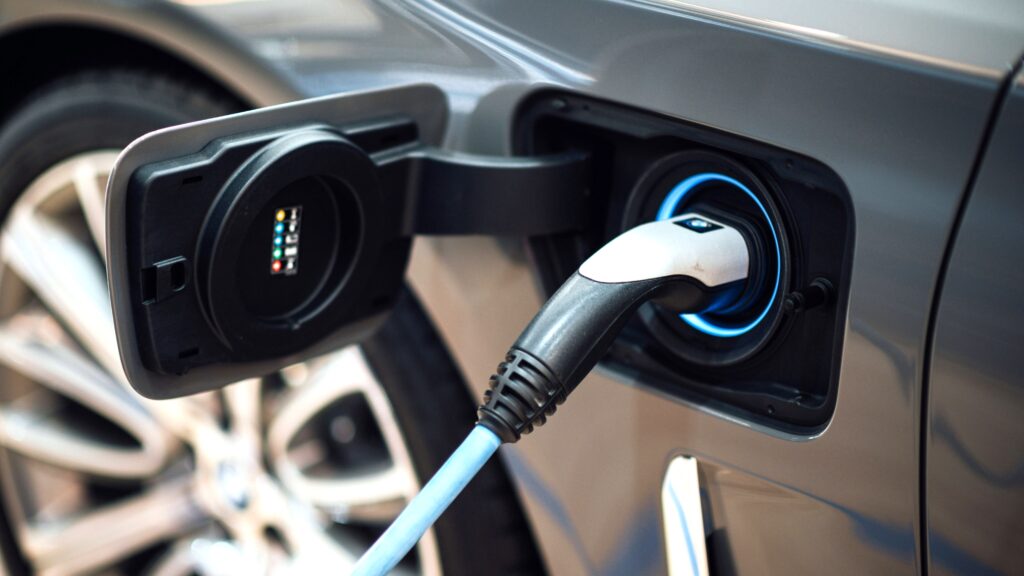
Electric vehicles (EV) are meant be the future of European industry. But one key problem remains unresolved: despite years of discussion, Europe still relies heavily on batteries produced outside the EU, with China dominating global supply. This creates a strategic vulnerability in a sector that is central to Europe’s industrial and climate ambitions.
The major concern is the EU’s dependence on external suppliers for batteries and key technologies in the EV value chain. The bloc still imports a significant share of lithium-ion batteries from China.
At the same time, multiple battery plants projects in Europe have been delayed or scaled back. If those capacities don’t come through‚ greater reliance on foreign supply raises questions about how sustainable industrial production really is․
Building on this dependence, a European Parliament INTA Committee-commissioned study highlights electric vehicles and battery value chains as one of the main channels through which Chinese industrial overcapacity is affecting EU manufacturing. The risk is concentrated mostly on upstream components rather than the final assembly of vehicles․
The report finds that in 2022‚ China produced 72 per cent of the world’s electric vehicles and 81 per cent of battery cells․ Capacity utilisation stood around 58 per cent for EVs and 31․5 per cent for battery cells. This indicates production is expanding faster than demand, leaving meaningful amounts of spare capacity in the supply chains․
European carmakers under pressure
China is strongly dominant in the battery value chain (cells and key subcomponents) due to long-term industrial policies‚ economies of scale‚ and an established innovation ecosystem․ According to the study, Chinese battery manufacturers have benefited from government support both on the demand side (EV subsidies) and supply side (favorable financing‚ land grants‚ and previously‚ local content mandates). That helped them scale up production and reduce costs. Thus‚ while European producers remain at an earlier stage of industrial development‚ they are under pressure to expand production․
The report finds no systematic evidence of dumping in the sector. Chinese electric vehicles are, in most cases, sold at higher prices in Europe than in their domestic market.
A more fundamental challenge lies in battery production itself. The EU currently meets around 43 per cent of its domestic demand. The rest is covered by imports, again primarily from China. This leaves Europe structurally dependent on external suppliers at a critical stage of the EV value chain.
In contrast, electric vehicle production in the EU has so far proved relatively resilient. Many components are still produced within the region, supported by established industrial ecosystems, logistics networks, and ongoing localisation efforts. Policy measures have also played a role, particularly the countervailing duties introduced in 2024. At the same time, there is no clear evidence that Chinese-made EVs are systematically undercutting the European market.
EV production remained steady
While EV production and demand trends in Europe remain broadly consistent in Europe‚ the global picture is different. Battery production capacity is outstripping demand, driven by a slower market penetration and structural bottlenecks․ This growing imbalance is contributing to rising overcapacity in the global battery industry.
Further, the report finds no systematic evidence of dumping in the sector. Chinese electric vehicles are, in most cases, sold at higher prices in Europe than in their domestic market. Overcapacity in the battery market is partly driven by industrial expansion but also uncertainty around future demand and technical requirements for batteries globally․
The report concludes that trade defence tools can play a role in specific situations. They do not, however, address structural dependencies or overcapacity․ It argues that EU policy will also need to place greater emphasis on scaling up domestic battery production and supporting technological development, alongside continued monitoring of market and the targeted use of trade instruments where necessary.