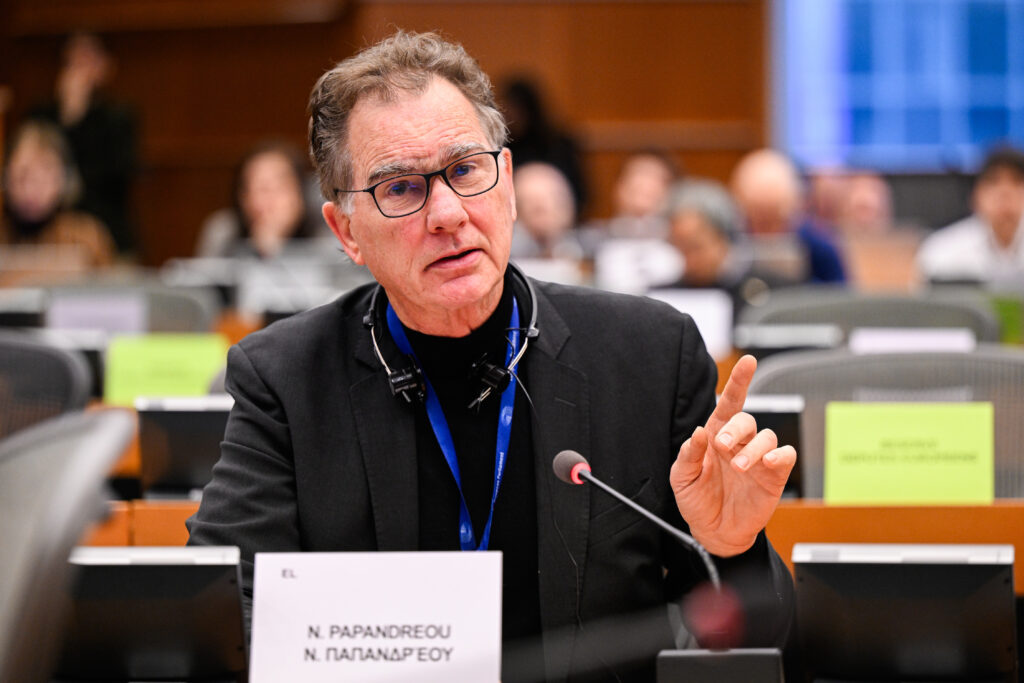
Fifty million Europeans still cannot access cancer therapies that deliver radiation directly to tumour cells. The EU is failing to change that. Radioligand therapies are currently a last resort for patients with the most advanced disease. Millions across the EU still cannot reach them. MEP Nikos Papandreou (S&D/GRC) is pushing the EU to use its financial and regulatory muscle to close the gap.
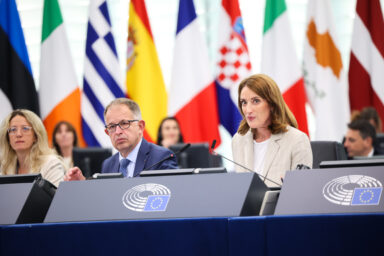
Speaking at a European Parliament event bringing together clinicians and policymakers, Mr Papandreou warned that Europe risks failing patients. He called on the EU to mobilise the Multiannual Financial Framework and the Beating Cancer Plan to scale access to radioligand therapies. MEP Tomislav Sokol (EPP/HRV) joined him.
EU Perspectives talked to MEP Papandreou.
What made you personally engage with radioligand therapy?
Radioligand therapy came onto my radar through discussions with clinicians and patients. But also through a broader pattern we see again and again in European health policy. Europe often succeeds in innovation but fails in equal delivery.
This is particularly striking in nuclear medicine, which already plays a central role in patient care. Millions of procedures are performed every year across Europe, and yet access to its most advanced therapies remains uneven. The recent draft cancer report in Parliament makes that point clear. Disparities in survival, screening and access to medicines remain very significant across and within member states.
You might be interested
Radioligand therapies need specialised infrastructure and workforce. Who should lead: member states or the EU?
Member states organise healthcare, but for highly specialised therapies like radioligand treatment, purely national solutions are not enough.
From my perspective, health is a right, not a privilege. So, when access depends on where someone lives, the EU has a duty to help reduce that inequality through coordination, investment, and support for infrastructure and skills. Radioligand therapies are a clear example of this, particularly for medical radioisotopes, which cannot be efficiently developed in isolation.
You said not every country needs its own expertise centre, but that capacity should be organised through European Reference Networks. What should that look like in practice?
In practice, it means being honest. Not every country can or should build every capability alone. The better model is a European one, where expertise is organised, connected and accessible.
The Parliament’s draft cancer report is helpful here. It says European Reference Networks are essential for rare cancers, but that cross-border referral pathways remain underused, and it calls for sustained investment so every patient can access multidisciplinary expertise. So yes, I support stronger EU backing for centres of excellence, linked through ERNs, with clearer referral pathways and practical support for patients and families when treatment must happen across borders.
You suggested that once the European Medicines Agency approves a therapy, it should be automatically accepted at national level. Are you calling for an end to national reimbursement and assessment duplication?
What I am calling for is not the removal of member state competence, but the reduction of unnecessary delay. Today, too often, a therapy can be scientifically validated at European level, yet patients still face fragmented and slow access pathways afterward.
We need better coordination between the EMA, HTA processes and national systems, more transparency on timelines, and less duplication where the evidence has already been vigorously assessed. The goal is simple: innovation approved in Europe should reach patients in Europe more quickly and fairly.
You described the Beating Cancer Plan dashboard as a form of ‘political pressure’ on member states. But is transparency enough?
Transparency matters, but it is not enough on its own. The draft cancer report is right to push for stronger monitoring, outcome indicators and accountability, because tracking progress without correcting inequalities is not enough. It also calls for targeted investment and continued funding under the next MFF. From my perspective, transparency must lead to action: investment, coordination, and clear pressure to close access gaps.
Innovation approved in Europe should reach patients in Europe more quickly and fairly.
—Nikos Papandreou, MEP (S&D/GRC)
You said EU funding is becoming more results-oriented, which is difficult for medicine. How should health projects demonstrate ‘results’, survival, quality of life, system efficiency?
We need a broader and more realistic understanding of results in health. Survival matters, of course, but so do quality of life, earlier diagnosis, reduced waiting times, and whether a therapy actually reaches patients across all member states.
That is also why I believe the next phase of EU health policy must focus not only on discovery, but on delivery. Europe does not just need to innovate; it needs to organise itself so that innovation is translated into equitable patient access.