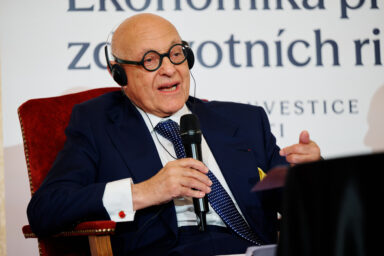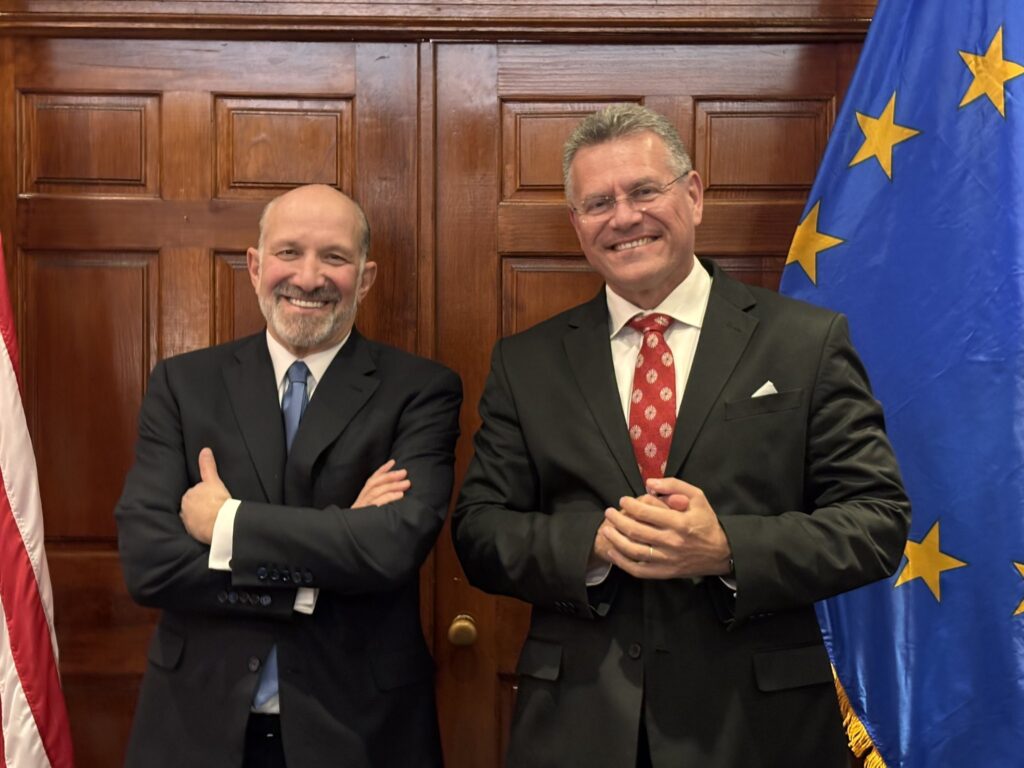
European Trade Commissioner Maroš Šefčovič left Washington on Friday with no breakthrough on the 50% US tariffs still hitting European steel and aluminium exports, but with a new proposal on the table: transatlantic coordination on global steel overcapacity.
Speaking to reporters after meetings with US Commerce Secretary Howard Lutnick and US Treasury Secretary Scott Bessent, Šefčovič said talks were “going in a positive direction” and that both sides had agreed to accelerate technical-level work on steel and aluminium.
Šefčovič called for “steel ring-fencing” — aligning EU and US trade policy toward third countries, primarily China, to prevent cheap foreign steel from undercutting both markets. The EU recently doubled its own tariffs on imported steel to shield European producers from Chinese overcapacity, and Šefčovič framed the two blocs as facing a common problem.
“As a next step, we want to launch work with the US on steel ring-fencing, aligning our approaches towards third countries,” Šefčovič told reporters.
Minerals deal
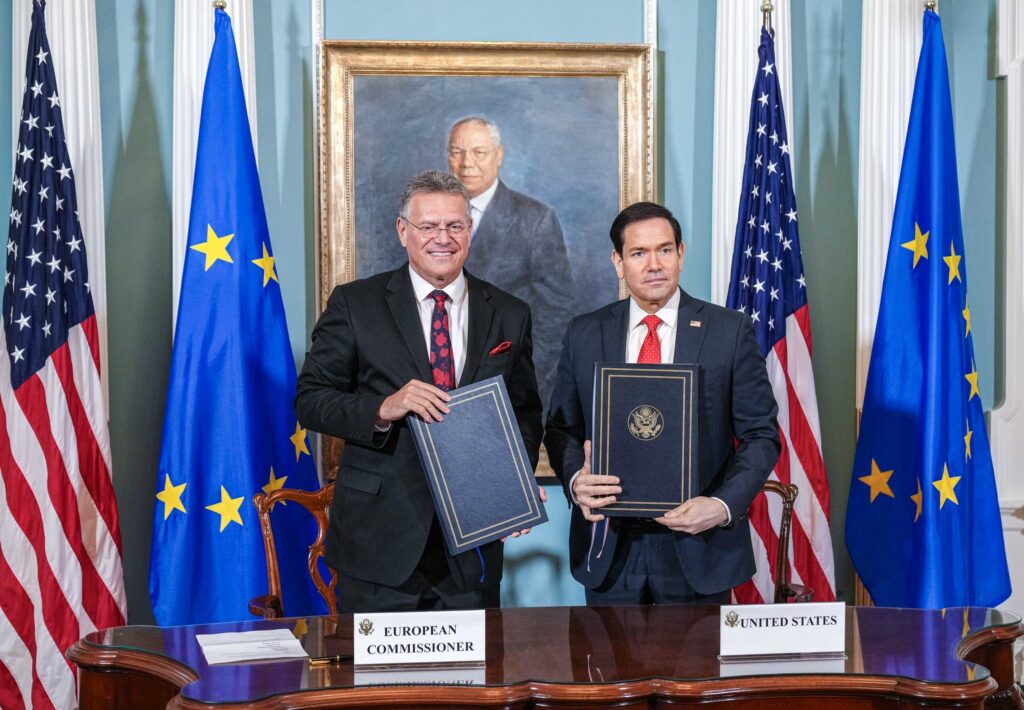
Šefčovič also formalised a critical minerals partnership with Washington during the visit, signing a memorandum of understanding with US Secretary of State Marco Rubio that includes minimum price mechanisms designed to support suppliers outside China.
Beijing controls between 47% and 87% of global supply for key minerals including lithium, cobalt and rare earths, and controls the majority of critical mineral refining capacity.
The steel tariff deadlock has been complicated by delays in EU implementation of the Turnberry deal, which is now being negotiated between the European Commission, Parliament and Council, with the second round of the trilogues scheduled for May 6.