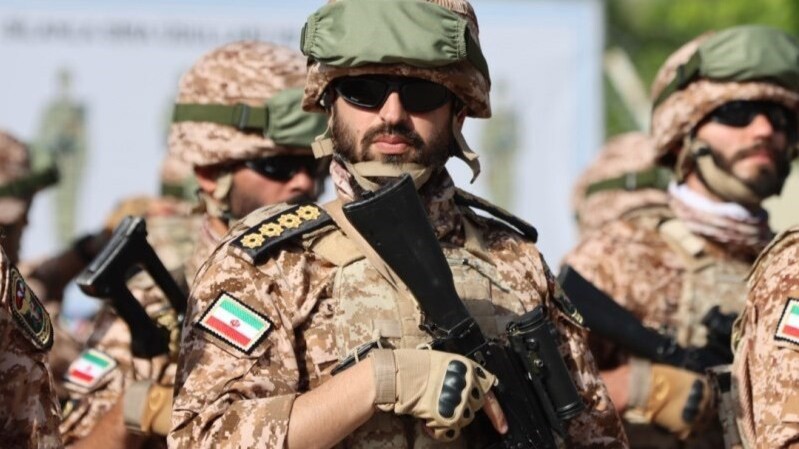
European security services have taken down more than 14,000 internet links associated with Iranian propaganda. A coordinated cross-border operation led by Europol involved 19 countries. The campaign targeted an extensive online ecosystem used by the Islamic Revolutionary Guard Corps (IRGC) to disseminate ideological content, recruit supporters and generate funding.
Modern conflicts are no longer confined to physical battlefields. An increasing share is now being fought in the digital realm — across social media platforms, video-sharing sites and independent websites where propaganda circulates and sympathisers are mobilised. It is precisely this online infrastructure that recent European security efforts set out to disrupt.
During the operation, investigators identified thousands of posts, videos and websites linked to the IRGC. According to Europol, the material included ideological speeches, propaganda videos and content glorifying the group’s activities.
„Terrorist networks are becoming more fluid and continue to adapt their methods, making sustained and coordinated action essential to limit their reach and impact,“ Europol wrote in a press release.
Under Europol’s coordination, investigators flagged 14,200 internet links associated with IRGC activity. These were subsequently reported to platform providers, who removed them or launched further assessments.
Joint effort of 19 countries
The operation ran in several coordinated phases between 13 February and 28 April, involving law enforcement agencies from 19 countries, including Austria, Germany, France, Italy, the Netherlands, Spain, Czechia, Ukraine or the United States.
It was led by the EU Internet Referral Unit — a specialist unit within Europol focused on identifying and referring extremist and terrorist content online for removal or review.
Propaganda material was found across mainstream social media platforms, streaming services, blogs and standalone websites. Investigators reported content in a wide range of languages, including Persian, Arabic, English, French, and Spanish.
Calls for retaliation
According to Europol, the removed material includs speeches blending religious motifs of martyrdom with political messaging, as well as AI-generated videos glorifying the Revolutionary Guards.
Some posts reportedly contains calls for revenge for the death of Iran’s Supreme Leader, Ali Khamenei. He was killed during the first wave of US-Israeli strikes on Iran in late February.
Analysis also revealed that IRGC propaganda spreads through a broad network of interconnected websites and accounts operating in multiple languages. These frequently amplify material produced by aligned groups such as Hezbollah, Hamas or Ansar Allah.
Accounts, platforms and crypto channels
The operation also led to restrictions on several prominent social media accounts. The main IRGC account on the platform X—with more than 150,000 followers—was blocked for users within the EU.
Investigators further found that the organisation relies on hosting services across multiple jurisdictions from Russia to the United States. That helps it maintain its online infrastructure even in the face of takedown efforts.
Another key tactic involves the use of cryptocurrencies to fund online operations and to bypass conventional financial oversight mechanisms.
Terrorist organisation
The Islamic Revolutionary Guard Corps was designated a terrorist organisation by the EU on 19 February 2026. The listing has already begun to take practical effect. “This designation allows law enforcement to take action against activity of its members and its supporting entities in the EU,” Europol stated.
Beyond the EU member states, the IRGC is also designated as a terrorist organisation in 22 other countries, including the United States, Australia, Ukraine and Saudi Arabia.
The operation marks one of the most extensive coordinated efforts to date targeting online networks linked to the IRGC. It highlights the growing focus of European authorities on disrupting digital infrastructures used by state-aligned actors.