Most Europeans have never heard of a solar inverter. But these devices run the power systems of millions of homes across the continent, and most of them are made in China. The European Commission now warns they could shut down the grid, and is preparing to ban them.
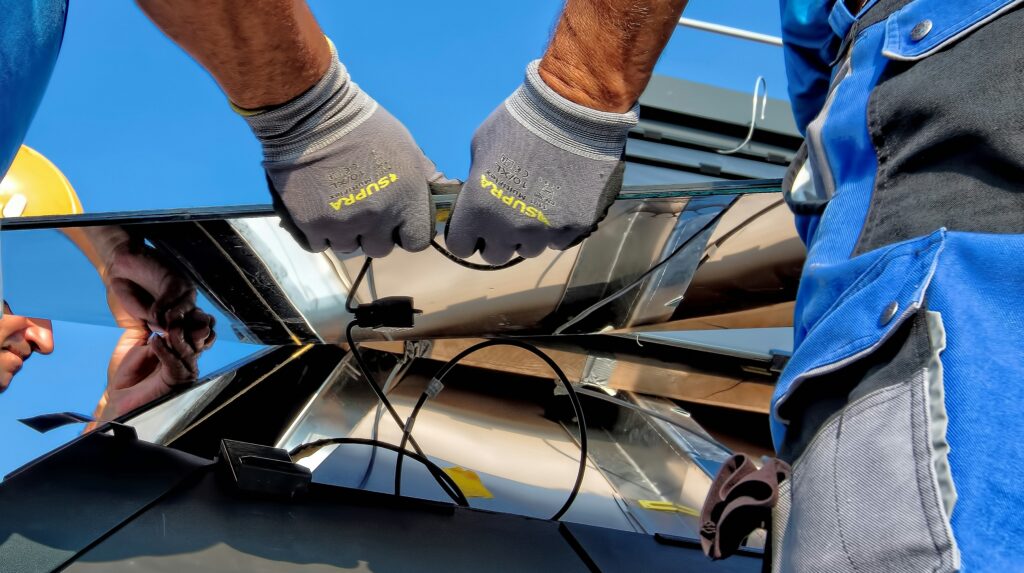
A solar inverter converts the direct current that solar panels produce into the alternating current that powers homes and businesses. Without it, solar energy cannot enter the grid.
Around 70 per cent of solar inverters installed across the EU have come from Chinese manufacturers. Huawei alone accounted for approximately 29 per cent of global solar inverter capacity in 2024, according to Wood Mackenzie. EU documents describe the company as a dominant supplier in European markets. That dominance has made the EU quietly dependent on a single country for a critical piece of its energy infrastructure.
A flaw in the system
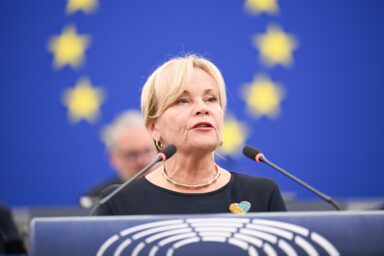
The inverters are connected to the internet. That is what makes them useful, but also dangerous. Hackers could use this connectivity to manipulate electricity production, cut off power generation, or access operational data. “This could mean a remote shutdown of member states’ networks, leading to countrywide blackouts,” Siobhan McGarry, the Commission spokesperson for the Internal Market, warned today.
The Commission has already moved. In December 2025, it published a joint communication on EU economic security identifying solar inverters as a high-risk dependency. It has since issued guidance restricting EU funds for projects using inverters from high-risk suppliers, covering China, Russia, Iran, and North Korea.
The ban extends to projects in neighbouring regions such as North Africa and the Western Balkans that are connected to the European grid. The move follows earlier EU efforts to reduce reliance on Chinese vendors in telecoms networks, where the EU similarly flagged Huawei and ZTE as security risks. Huawei has repeatedly denied that its equipment poses any security threat.
“Huawei alongside ZTE have already been listed and we have a recommendation to encourage our member states to exclude them from their telecom operators and from their connectivity infrastructure,” Thomas Regnier, the Commission spokesperson for tech sovereignty and defence, said today.
Legislation and costs
The bigger step is still ahead. In January 2026, the Commission proposed a Cybersecurity Act revision to formally ban high-risk suppliers from the EU market. The proposal is in its first reading in the European Parliament. Preparatory discussions are under way in the Council.
This could mean a remote shutdown of member states’ networks, leading to countrywide blackouts.
— Siobhan McGarry, Commission spokesperson for the Internal Market
Replacing existing installations will not come cheap. According to a Wood Mackenzie analysis, switching to Western inverters adds just 1.7 to 4.3 per cent to total project costs. The question of who foots the bill remains open.