Europe depends on non-European providers for over 80 per cent of its digital products and services. The European Commission presented four initiatives this Wednesday to start changing that.
The European Commission has unveiled its long-awaited Tech Sovereignty Package after three delays. The bloc produces only around 10 per cent of global semiconductors and US hyperscalers hold over 70 per cent of its cloud market. Brussels now wants to cut that dependence across chips, cloud, open-source software, and energy infrastructure.
“We cannot afford to depend on others for the technologies that keep our hospitals running, our energy grids stable and our services secure,” Commission President Ursula von der Leyen said. “This is about protecting our citizens, defending our interests, and making our own choices.”
The Commission sets out the scale of investment that Europe needs to mobilise. In real numbers, an additional €120bn for semiconductors. Around €200bn by 2036 to expand data-centre capacity, mostly from the private sector. Plus €100bn for cloud and AI leadership initiatives, including AI factories and gigafactories. Lastly, €2bn over seven years for the open-source strategy. For energy, the Commission points to a much broader annual investment gap of €400bn.
To help finance this, Brussels wants to use the future European Competitiveness Fund, Horizon Europe, national and regional partnership plans, and private capital mobilised through deeper EU capital markets.
The Chips Act 2.0
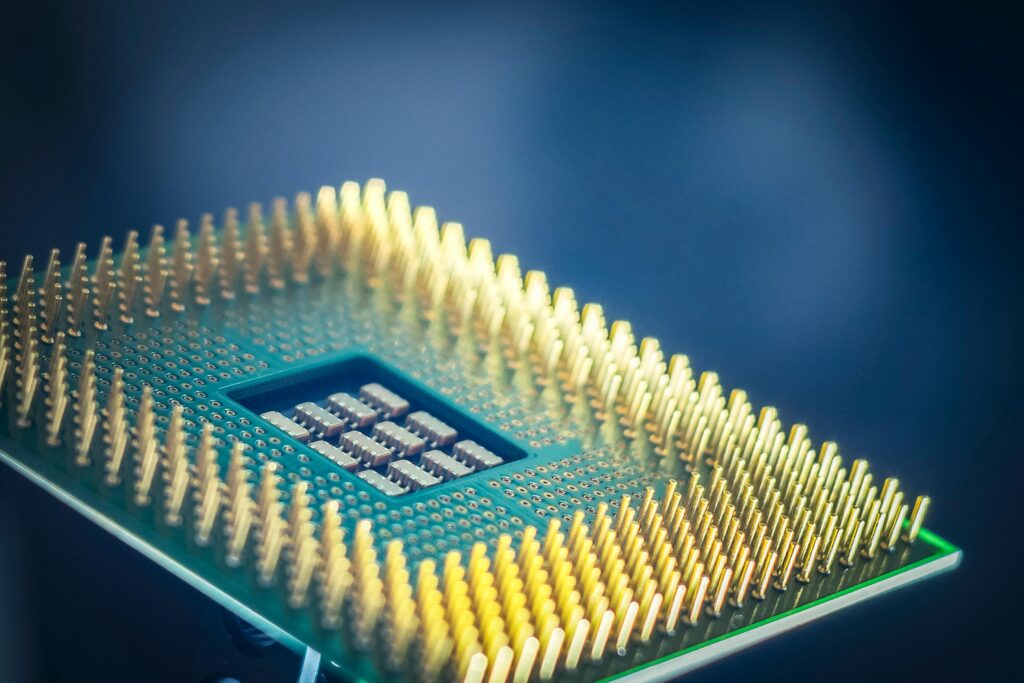
The Chips Act 2.0 is designed to reduce Europe’s dependence on third countries for chip design and production. The Commission wants to accelerate permitting for semiconductor projects, create a label for regions ready to host chip investments, and back strategic projects in parts of the supply chain where Europe has gaps, including advanced manufacturing, chip design, and AI chips.
The proposal also aims to stimulate demand for EU-designed and EU-made chips by connecting strategic projects with potential industrial users, including through demand forums, AI factories and gigafactories, cloud-related measures, and public innovation procurement. A new Business-to-Business Semiconductor Supply Chain Platform would monitor risks and vulnerabilities, run stress tests, and issue early warnings of potential disruptions.
The EU wants to raise its share of global semiconductor production to 20 per cent by 2030. The first Chips Act resulted in around €80bn of announced investment commitments, with more than €52bn already being implemented.
Cloud and AI Development Act
US hyperscalers dominate Europe’s cloud market. They hold around 70 per cent. Although the EU cloud services market is growing, the market share of EU providers fell from 29 per cent in 2017 to 15 per cent in 2022 and has remained unchanged since. Besides, the US CLOUD Act allows American providers to hand over data to authorities even when stored outside the US. In response, the Commission wants to triple Europe’s data-centre capacity over the next five to seven years.
The Cloud and AI Development Act would create a common EU system to classify cloud services with four assessment levels. For more sensitive services, providers would need stronger safeguards against foreign access or disruption. The highest level would be reserved for critical uses, such as defence. The act would also allow the Commission to purchase cloud and AI services for member states and public authorities. Such measures give European providers larger customer bases and help them scale.
Building European alternatives
The third pillar of the package focuses on the EU Open Source Strategy. Europe spends €264bn annually on third-country products and services and wants to reduce that dependence. The strategy aims to scale up open-source alternatives in priority areas, including cloud, AI, internet technologies, cybersecurity, and semiconductors.
Public administration is central to the strategy. The Commission will provide procurement guidelines to help public authorities choose open-source solutions, reducing reliance on systems controlled by non-European providers.
Energy and AI roadmap
The fourth part of the package is the Strategic Roadmap for Digitalisation and AI in the Energy Sector. AI and data centres need large amounts of electricity and water. The Commission wants closer cooperation between the energy and digital sectors so that data-centre growth does not add pressure on the grid.
Executive Vice-President Teresa Ribera said the package “ensures surging demand from data centres works with the grid, not against it, so Europe’s digital ambition powers the energy transition rather than competing with it.” It will also promote the use of AI and digital tools in the energy system itself. This includes smarter electricity infrastructure, faster roll-out of smart meters, and better cross-border energy data exchange. Another objective is to support sovereign digital and AI tools for the energy sector, trained on European data and developed by EU firms, including AI foundation models for power grids.
A new industrial policy approach
Executive Vice-President Henna Virkkunen said the package marks “a major shift” in how Europe approaches technological sovereignty. “It is time for Europe to be in control of its data, of its supply chains, and of its future in a clean and sustainable way,” she said.
We cannot afford to depend on others for the technologies that keep our hospitals running, our energy grids stable and our services secure.
— Ursula von der Leyen, President, European Commission
Beyond the four individual initiatives, a key concept is “EU value added”. Rather than applying a simple “buy European” rule, public procurement should reward companies that invest in Europe, create jobs, develop research, and bring new products to the European market.
The Commission is also looking at new financing tools. It will consult member states, the European Investment Bank Group, and other stakeholders on setting up a European equity capacity at scale to finance tech sovereignty projects.