The Ebola outbreak in Africa is becoming more than a public health emergency. As EU ministers meet to coordinate their response, the European Commission is presenting the crisis as evidence that Europe must invest more heavily in preparedness, vaccines and medical countermeasures before the next outbreak arrives.
The World Health Organization’s last month to declared the Ebola outbreak in the Democratic Republic of the Congo a public health emergency of international concern. In Brussels, it is increasingly being used as a test case for a broader political debate about Europe’s preparedness for future crises. And whether health security should become a permanent priority in the next EU budget.
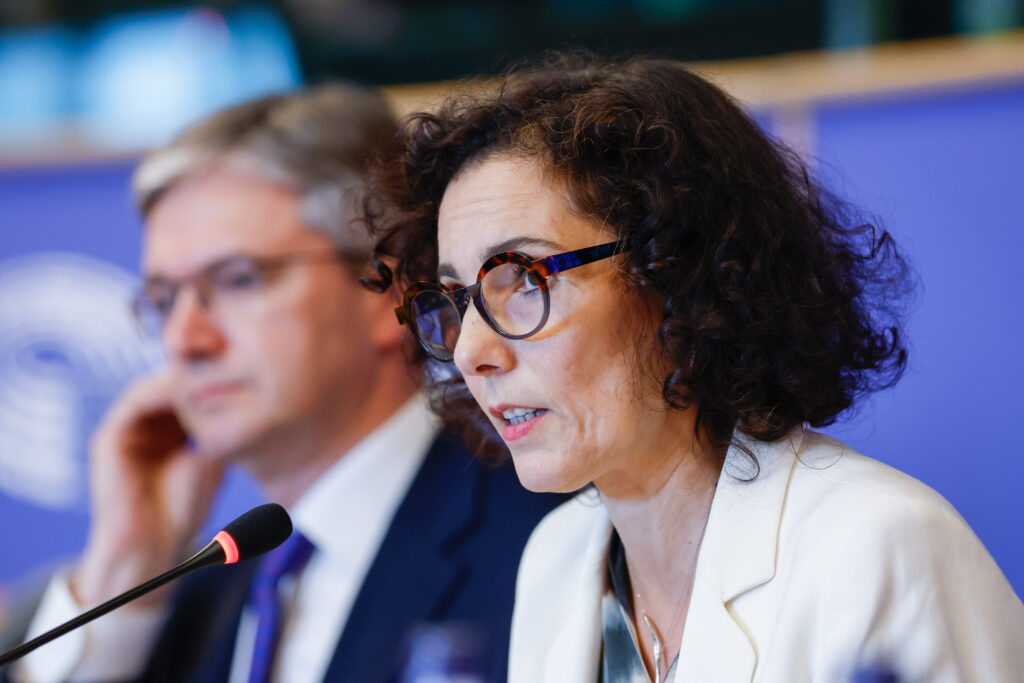
Speaking before the European Parliament’s Public Health Committee on Wednesday, Commissioner Hadja Lahbib argued that recent outbreaks of Ebola and Hantavirus demonstrate why Europe can no longer afford to treat health emergencies as temporary crises. “We must keep health preparedness a priority in our next European budget. Europeans expect nothing less,” Commissioner Lahbib told MEPs.
The debate is set to intensify on Friday. EU health ministers gather for an extraordinary video conference convened by the Cypriot Presidency. They will discuss the European response to the outbreak and possible coordination measures across member states. The meeting comes amid growing discussion about travel restrictions and border measures following the WHO’s declaration.
Precautions at national level
The upcoming talks also highlight a tension that emerged during Lahbib’s exchange with MEPs. While the Commission has pushed for a coordinated, science-based response guided by assessments from the World Health Organization and the European Centre for Disease Prevention and Control, some countries have already introduced their own precautionary measures.
I hope that we will have a more coordinated approach, which is really essential. — Hadja Lahbib, Commissioner for Equality, Preparedness and Crisis Management
“I hope that we will have a more coordinated approach, which is really essential,” Ms Lahbib said. She criticised isolated national responses that risk undermining a common European strategy. For the Commissioner, the argument extends well beyond the current outbreak. “Health preparedness is not just a health issue. It is a security issue,” she said.
Test of preparedness
The outbreak presents a particularly difficult challenge for global health authorities. Unlike the better-known Zaire strain of Ebola, the Bundibugyo virus responsible for the current outbreak has no licensed vaccine and no approved treatment. WHO declared the outbreak a public health emergency of international concern on 17 May, calling for coordinated international action.
While the European Centre for Disease Prevention and Control continues to assess the risk to people living in the EU as very low, the outbreak has nevertheless become an early test of the preparedness structures the bloc has been building since the COVID-19 pandemic.
The Commission has been working closely with the WHO, Africa CDC and member states through the Health Security Committee. Senior officials met on 20 May to assess the situation, followed two days later by joint EU guidance on preparedness measures and screening.
Earlier this year, the Commission also adopted its Comprehensive Health Threat Prioritisation Assessment. It identifies the health threats most likely to affect Europe in the coming years. “Ebola and Hantaviruses were already on that list,” Ms Lahbib noted.
For the Commission, that is evidence that Europe’s preparedness system is beginning to shift from reacting to crises towards anticipating them.
Racing to develop a vaccine
The outbreak has prompted renewed efforts to speed up work on vaccines. Ms Lahbib said the EU had contributed through the Coalition for Epidemic Preparedness Innovations (CEPI) to launch vaccine development and testing efforts. “We have launched an appeal to produce a vaccine and to test it later on through CEPI,” the commissioner said.
We hope that we will have a vaccine soon. — Hadja Lahbib, Commissioner for Equality, Preparedness and Crisis Management
According to her, vaccine candidates are already being evaluated, including one developed by Moderna. “We hope that we will have a vaccine soon.”
The Commission is also supporting vaccine and treatment development through a €7.4 million contribution agreement with the WHO’s research and development blueprint programme. It is aimed at accelerating clinical trials for Bundibugyo-specific countermeasures.
The vaccine effort forms part of a broader strategy to ensure that promising medical countermeasures can move more rapidly from research into deployment when new threats emerge.
What does it looks like in practice
Ms Lahbib repeatedly argued that preparedness is no longer an abstract concept but an operational capability that Europe is already building. “We have started turning our Medical Countermeasures Strategy into concrete action,” she said.
That response goes far beyond vaccine development. The EU has provided funding to Africa CDC to strengthen surveillance and pathogen tracking. This includes wastewater surveillance for Ebola and other pathogens. Detection kits are being deployed through the Partnership to Accelerate Mpox Testing and Sequencing in Africa programme to support testing and genomic sequencing.
The Commission has also mobilised emergency medical supplies. Through the EU-supported WHO AFRO Hub in Dakar, more than six tonnes of critical equipment, medicines, personal protective equipment and sample collection kits have already been delivered to the Democratic Republic of the Congo.
At the same time, the EU Health Task Force has deployed expertise to support operational planning and coordination with African partners. The Commission argues that these investments are helping Europe respond earlier and more effectively when outbreaks emerge abroad, reducing the risk that they become larger international crises.
From medical countermeasures to resilience
The Ebola response is also becoming the first major test of the Commission’s recently launched Global Health Resilience Initiative. Presented only weeks ago, the initiative seeks to strengthen surveillance systems and accelerate access to vaccines, diagnostics and therapeutics through closer international cooperation.
Three weeks ago, commissioner Lahbib told MEPs, the Commission launched the initiative as “our commitment in action”. The initiative reflects a growing recognition in Brussels that future health threats are unlikely to remain confined to national borders. “A threat anywhere is a threat everywhere,” she said.
The Commission is also broadening preparedness beyond infectious disease outbreaks. At the One Health Summit in Lyon in April, it committed €50 million to support the development of new antibiotics against antimicrobial resistance and treatments for dengue. “Together with our stockpiles of medical countermeasures, these investments are building real preparedness for all-hazards,” Ms Lahbib said.
The battle behind the outbreak
Behind the discussion about Ebola lies a much larger political question. What place should health occupy in the next Multiannual Financial Framework? The answer will shape the future of HERA, strategic stockpiles, medical countermeasures programmes and Europe’s wider preparedness agenda.
Ms Lahbib used the hearing to make a direct appeal ahead of budget negotiations. “We must also make sure that innovation in medical countermeasures, and the industrial capacity needed to produce them, receive strong support through the European Competitiveness Fund and Horizon Europe,” she said.
The language mirrors a broader shift taking place inside the Commission, where health is increasingly being framed not only as a healthcare issue but as a strategic investment linked to resilience, competitiveness and security.
The next outbreak, Commissioner Lahbib warned, is inevitable. “The next outbreak is not a question of if, but when. And when it comes, Europe must be ready.”