Ottawa is rewiring its defence partnerships around the globe — with Europe at the centre. It involves buying Swedish, arming with Polish drones, and engineering supply chains that plug directly into EU funding frameworks.
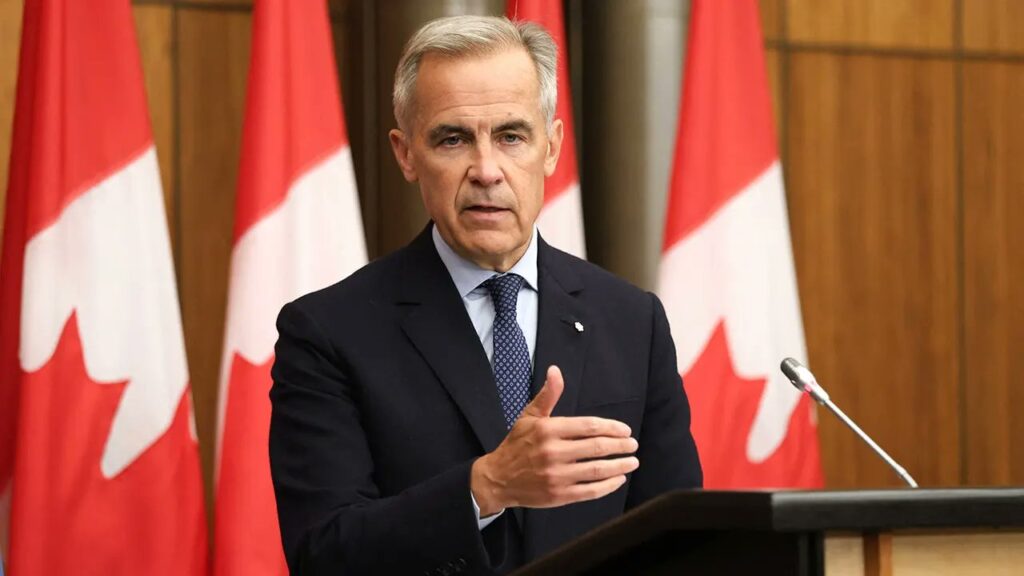
Canada’s defence policy has undergone its most sweeping reorientation in a generation. Since Mark Carney became PM in March last year, Ottawa has signed deals on four continents. The common thread is deliberate diversification away from Washington. So is a calculated effort to plug Canada into Europe’s fast-evolving defence-industrial architecture.
The strategic logic is straightforward. The Carney government has pledged to lift defence spending to two per cent of GDP in 2025-26. By 2035, backed by a ten-year C$180bn acquisition envelope, it is to reach five per cent. Its February 2026 Defence-Industrial Strategy centres on “strategic autonomy,” industrial offsets, and tighter dovetailing with European supply chains. It explicitly cites the EU’s Readiness 2030 plan as a benchmark.
The Pole position
The most consequential of Canada’s new partnerships run through Europe. On 3 June, defence ministers David J. McGuinty of Canada and Władysław Kosiniak-Kamysz of Poland signed a significant Letter of Intent. It covers joint defence-industrial cooperation, emerging technologies, and ammunition production capacity in Canada. Crucially, the agreement explicitly invokes the EU’s Security Action for Europe (SAFE) initiative, a €150bn loan instrument running from 2025 to 2030, to fund joint projects.
“Minister McGuinty highlighted opportunities to strengthen bilateral defence industrial cooperation, including collaboration under SAFE, potential joint projects involving emerging technologies, and talks on the establishment of ammunition production capacity in Canada,” Canada’s defence department said. Ottawa’s planned procurement of Polish-made drones forms part of the arrangement.
Canada’s access to SAFE is itself remarkable. As of today, it is the only non-European country admitted to the scheme. Under a framework agreement concluded with the European Commission on 1 December 2025, Canadian firms may participate in SAFE-funded joint procurements.
The backdrop is a fraying relationship with Washington. This week, the Pentagon paused its participation in the Permanent Joint Board on Defence, a forum dating to 1940, accusing Canada of failing to make credible progress on its defence commitments. “We can no longer avoid the gaps between rhetoric and reality,” said Elbridge Colby, the US under secretary of defence. “Real powers must sustain our rhetoric with shared defence and security responsibilities.”
The Norwegian dimension
Norway’s status as an EEA member adds a further dimension. Any Canada–Norway co-development that final-assembles in Norway can qualify fully for SAFE subsidies, as well as for the European Defence Industry Reinforcement through Common Procurement Act (EDIRPA), a €300m incentive scheme targeting 40 per cent joint EU procurement by 2030.
That geometry shapes the Canada–Norway deal signed in Oslo in mid-March. Prime Minister Carney and his Norwegian counterpart, Jonas Gahr Støre, issued a joint statement covering Arctic security, space communications, AI, critical minerals, and energy.
The space-security roadmap explicitly references interoperability with EU and NATO space-based enablers, aligning it with the EU’s list of SAFE-priority capabilities, which includes C4ISTAR and the protection of space systems. Norway’s EEA status means the industrial clauses baked into the bilateral roadmap can draw on EU funding in ways that a purely bilateral Canada–US arrangement could not.
Sweden over America
At CANSEC, Canada’s flagship defence trade show, Mr Carney announced on Thursday that Canada had selected Saab as its preferred supplier for a future Airborne Early Warning and Control (AEW&C) capability. The aircraft in question is the GlobalEye, built on a Bombardier Global 6500 airframe and fitted with Saab’s extended-range radar, an advanced sensor suite, and a multi-domain command-and-control system.
Saab has offered to build, maintain, and upgrade the Canadian GlobalEyes with a team of Canadian partners. — Saab statement
Ottawa intends to acquire around half a dozen aircraft. The GlobalEye beat two American rivals: the Aeris X by L3Harris and the E-7 Wedgetail from Boeing. No contract has yet been signed. “Saab has offered to build, maintain, and upgrade the Canadian GlobalEyes with a team of Canadian partners—the goal is to transfer knowledge and technology to Canada that will grow the domestic defence industry,” the company said.
The choice carries layered significance. Technology transfer and Canadian industrial content outweighed the interoperability argument for a US type. The GlobalEye’s supply chain, combining Swedish sensors with a Canadian airframe, is EU-origin enough to be SAFE-eligible for EU customers, broadening Bombardier’s export horizon.
Deeper than procurement
Swedish Prime Minister Ulf Kristersson said he “looks forward to welcoming Canada into the GlobalEye family.” Stockholm is also pitching 72 Saab Gripen jets as a replacement for some of the 88 Lockheed Martin F-35s Canada contracted in January 2023, a purchase Mr Carney’s government is reconsidering amid tensions with Washington.
The Canada–Sweden relationship has deepened well beyond procurement. A November 2025 state visit by King Carl XVI Gustaf and Queen Silvia, accompanied by Deputy Prime Minister Ebba Busch and Defence Minister Pål Jonson, formalised a strategic partnership covering security, Arctic affairs, trade, innovation, and the green and digital transitions. What began as fighter-jet talks has become, as one researcher in Canadian studies put it, a model of partnership based on long-term alignment rather than any single contract.
Canada is hedging across multiple axes simultaneously. In March, Australia and Canada announced their largest-ever bilateral defence export deal, centred on Australia’s Over-the-Horizon Radar technology to enhance Canada’s Arctic surveillance capabilities.
A wider web of partners
In March, Mr Carney also signed a strategic partnership agreement with Japanese Prime Minister Sanae Takaichi in Tokyo, covering defence, energy, trade, cyber policy, and Arctic security. “We have much in common, and we’re enriched by each other’s cultures, perspectives and histories,” Mr Carney said. “This is a strong foundation on which we can build something even better, more prosperous, more ambitious.”
(Canada and Japan) have much in common, and we’re enriched by each other’s cultures, perspectives and histories. — Mark Carney, Canada’s prime minister
South Korea’s Hanwha has announced it will use steel from Algoma’s Sault Ste. Marie plant to build armoured military vehicles in Canada, contingent on winning the contract for Canada’s next-generation submarine fleet. The arrangement, built around a consortium called Project Arrow Defence with 51 per cent Canadian ownership, spans five vehicle types including the K-9 Thunder howitzer and drone ground vehicles.
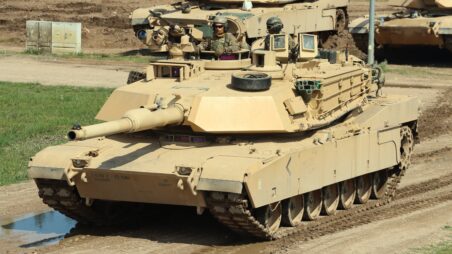
Despite the political cooling, Canada also struck a $1.88bn deal with the US to procure 26 M142 HIMARS launchers. The agreement saw finalisation under the US foreign military sales programme, with deliveries expected from 2029.
The EU framework beneath it all
The EU legislative architecture underpinning much of this activity is still taking shape. EDIRPA is operational; SAFE is running; the European Defence Industrial Strategy and its implementing regulation, EDIP, covering 2025-27, are pushing for deeper supply-chain integration and a Defence Industrial Readiness Board.
Ottawa’s insistence on domestic production and technology transfer dovetails with EDIS goals to shorten trans-Atlantic supply chains. Canadian facilities could in time be recognised as reliable, friendly-shore nodes for EU-funded projects.
The broader implication is structural. Canada’s twin-track approach—honouring NATO and NORAD commitments while diversifying procurement and courting EU industrial schemes—offers a template for other non-EU allies, including the United Kingdom and Japan, seeking partial access to European frameworks without ceding industrial autonomy.