A group of lawmakers wants to establish a new fund for health innovation, aimed at ensuring faster access to breakthrough medicines and diagnostics. It should be built into the next EU long-term budget. The main idea? Preventing the dilution of funds in the wider competitiveness spending.
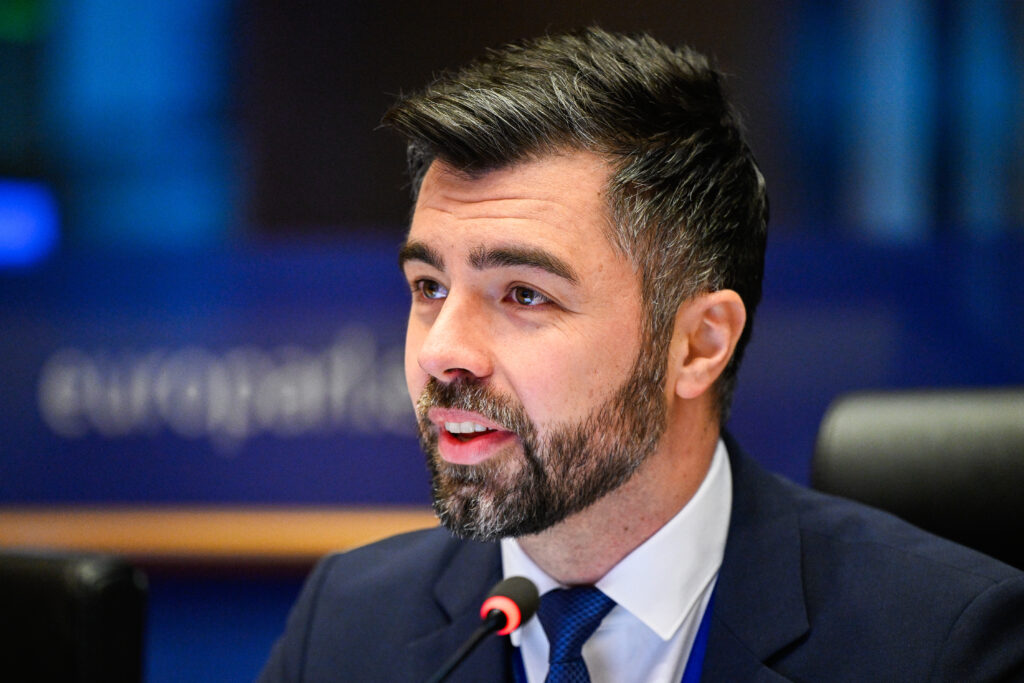
Dubbed the European Innovation Fund for Transformative Health, the proposal is a brainchild of Member of the European Parliament (MEP) András Kulja (EPP/HU), who is currently gathering signatures for a letter to the European Commission.
According to Kulja, the fund would bridge the gap between Europe’s science and its patients, while “fully respecting member states’ responsibilities for healthcare delivery.”
Under his proposal, the fund would be integrated into the EU’s next Multiannual Financial Framework (MFF) for 2028–2034, rather than creating a standalone programme. Under the Commission’s original proposal of the bloc’s long-term budget, health funding would sit within the new €234 billion European Competitiveness Fund, whose health and biotech window is worth €20.4 billion.
Supporters argue a dedicated instrument is needed to ensure health innovation does not become diluted within the broader competitiveness agenda.
Two possible routes
MEP Victor Negrescu (S&D/RO), a Vice-President of the European Parliament, sees two possible paths. The first would be creating a dedicated budget line in the European Competitiveness Fund. Governments, he said, should tell EU leaders they would like “a sub-point focused on all those specific elements”. The second would use the new national and regional partnership plans.
Negrescu, who leads Parliament’s health committee opinion on those plans, said lawmakers are “working together to ask for €20 billion out of the national plans to go for health”. They also want member states to “organise specific chapters on health” — something that the Commission’s proposal currently doesn’t require.
“We are working together to ask for €20 billion out of the national plans to go for health.”
— MEP Victor Negrescu (S&D/ RO), Vice-President of the European Parliament
That flexibility, he argued, would allow countries to tailor investments to their needs: Italy could create “a specific chapter on innovation on health”, France could focus on health technologies, while Romania could prioritise healthcare infrastructure and preparedness.
MEP Kulja, who is a medical doctor, framed it as a delivery problem. Patients and politicians keep asking why technologies available in the United States are not available in Europe. “And we don’t really have the good answers,” he said.
The real question, he argued, is “whether we have the right mechanism to ensure that innovation is actually adopted across our healthcare systems”.
A gap to fill
Michele Migliori, a policy analyst at the European Policy Centre (EPC), argued that Europe already excels at funding research. The problem comes later.
Only 46% of centrally approved innovative medicines reach patients in central and eastern Europe, he said. On average, patients wait 578 days between EU approval and access to treatment. That is far longer than the 180-day target set by the bloc’s Transparency Directive.
If companies increasingly launch new medicines elsewhere, Europe risks becoming “a secondary market”, Migliori warned. It would remain “excellent in science … but slower in access and weaker in capturing value”.
How it would work
According to Migliori, the EU already has many of the necessary building blocks, including the European Health Data Space (EHDS), the Clinical Trials Regulation (CTR) and the Health Technology Assessment (HTA) Regulation. National initiatives also offer examples, such as Italy’s Innovation Fund, the UK’s Cancer Drugs Fund and regional HTA cooperation between Benelux and Nordic countries.
What Europe lacks, he argued, is a framework that ties these pieces together.
Rather than becoming “another European reimbursement agency”, the fund should focus only on areas where fragmented national systems create EU-wide problems. It could support real-world evidence, patient registries and outcome-based payment models while operating through voluntary groups of member states matching each other’s contributions instead of one centralised budget.
“We have to act fast, because there is a time window … and it will close.”
— MEP András Kulja (EPP/HU)
“It should be an architecture for coordination,” Migliori said, urging policymakers to start with a limited number of technologies rather than waiting for a perfect system
Industry and patient support
For the pharmaceutical industry, the main benefit would be greater predictability.
Speaking for the pharmaceutical group EUCOPE, Matias Olsen said that 64% of its members would likely delay launching medicines in Europe in the short term. In the long term, the figure rises to 82%. He attributed much of the pressure to pricing policies, including the United States’ “Most Favoured Nation” (MFN) approach to drug prices. A mechanism that speeds up the path from regulatory approval to patient access, he argued, would therefore be “seen as welcome by companies”.
Denis Horgan, executive director of the European Alliance for Personalised Medicine, argued the EU budget should include a “patient access test”. According to him, money spent on science should be matched by similar sums for patients’ access.
His priority is diagnostics. “It’s not about more money but how we allocate existing resources,” he said.
Solène Jouan of the European Patients Forum (EPF) backs the goal. However, she also came with a warning, describing the cost of medicines “the elephant in the room”.
Some member states simply cannot pay, she said. She also questioned whether the debate pays enough attention to access. “When I’m reading the ECF, there is no access anymore,” she said.
The political challenge
The proposal arrives as negotiations over the EU’s next long-term budget become increasingly competitive.
The same reshuffle proposed by the Commission would abolish the standalone EU4Health programme, folding health spending into the broader European Competitiveness Fund. Parliament is already pushing to preserve around €10 billion for EU4Health.
Negrescu believes Europe still has a strong foundation to build on. “On health innovation … we are still on top. We are still competitive,” he said. But securing dedicated funding will not be easy. “Every country would likely want a piece of the cake,” he acknowledged.
Kulja, who presented the proposal during a July 1 roundtable in the European Parliament, hopes his letter will strengthen Parliament’s voice before member states begin final negotiations on the budget. “We have to act fast, because there is a time window … and it will close,” he said.
The Commission now faces a choice. It can build a dedicated health fund. Or it can leave innovation to fight for space in the competitiveness pot. For supporters of the proposal, that decision will ultimately determine how quickly European patients gain access to medicines developed by Europe’s own researchers