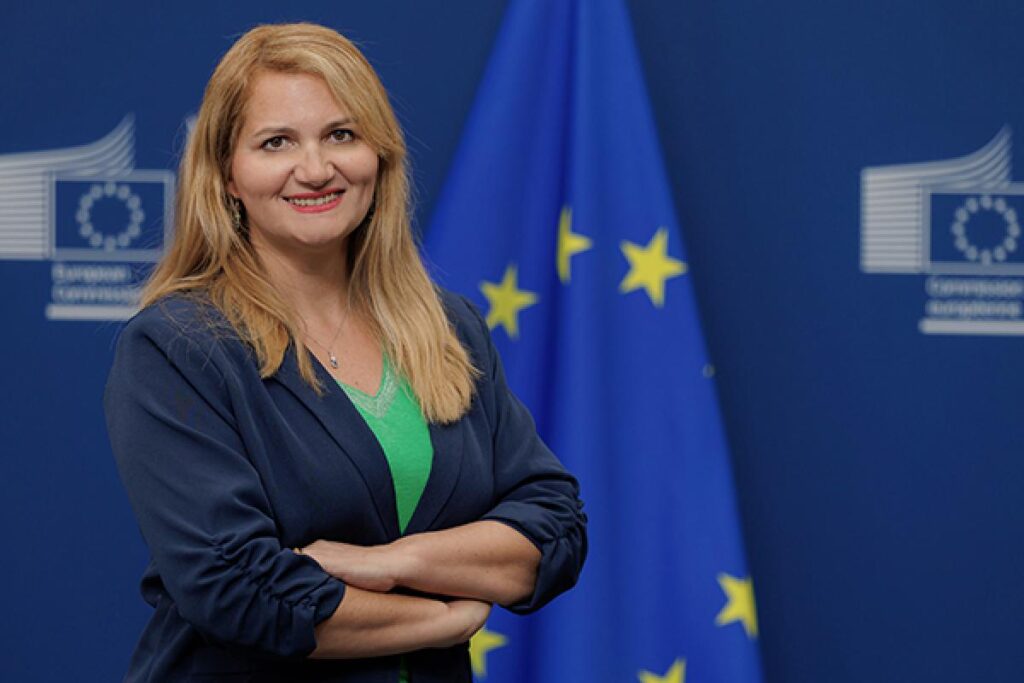
State aid is no longer viewed in Brussels solely as an undesirable distortion of conditions in the common market. Instead, according to Petra Němečková from the cabinet of European Commission Executive Vice-President Teresa Ribera, it is becoming part of the European Union’s broader economic and geopolitical strategy.
“Today, state aid is considered a tool through which we should enable investments that make sense not only for a member state, but for Europe as a whole,” Němečková said at the conference State Aid in Motion, organized by the Office for the Protection of Competition of the Czech Republic, while stressing she speaks in her personal capacity.
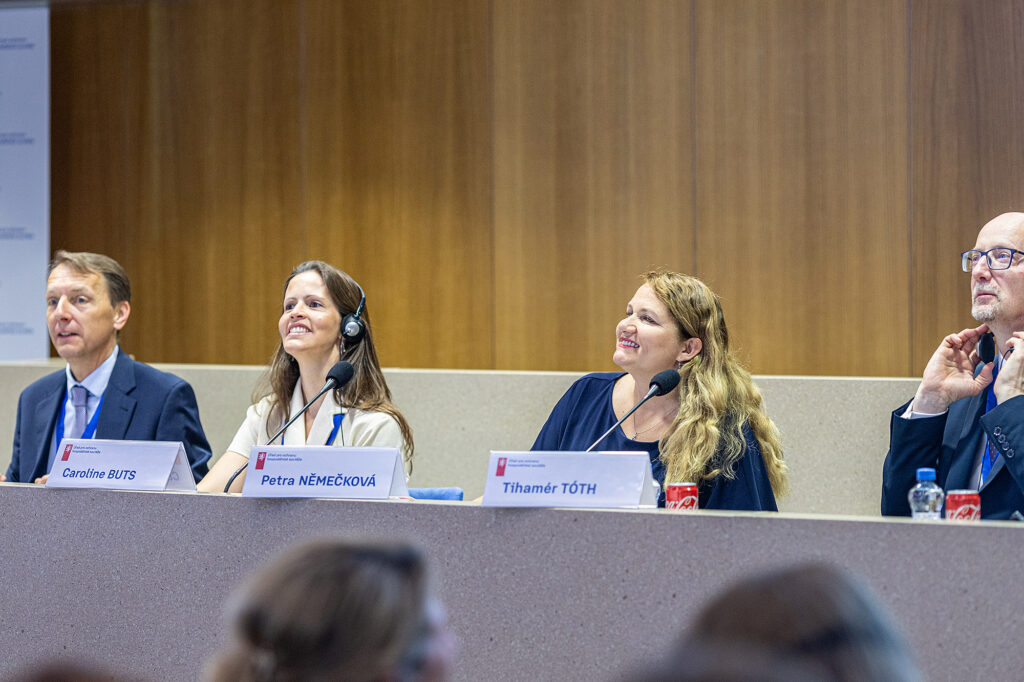
Her remarks reflect a shift in the perception of state aid. “The rules should serve society, businesses, and people. They should help create jobs, affordable energy, and security of supply,” she said.
State aid as part of industrial policy
Němečková emphasized that the state aid agenda is no longer an isolated area of competition law. It now cuts across most of the European Commission’s strategic initiatives.
“State aid is not an isolated agenda. It is woven through all the initiatives, action plans, and strategies through which the Commission is seeking to strengthen the competitiveness and autonomy of the European Union,” she said.
“The housing crisis is not only a question of social cohesion. It is also an economic problem, because if workers cannot afford to live where employment opportunities exist, the entire economy suffers.”
— Petra Němečková
She cited the Clean Industrial Deal, sectoral strategies for the automotive industry, the chemical sector, and steelmaking, as well as initiatives in defense, digitalization, and affordable housing. According to her, the goal is to create rules that enable “targeted, comparable, and controlled investments in European priorities.”
Fewer grants, more guarantees and preferential loans
Another significant change is its approach to financing. State aid is not intended to replace private investment, but rather to mobilize it. “We are trying to design state aid in a way that attracts private investment to areas where private capital is hesitant,” Němečková explained.
The European Commission is therefore placing increasing emphasis on combining European funds, national resources, and private capital, as well as innovative financial instruments such as preferential loans, state guarantees, and other forms of risk-sharing.
According to Němečková, this approach is evident, for example, in the new rules on affordable housing, which are intended to redirect investment toward less profitable projects as well.
Accelerated support for clean industry
Němečková described the new Clean Industrial State Aid Framework (CISAF) as one of the most significant innitiatives of last year.
CISAF is intended to enable faster approval of aid in areas crucial to European competitiveness, energy security, and strategic autonomy. “Decarbonization and clean energy are not just climate policy. They are also a policy for achieving European autonomy,” she said.
In her view, investments in energy grids, energy storage, and industrial decarbonization simultaneously represent investments in Europe’s security, resilience, and competitiveness.
And member states are making intensive use of the new instrument. In less than a year of operation, the Commission has adopted 24 decisions for 14 member states, with a total value of €37.6 billion.
Ms Němečková highlighted that one of CISAF’s advantages is its speed. “If the framework’s conditions are met, the Commission should issue a decision within six weeks,” Němečková said.
Simplification on the way
The second major project is the revision of the General Block Exemption Regulation (GBER), which is currently the main instrument for granting state aid in the European Union. “For many member states, GBER is the bread and butter of state aid,” Němečková remarked.
The block exemption regulations establish the conditions under which state aid can be granted, accounting for roughly 80 percent of all state aid provided across the EU.
The main objective of the planned revision is to simplify the rules and reduce the administrative burden. The political logic is straightforward: fewer notifications in cases with a low risk of distorting competition, and more capacity for complex and strategic cases. The text is expected to take effect next year.
Projects of Common European Interest and affordable housing
So-called Important Projects of Common European Interest (IPCEIs) continue to play a significant role. These are intended primarily for technologically demanding and high-risk projects with a cross-border dimension that individual member states would find difficult to finance on their own.
“They are a very good response to the problem of fragmentation,” Ms Němečková said.
As examples, she mentioned projects involving hydrogen, artificial intelligence, and medical technologies. In addition, the Commission has now became involved earlier in the project-design stage and help member states identify suitable areas for future projects.
“Competitiveness should not come at the expense of rules. Speed without rules leads to greater fragmentation. Our goal is to find the right balance.”
— Petra Němečková
Ms Němečková also devoted special attention to housing, an issue that the European Commission is increasingly linking to economic policy. “The housing crisis is not only a question of social cohesion. It is also an economic problem, because if workers cannot afford to live where employment opportunities exist, the entire economy suffers,” she said.
Last year, the Commission therefore amended the rules governing Services of General Economic Interest (SGEI) so that member states could more easily support social and affordable housing without the need for prior notification to Brussels.
More changes on the way
The Commission is also preparing other revisions of state aid rules. Next in line are rescue and restructuring guidelines or new rules for air transport and airports.
“State aid is in motion because Europe itself is in motion,” Němečková concluded.
According to her, the main challenge of the coming years will be finding a balance between the speed of support and the protection of the single market. “Competitiveness should not come at the expense of rules. Speed without rules leads to greater fragmentation. Our goal is to find the right balance.”