The European Parliament has backed a sweeping update to air passenger rights, voting 646 to 12 in favour. MEPs kept the three-hour threshold for delay compensation, a red line for many lawmakers throughout the talks. The deal also delivers clearer refunds, free family seating, and more transparent ticket pricing.
The compensation scheme is arguably the best-known element of EU passenger protection. It stays unchanged: €250 for flights under 1,500km, €400 for flights between 1,500km and 3,500km, and €600 for flights above 3,500km. The same amounts apply if an airline cancels a flight less than 14 days before departure, or denies a passenger boarding.
Airlines can cut compensation by half on the longest routes. This applies if they offer rerouting to the final destination, or if the delay on arrival is no more than four hours. They can also avoid paying compensation altogether if a disruption was beyond their control. The new rules list “extraordinary circumstances” openly, including natural disasters, war, bad weather, unruly passengers, and strikes by airport, air navigation, or ground handling staff.
This point had become the central battle in the revision. Airlines and several governments pushed for more flexibility, while Parliament insisted that airlines and governments should not weaken existing rights.
Parliament ‘delivered’ for passengers
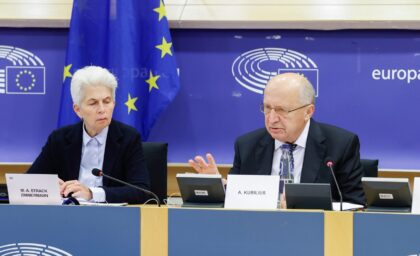
Andrey Novakov (EPP/BGR), the European Parliament’s rapporteur on the file, said MEPs had protected passengers and secured practical improvements in the deal. The Bulgarian EPP lawmaker, who led Parliament’s position in the negotiations, said the three-hour delay window and the current compensation levels were red lines.
We fought for people, not for statistics. Because behind every delay and every cancellation there are real lives.
— Andrey Novakov, Rapporteur, European Parliament (EPP/BGR)
“Parliament promised passengers that their rights will be protected. And today we delivered. We fought for people, not for statistics. Because behind every delay and every cancellation there are real lives. We also added many clear improvements for families, PRMs and for a competitive aviation sector. This is a balanced result that we can all be proud of,” Mr Novakov said.
Virginijus Sinkevičius (Greens/EFA, LTU), vice-chair of Parliament’s Transport and Tourism Committee, said the deal protected passengers without leaving airlines behind. “We have good news for everyone who flies. We worked hard to make sure passengers did not lose the rights they already had, while securing better protection for families, people with reduced mobility, and others who need it most,” he said.
Clearer claims, stronger duties
The deal also clears up how passengers can make claims. Airlines will have to give passengers clear instructions on how to claim, within four days of a disrupted journey ending. They will then have 30 days to pay out, or to explain why compensation does not apply. Passengers will have nine months to file a claim. Carriers will also have to look after stranded passengers: refreshments every two hours, meals after three hours, and accommodation for up to three nights where appropriate.
The package also extends existing rights for passengers with reduced mobility. If they miss a flight at the airport because of a lack of assistance, they will be entitled to compensation, rerouting, and further help.
Apostolos Tzitzikostas, Commissioner for Sustainable Transport and Tourism, said the deal struck the right balance between consumer protection and legal certainty for the aviation sector. Today’s agreement, he said, is a major step forward for European passengers and for Europe’s aviation sector, delivering clearer rights in practice and greater transparency.
“We have found the right balance: preserving Europe’s world-leading passenger protection, while creating a fair, predictable and workable framework for the aviation industry,” Mr Tzitzikostas said.
Family seating and ticket transparency
The agreement obliges airlines to seat children under 14 next to an accompanying adult free of charge. Similar provisions apply to passengers with reduced mobility and to pregnant women. Passengers will also have the right to bring one personal item on board, such as a small bag or backpack, free of charge.
Ticket prices will have to be displayed more clearly, including information on cabin baggage charges. Airlines will still be allowed to offer cheaper fares to passengers who choose to travel without hand luggage, but the rules are intended to make prices easier to compare across airlines and booking platforms.
Passengers will no longer be charged extra for correcting a spelling mistake in their name, or for a printed boarding pass if they have already checked in. They will also be able to receive boarding passes digitally at check-in, without needing a user account or a special app. Airlines cannot deny them boarding for using their own printed version of a digital pass.
The agreement also bans airlines from denying a passenger their return flight simply because they missed the outbound leg. This practice, known as a no-show policy, has long been criticised by consumer groups as unfair to travellers.
Years of deadlock
The Commission first proposed changes to the EU’s air passenger rights rules back in 2013. Disagreements among member states in the Council then blocked the file for 13 years. Negotiators finally struck a political agreement in the conciliation committee last month. The deal, they said, would bring greater transparency and predictability for both passengers and airlines.
MEPs have now formally endorsed the joint text, which the Council must still confirm by early August. The new rules will enter into force 20 days after publication in the EU’s Official Journal. Member states and airlines will then have a year to prepare before the rules apply in practice.
For passengers, the vote will lock the existing compensation scheme into one single, simple legal framework. For airlines, clearer rules will bring more legal certainty, though the core protection for delayed passengers stays firmly with Parliament.