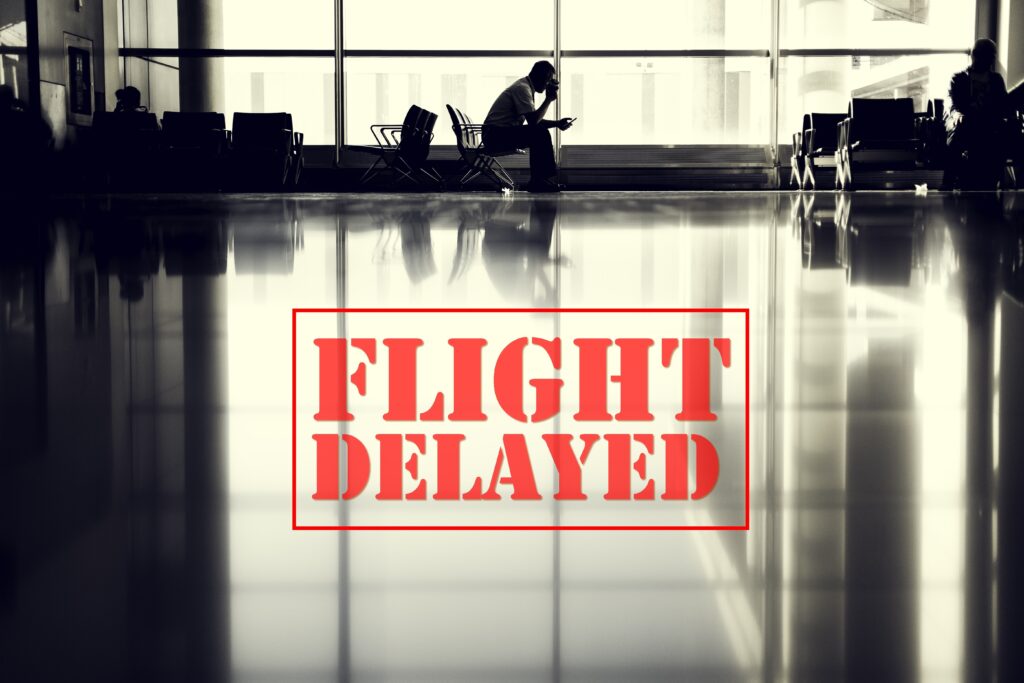
Travellers in the EU will keep their right to compensation if a flight is delayed by three hours or more. After years of wrangling, negotiators seem to have let mostly unchanged the issue that shields passengers from airline industry attempts to weaken the rules. The deal still needs final approval by 15 June.
The deal is not yet official and remains only a preliminary agreement. According to the current version of the deal, which closed most of the controversial articles, compensation of up to €600 for delayed or cancelled flights remains intact. Airlines will also have to contact affected passengers directly and explain what went wrong, sources told EU Perspectives.
The three-hour threshold for compensation was the most fought-over point in the negotiations. The Council had pushed to raise it to between four and six hours depending on flight distance, which would have stripped millions of passengers of their current rights. Parliament held firm.
Passengers keep full compensation
Compensation levels stay the same. Passengers receive €250 for flights up to 1,500 km and €400 for flights between 1,500 and 3,500 km. On longer flights, the amount depends on the length of the delay: €300 for delays of three to four hours, and €600 for delays beyond four hours or for cancellations.
Behind every delay or cancellation, there are real people, missed birthdays, funerals, weddings and job interviews.
— Andrey Novakov, rapporteur, European Parliament (EPP/BGR)
It is a significant win for lawmakers who spent years resisting airline industry pressure to water down the rules. The Council had originally pushed for lower payouts and higher thresholds, changes that consumer groups warned would leave millions of passengers worse off than they are today. Rapporteur Andrey Novakov (EPP/BGR) put it simply earlier this year: “Behind every delay or cancellation, there are real people, missed birthdays, funerals, weddings and job interviews.”
Airlines must reach out first
After a disruption, airlines will have to send passengers a link to a claim form within 48 hours of a delayed or cancelled flight. The link must arrive via a permanent channel such as email, not just an app notification that passengers may struggle to retrieve later. This shifts the burden away from passengers, who under the current rules often have to hunt down the right form themselves.
Airlines will also have to explain why a flight was disrupted. Invoking “extraordinary circumstances” to avoid compensation will no longer be enough, as they must spell out exactly what those circumstances were, rather than relying on a blanket excuse. Once a claim is filed, the airline has 30 days to pay or explain in writing why it refuses. Previously, airlines could drag out the process without any clear deadline to respond, leaving passengers in limbo for months.
Cabin bag included in the price
Airlines will have to include a carry-on suitcase in the advertised fare, rather than just the smaller bag that fits under the seat. Passengers who do not need the larger bag can remove it from their booking in exchange for a lower price. The measure targets one of the most common sources of frustration for air travellers: the habit of budget carriers to advertise artificially low fares that exclude basic luggage, making it nearly impossible to compare the true cost of competing flights before booking.
The compromise is not yet final. The conciliation committee, bringing together representatives from the Parliament and member states, has until 15 June to adopt the text. If it fails, the reform proposal lapses entirely and the current rules stay in place. After more than a decade of stalling, neither side can afford to walk away empty-handed.